7 Inspiring Ideas for Design for Home Page in 2026
Imagine visiting a site in 2026, where the design for home page instantly draws you in with a seamless blend of cutting-edge technology and personalised touches. As digital innovation accelerates, your homepage becomes the pivotal gateway, shaping how audiences perceive your brand and engage with your content. In this article, discover seven inspiring ideas for reimagining homepage design in 2026—each rooted in the latest trends, smart technologies, and user-focused strategies. Explore bold predictions, real-world examples, and practical concepts designed to elevate your digital presence and spark meaningful connections with every visitor.
The Importance of Homepage Design in 2026
The digital landscape in 2026 is evolving at a rapid pace, and the design for home page is no longer a static showcase. Today’s homepage acts as a brand’s digital handshake, setting the tone for every user interaction. Understanding its shifting role is essential for any business aiming to stand out and connect with modern audiences.
The Evolving Role of Homepages
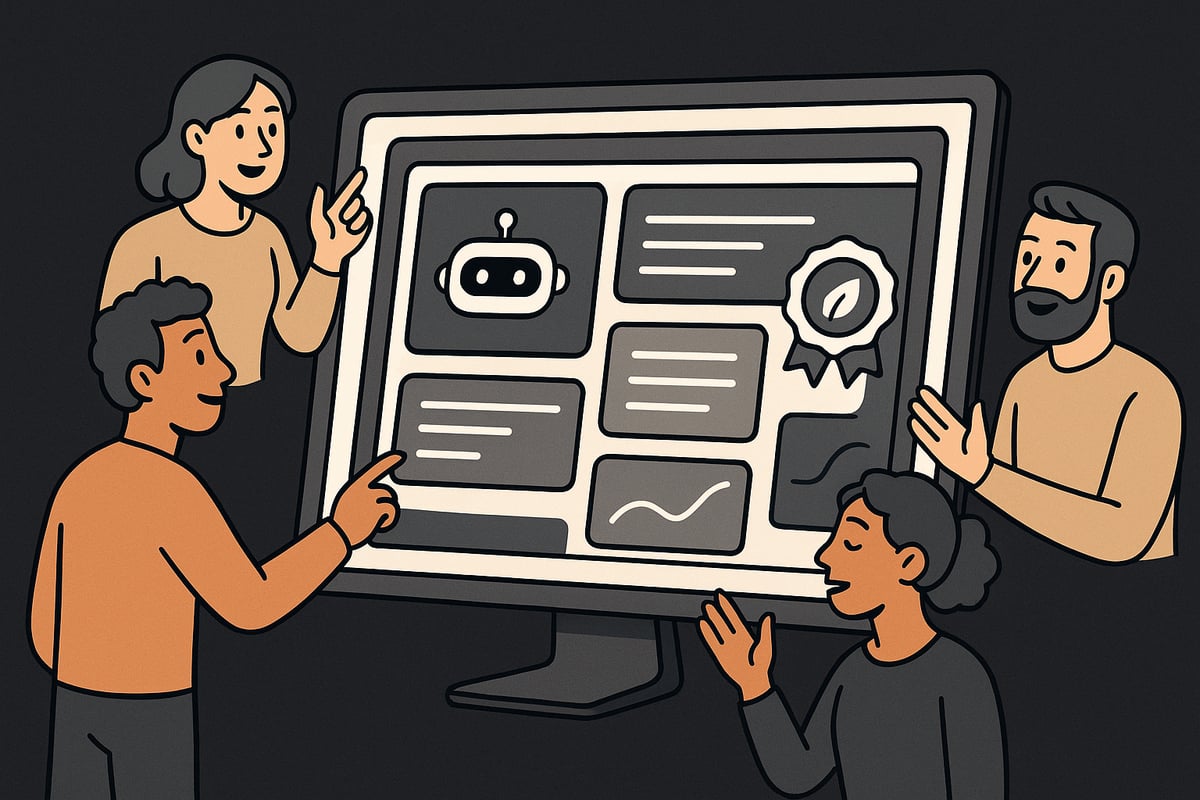
Homepages have transformed from simple entry points to dynamic storytelling platforms. In the design for home page, the focus now lies on delivering adaptive experiences that resonate with each visitor. Brands are leveraging real-time content and personalisation, ensuring that every homepage visit feels unique and relevant.
The homepage is now the central hub of digital interaction and brand narrative. This shift drives brands to continuously update content, integrate interactive elements, and adapt layouts in response to user behaviour.
User Expectations and Behavioural Shifts
User expectations for design for home page have risen sharply. Visitors demand seamless, intuitive navigation across all devices, expecting a consistent experience whether on mobile, tablet, or desktop. They are quick to judge, seeking instant value and clear calls-to-action.
Modern users also crave effortless access to information, preferring homepages that guide them naturally to their goals. Meeting these expectations is now the baseline for digital success.
Impact on Brand Perception and Conversion
A strong design for home page directly influences how users perceive a brand. Research shows that 94% of first impressions are design-related, making homepage aesthetics and usability critical. Well-designed homepages foster trust, encourage engagement, and drive higher conversion rates.
On the other hand, poor homepage design is a leading cause of high bounce rates. Brands that invest in quality design consistently outperform competitors in customer acquisition and retention.
Integrating Technology and Creativity
Technology is reshaping the design for home page, with AI and automation enabling advanced personalisation and interactive features. Brands are balancing aesthetics, performance, and accessibility to create inclusive experiences. Creative use of animations, chatbots, and real-time updates enhances user engagement.
However, successful integration requires careful attention to speed and accessibility. Brands that excel in this space set new standards for digital interaction.
Key Arguments and Insights
In a crowded digital marketplace, the design for home page is a true differentiator. Ongoing optimisation, A/B testing, and data-driven decisions are no longer optional but necessary. Analytics and user feedback drive continuous improvement, ensuring the homepage evolves with changing trends and technologies.
Ultimately, brands that prioritise innovative and user-centric homepage design secure a lasting competitive edge. Regular evaluation and adaptation keep the homepage relevant, engaging, and effective.
7 Inspiring Ideas for Design for Home Page in 2026
What will set apart the most impactful design for home page in 2026? As digital experiences evolve, the answer lies in a blend of advanced technology, creativity, and a deep understanding of user needs. Below, we explore seven groundbreaking approaches that will shape the future of homepage design, each offering unique opportunities and challenges for brands ready to lead.
1. Hyper-Personalised User Experiences
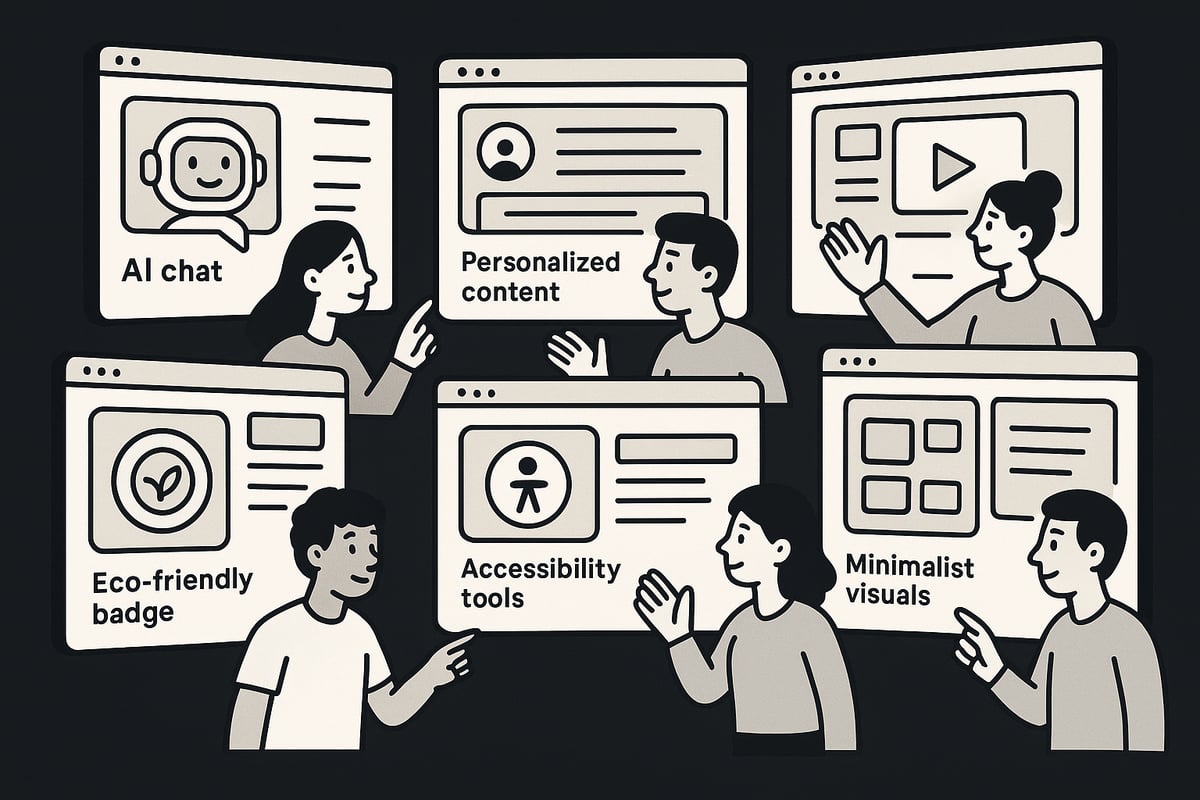
The concept of personalisation has moved far beyond simply greeting users by name. In 2026, the most effective design for home page will harness AI and machine learning to deliver content, products, and messaging tailored to each individual in real time.
Imagine landing on a homepage that adapts instantly to your browsing history, location, and preferences. E-commerce platforms already use this approach to show curated product recommendations, but the design for home page in the future will take this further. Real-time adaptation will mean that even the layout, imagery, and calls-to-action shift based on user signals.
Benefits of hyper-personalisation include:
- Increased engagement, as users see content that resonates.
- Improved conversion rates, with offers and products aligned to intent.
- Higher loyalty, as visitors feel understood and valued.
However, this level of personalisation brings challenges. Privacy, data security, and transparency must be central to any design for home page that leverages user data. Clear consent mechanisms and the ability to control personalisation settings are essential.
Key insight: For personalisation to succeed, it must feel natural and non-intrusive. Users should sense that the design for home page is working with their needs, not manipulating them. Striking this balance will set leading brands apart in 2026.
2. Immersive Storytelling with Interactive Elements
Storytelling is at the heart of memorable design for home page. In 2026, expect brands to use video, animation, and interactive scroll effects to engage users from the first moment.
Interactive elements, such as micro-interactions, guide users through a brand’s narrative. Parallax scrolling, animated backgrounds, and clickable product demos all enhance the journey. For example, a travel brand might use immersive video and interactive maps to showcase destinations, making the design for home page both informative and captivating.
Benefits of immersive storytelling:
- Users spend more time on the page, exploring content.
- Stronger emotional connections form between the brand and visitor.
- Complex messages are conveyed more effectively.
There are challenges, particularly in balancing rich media with performance. Large videos and animations can slow load times, impacting user experience and SEO. The best design for home page in 2026 will optimise assets and prioritise performance, ensuring storytelling never distracts from usability.
Key insight: Storytelling should support the user journey, not detract from it. Interactive elements must have purpose, guiding visitors towards clear actions and deeper engagement.
3. Seamless Integration of AI-Powered Chat and Assistance
AI-powered chatbots are transforming the design for home page, providing instant support and navigation. By 2026, conversational interfaces, including voice search and intelligent onboarding, will be mainstream.
Imagine visiting a service website and being greeted by an AI assistant that understands your needs, answers questions, and helps you find information quickly. This approach reduces friction and ensures users always feel supported, regardless of the time or device.
Key benefits:
- 24/7 accessibility to expert help.
- Reduced user frustration and drop-off rates.
- Enhanced ability to capture and address user feedback.
However, the design for home page must ensure that AI interactions feel human and empathetic. Users should never feel they are communicating with a cold, robotic system. The best results come when AI enhances, rather than replaces, the human touch.
Key insight: AI chat and assistance should be integrated seamlessly, always available but never intrusive. The most effective design for home page in 2026 will offer a frictionless blend of automation and empathy.
4. Sustainable and Ethical Design Practices
As environmental awareness grows, sustainability will be a core principle in the design for home page. Brands are expected to demonstrate their commitment through energy-efficient sites, transparent communication, and ethical choices.
Websites can reduce their carbon footprint by optimising code, compressing images, and choosing green hosting providers. Many will display eco-friendly badges, carbon calculators, or sustainability statements directly on their homepage, making values visible from the first click.
Benefits of sustainable design:
- Appeals to environmentally conscious consumers.
- Reduces operational costs through efficiency.
- Enhances brand reputation and trust.
Challenges include balancing rich design with minimal resource use. The design for home page must deliver engaging experiences without unnecessary bloat. Brands that integrate sustainability as a genuine value, not just a marketing ploy, will resonate most with forward-thinking audiences.
Key insight: Ethical and sustainable design for home page goes beyond aesthetics. It’s about making responsible choices at every step, from hosting to user experience, and building trust through transparency.
5. Advanced Accessibility and Inclusive Design
Accessibility is no longer optional in the design for home page. By 2026, inclusive design will be a baseline expectation, ensuring every visitor, regardless of ability, can access and engage with content.
This means using ARIA labels, keyboard navigation, and high-contrast modes. Brands are already introducing features like customisable font sizes, adjustable colour schemes, and voice navigation. These tools make the design for home page usable by the widest possible audience.
Advantages of accessible design:
- Reaches a broader audience, including those with disabilities.
- Meets legal requirements and avoids costly penalties.
- Enhances brand reputation as inclusive and forward-thinking.
The main challenge is balancing creativity with accessibility standards. Some visual flourishes may need to be adapted or omitted. Yet, accessibility often drives innovation, pushing brands to create solutions that benefit everyone.
Key insight: Prioritising accessibility in the design for home page leads to greater user satisfaction and fosters true inclusivity.
6. Modular and Dynamic Layouts
Flexibility is a hallmark of the most effective design for home page in 2026. Modular, component-based layouts allow brands to update content rapidly and tailor experiences to different audiences.
Grid systems adapt in real time, showing live widgets or dynamic product blocks as needed. News sites, for example, can surface breaking stories instantly, while e-commerce platforms can feature trending products or flash sales.
Benefits of modular layouts:
- Rapid updates and easy customisation.
- Scalability as brands grow and evolve.
- Improved site performance through reusable components.
Challenges include maintaining visual harmony and consistent branding. The design for home page must feel cohesive, even as pieces change dynamically. Ongoing experimentation and A/B testing are essential to optimise layouts for engagement and conversion.
Key insight: Modular design for home page supports agility, allowing brands to adapt quickly to trends and user feedback.
7. Minimalism Meets Bold Visual Identity
Minimalism remains a powerful trend in the design for home page, but in 2026, it’s paired with striking visual identity. Clean layouts, abundant whitespace, and bold typography focus attention on the core brand message and a single call-to-action.
Leading tech brands exemplify this approach, using minimalist hero sections with vibrant accents to capture attention without overwhelming the user. This style improves clarity, speeds up load times, and strengthens brand recall.
Benefits of minimalist design:
- Clearer messaging and navigation.
- Faster performance across all devices.
- Stronger and more memorable brand presence.
The challenge is avoiding oversimplification. If a design for home page becomes too sparse, it risks losing engagement opportunities. The key is to amplify personality through carefully chosen visuals and strategic use of colour and type.
Key insight: Minimalism should enhance your brand’s unique identity, not dilute it. For more on how these trends are shaping future web experiences, see the Top 10 website design trends for 2026.
Measuring Success: KPIs for Homepage Design in 2026
In 2026, measuring the effectiveness of your design for home page is more critical than ever. As digital landscapes evolve, brands need clear metrics to track performance, optimise user experience, and maintain a competitive edge.
Key Performance Indicators (KPIs) for 2026
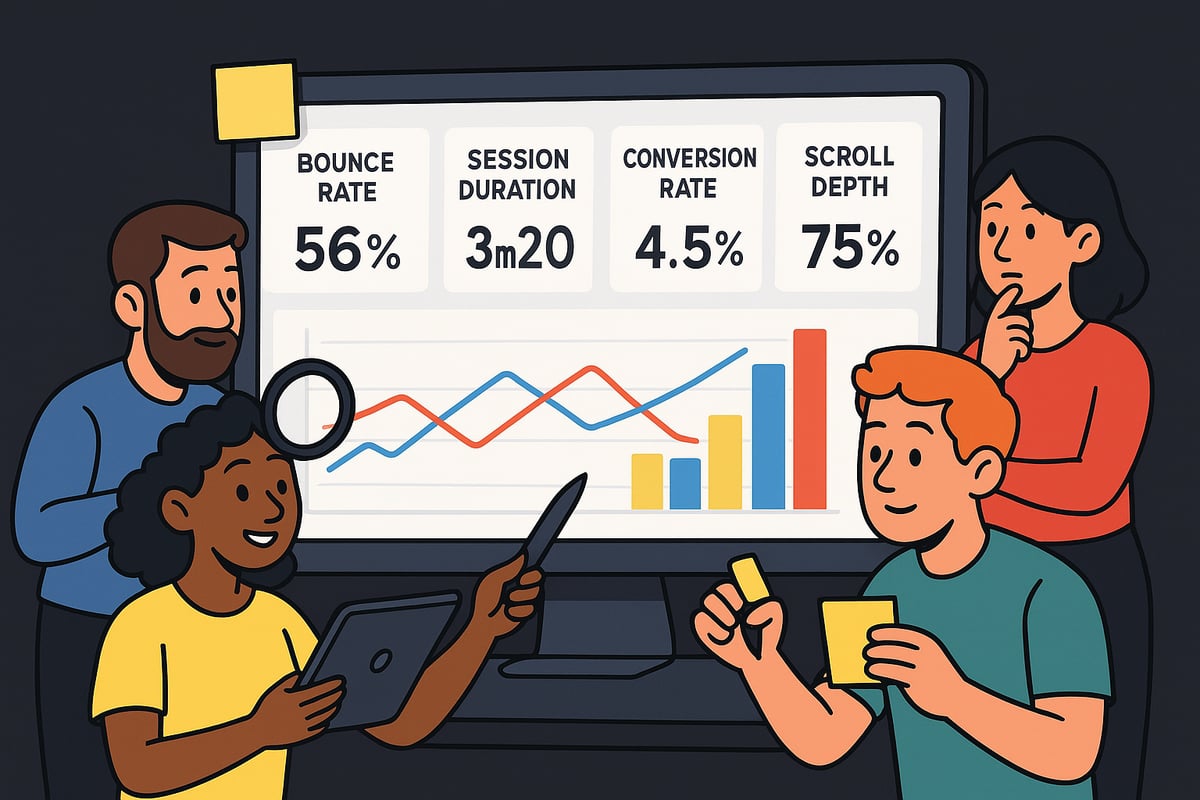
The foundation of measuring success lies in selecting the right KPIs. For design for home page, focus on bounce rate, average session duration, conversion rate, and scroll depth. Bounce rate reveals how effectively your homepage captures immediate interest. A low bounce rate suggests users are engaging with your content.
Session duration highlights how long visitors stay, reflecting the depth of their interaction. Conversion rate measures how well your homepage turns visitors into leads or customers. Scroll depth indicates how much content users explore, offering clues about information hierarchy and engagement.
Tools for Analysing Homepage Performance
To track these KPIs, modern analytics tools are indispensable. Heatmaps visually display where users click and scroll, revealing which homepage elements attract attention. Session recordings provide a play-by-play view of user journeys, uncovering friction points and usability issues.
A/B testing platforms let you experiment with different versions of your design for home page, identifying what resonates best. Regular user feedback—through surveys or feedback widgets—creates a continuous loop for improvement. These tools help ensure your homepage evolves with changing user behaviours.
Industry Benchmarks, Case Studies, and Analytics Innovation
Comparing your metrics to industry benchmarks is vital for context. High-performing homepages typically boast bounce rates below 40 percent and strong conversion rates. Analysing case studies of brands that achieved measurable growth through redesigns can inspire new strategies and validate your efforts.
For deeper insights, explore emerging analytics technologies tailored for 2026. AI-powered platforms now offer predictive analysis, real-time segmentation, and automated recommendations, streamlining optimisation efforts. For a strategic overview of what sets top-performing homepages apart, see this Expert site design guide.
Continuous Improvement and Data-Driven Decisions
Success with design for home page is not a one-time achievement. Ongoing measurement, regular A/B testing, and a willingness to adapt based on data ensure your homepage remains relevant and high-performing as digital expectations shift.
Future-Proofing Your Homepage Design Strategy
To keep your design for home page ahead of the curve in 2026, continuous adaptation is essential. Embrace change by building flexible design systems that can evolve with new technologies and shifting user needs. Encourage ongoing collaboration between design, development, and marketing teams to ensure every update supports both brand and business goals. Stay alert to competitor moves and industry innovations, using regular analysis to inform your approach. For guidance, explore essential homepage layout strategies that help future-proof your site. By committing to this proactive mindset, your homepage will remain engaging and relevant for years to come.