
Building Site Design Guide: Expert Strategies for 2025
Are you prepared for the seismic shifts transforming building site design in 2025? The industry is rapidly changing as new regulations, technological innovations, and sustainability demands reshape how projects are conceived and executed.
This guide delivers expert-backed, actionable strategies to help you master building site design for the coming year. Our mission is to equip architects, developers, and project managers with the latest trends, technologies, and best practices.
Discover how to conduct thorough site analysis, embrace sustainable solutions, leverage digital tools, navigate compliance, and anticipate future trends. Use these insights to future-proof your next building project and stay ahead in a dynamic landscape.
Step 1: Comprehensive Site Analysis and Assessment
A successful building site design begins with a meticulous and holistic site analysis. This step lays the foundation for every subsequent decision, ensuring projects run efficiently, meet compliance, and deliver long-term value. In 2025, site assessment is more critical than ever, shaped by new regulations, advanced digital tools, and a stronger focus on sustainability.

Understanding Site Context and Constraints
The first step in building site design is to thoroughly evaluate the location, topography, and existing infrastructure. Understanding these elements helps identify both opportunities and constraints early, reducing the risk of delays and costly changes later.
A comprehensive analysis includes soil testing, hydrology assessments, and environmental impact studies. These methods reveal crucial factors such as ground stability, flood risks, and habitat considerations. For example, a leading UK developer recently avoided a six-month delay by investing in early soil and drainage analysis, which uncovered hidden groundwater issues.
According to RICS, 68% of construction overruns are directly linked to inadequate site assessment. The importance of adopting a forward-thinking design strategy for 2025 cannot be overstated, as it ensures robust groundwork for any building site design project.
| Issue | Impact on Project | Frequency (UK) |
|---|---|---|
| Poor site assessment | Delays, overruns | 68% (RICS, 2024) |
In summary, investing in detailed site context studies sets the stage for resilient and future-ready building site design.
Stakeholder Engagement and Needs Analysis
Engaging stakeholders from the outset is essential for effective building site design. Identifying all relevant parties, from local authorities to future users, ensures their needs and concerns are addressed early.
Key stakeholder groups include:
- Local councils
- Community members
- End users or tenants
- Utility providers
- Environmental agencies
Gathering input can be achieved through surveys, workshops, and public consultations. For instance, incorporating local council feedback early in the planning process can streamline approvals and highlight potential planning obstacles. This collaborative approach not only builds trust but also aligns site design outcomes with broader community goals.
A well-executed needs analysis provides a solid foundation for building site design, helping avoid scope changes and ensuring all voices are heard.
Risk Identification and Mitigation Planning
Another cornerstone of building site design is the identification and mitigation of site-specific risks. Common hazards include flooding, soil contamination, and challenging access routes. Mapping these risks early allows teams to develop robust mitigation strategies.
Modern tools such as GIS mapping and digital risk assessment platforms enable detailed visualisation of potential hazards. Early risk planning has tangible benefits, with Construction News reporting that it can reduce project delays by up to 30%.
| Risk Type | Mapping Tool | Delay Reduction |
|---|---|---|
| Flooding | GIS, Modelling | 30% (avg, 2023) |
| Contamination | Surveys, GIS | |
| Access issues | Digital mapping |
By proactively addressing risks, project teams can safeguard timelines, budgets, and the overall success of the building site design.
Digital Surveying and Data Collection
Digital innovation is transforming the way building site design teams gather and use site data. Technologies such as drones, LiDAR, and 3D scanning provide rapid, accurate, and comprehensive site surveys.
These methods offer several advantages over traditional surveying:
- Faster data collection
- Greater accuracy
- Improved visualisation for stakeholders
- Enhanced safety
In 2024, 55% of UK projects incorporated drone surveys to boost efficiency and minimise manual site visits. Digital data collection also supports better decision-making throughout the design and planning process, reducing errors and rework.
Embracing digital surveying is now a best practice for building site design, ensuring projects are both future-proof and competitive in the evolving construction landscape.
Step 2: Strategic Planning and Concept Development
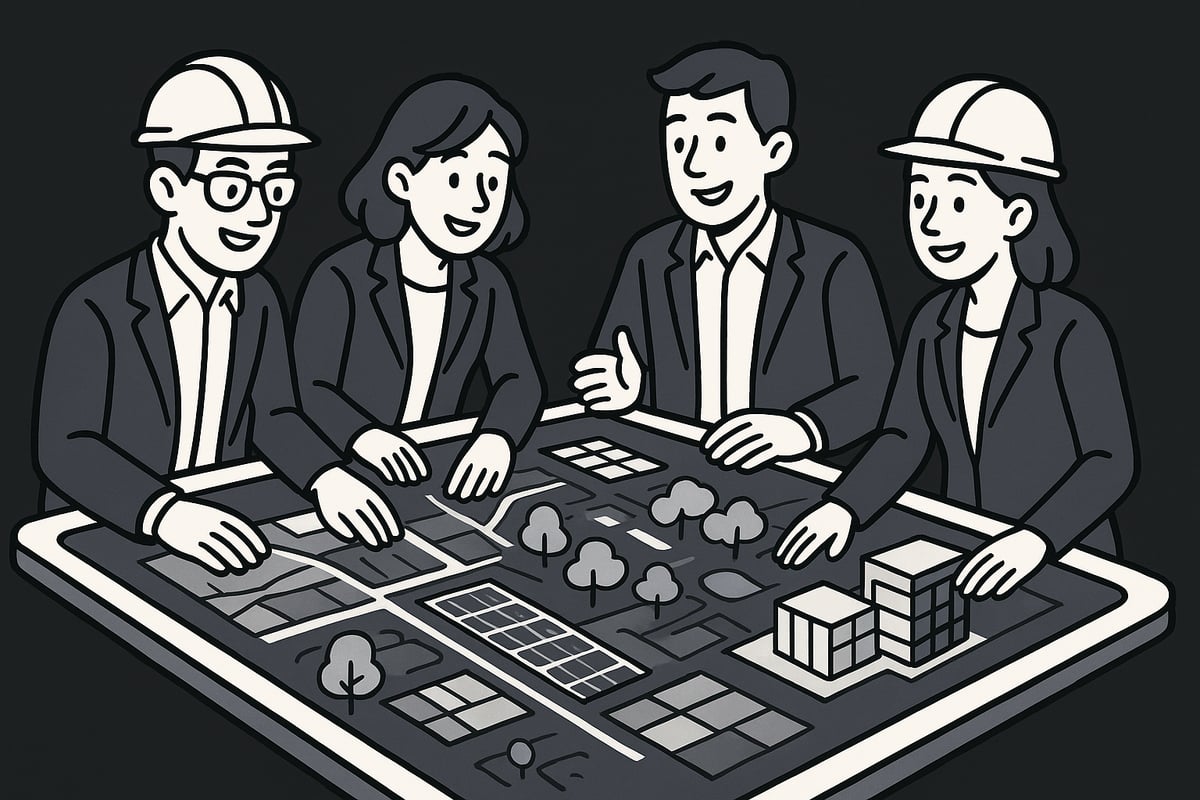
Strategic planning is the foundation of successful building site design. This step transforms analysis into actionable concepts, aligning vision, regulations, and innovation. By integrating best practices early, project teams can boost value, secure approvals, and deliver sites that thrive well into the future.
Masterplanning for Optimised Land Use
Effective masterplanning is crucial for building site design. It starts with understanding zoning requirements, site orientation, and spatial efficiency. By carefully balancing density, access, and open space, teams can enhance user wellbeing and long-term site performance.
For instance, mixed-use developments now prioritise multi-functionality, maximising value per square metre. Key principles include:
- Positioning buildings to capture natural light and ventilation
- Allocating open spaces for recreation and biodiversity
- Ensuring clear movement routes for pedestrians and vehicles
Masterplanning sets the stage for resilient, adaptable building site design that meets both present and future needs.
Integrating Sustainability from the Start
Embedding sustainability into building site design is no longer optional. Early-stage decisions shape energy use, operational costs, and environmental impact. Incorporating passive design, green infrastructure, and renewable energy sources from the outset is essential.
Energy modelling at concept stage helps ensure compliance while identifying cost-saving opportunities. BREEAM-certified sites typically achieve 18 percent lower operational costs, proving the value of sustainable strategies. Notably, UK Construction Trends 2025 highlights sustainability and digital innovation as defining features for the coming year.
By prioritising these elements, teams future-proof building site design against shifting regulations and market expectations.
Regulatory and Planning Considerations
Navigating the regulatory environment is a core aspect of building site design. Understanding UK planning frameworks, local authority policies, and national standards is vital for project success. Preparing clear, comprehensive documentation early streamlines the approval process.
Engaging with local planners at the concept stage helps identify requirements and avoid costly revisions. Early, proactive communication can accelerate timelines and prevent obstacles.
By integrating compliance into planning, teams reduce risk and support a smooth transition from concept to delivery, establishing a robust foundation for building site design.
Future-Proofing Through Flexibility
Modern building site design must account for evolving user needs and technological advancements. Designing adaptable spaces enables sites to respond to trends like remote work, electric vehicle charging, and changing community expectations.
Post-pandemic commercial developments have demonstrated the value of flexible layouts, which can be reconfigured for different uses over time. Key strategies include:
- Modular floorplans for easy adaptation
- Infrastructure for future smart technologies
- Spaces that support both collaboration and privacy
Flexibility ensures building site design remains relevant and valuable as demands shift.
Digital Collaboration and BIM Integration
Digital tools are transforming building site design, with Building Information Modelling (BIM) now a standard for major UK projects. BIM fosters transparency, coordination, and efficient decision-making among stakeholders.
According to NBS 2024, 75 percent of firms require BIM on large-scale developments. Benefits include:
- Real-time updates to design changes
- Enhanced clash detection and risk management
- Improved project timelines and cost control
Embracing digital collaboration ensures building site design is aligned, efficient, and ready for future challenges.
Step 3: Sustainable and Resilient Site Design
Sustainable and resilient building site design is no longer a luxury—it is a necessity for projects in 2025 and beyond. As the climate crisis intensifies, developers and architects are prioritising low-impact, future-proofed solutions that enhance value, reduce costs, and deliver long-term benefits for users and communities.
Low-Impact Development and Biodiversity
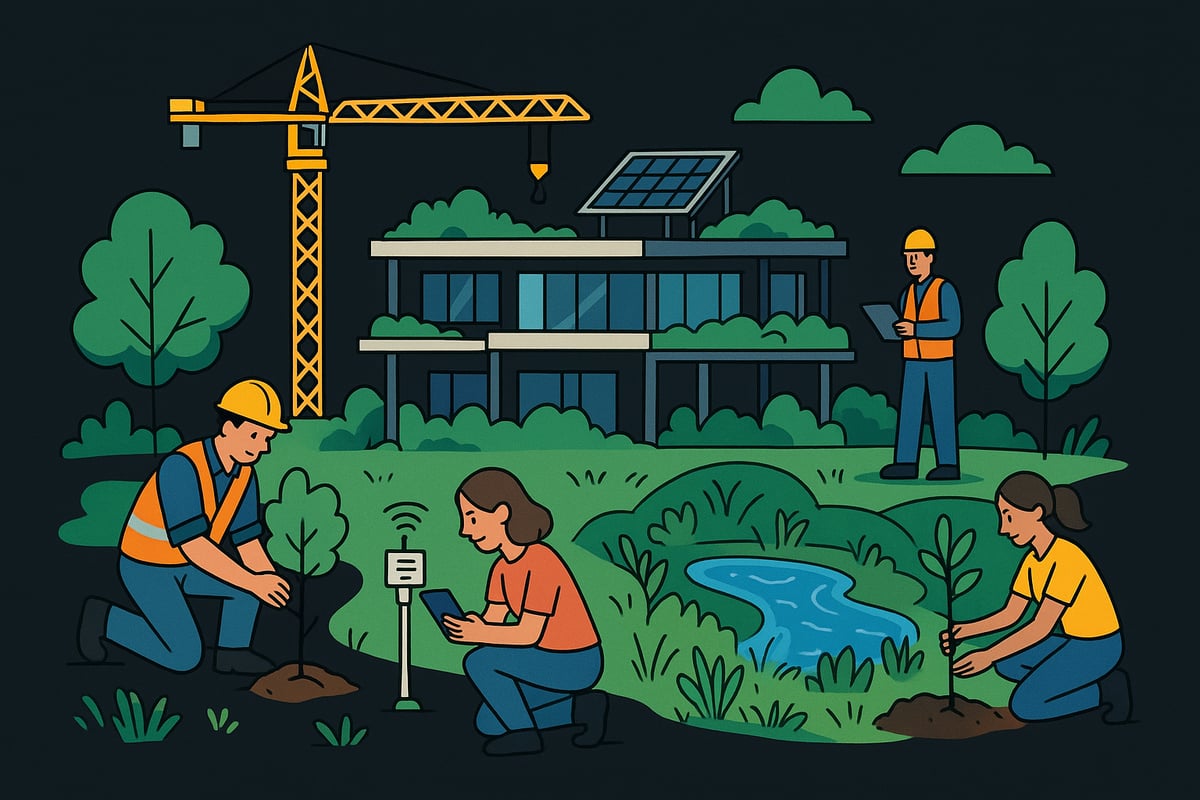
Low-impact development is central to building site design that enhances both ecology and urban life. Techniques like Sustainable Urban Drainage Systems (SUDS) manage stormwater naturally, reducing flood risks and supporting local habitats.
Green corridors and roofs play a crucial role in boosting biodiversity. A recent urban project increased species diversity by 40 percent by integrating pollinator-friendly roofs and wildlife habitats throughout the site.
Key actions for biodiversity include:
- Mapping existing ecological assets before construction
- Selecting native planting schemes
- Creating continuous green pathways for wildlife movement
These strategies not only meet regulatory requirements but also deliver measurable value to both the environment and the wider community.
Energy Efficiency and Net Zero Targets
Energy efficiency must be embedded at the earliest stages of building site design. Reducing both embodied and operational carbon is now a market expectation. Integrating solar panels, wind turbines, and ground-source heat pumps helps deliver net-zero-ready sites.
According to Savills, net-zero-ready developments command up to 20 percent higher valuations. Early-stage energy modelling enables teams to balance compliance, sustainability, and cost efficiency.
To achieve net zero:
- Opt for passive design principles to minimise energy demand
- Prioritise renewable energy sources on site
- Monitor energy performance throughout construction and operation
These steps ensure building site design aligns with future regulatory demands and market preferences.
Climate Adaptation and Resilience
With climate risks escalating, resilient building site design is essential. Flooding, overheating, and extreme weather events can all undermine project success if not addressed early.
Site layouts should be informed by advanced climate modelling, ensuring that drainage, orientation, and landscaping mitigate future risks. Sixty percent of UK councils now require climate resilience assessments as part of planning applications.
Practical measures include:
- Elevating key infrastructure above flood levels
- Maximising shade and ventilation to reduce overheating
- Selecting resilient landscaping to withstand drought or heavy rainfall
A proactive approach to resilience helps secure project approvals and protects long-term investment.
Material Selection and Circular Economy
Material choices have a significant impact on the sustainability of building site design. Selecting low-carbon, recycled, and locally sourced materials reduces environmental impact and supports the circular economy.
Modular construction methods can cut site waste by up to 70 percent, while also enabling faster, cleaner builds. Embracing the circular economy means designing for disassembly and reuse, lowering lifecycle costs.
Consider these strategies:
- Specify materials with Environmental Product Declarations (EPDs)
- Use recycled aggregates and timber from certified sources
- Plan for future material recovery and repurposing
Such decisions help projects meet both environmental targets and client expectations.
Health, Wellbeing, and Social Value
Prioritising health, wellbeing, and social value in building site design delivers benefits beyond compliance. Ample daylight, high indoor air quality, and support for active travel are now standard expectations.
Community engagement from the outset can significantly boost site value and approval rates. One recent case study saw a 15 percent increase in local support after co-design workshops and open consultations.
To maximise social value:
- Design accessible, inclusive public spaces
- Incorporate green routes and cycling facilities
- Engage with local stakeholders to tailor amenities
These approaches build stronger communities and reinforce the reputation of project teams.
Smart Technologies for Sustainable Sites
Smart technologies are transforming building site design, making sustainability measurable and manageable. IoT sensors, smart lighting, and real-time monitoring systems optimise resource use and reduce maintenance costs by up to 15 percent (Arup, 2023).
Digital tools also support data-driven decisions, ensuring environmental and operational targets are met. For a deeper dive into how artificial intelligence is shaping sustainable site management, see AI solutions in site design.
Key smart strategies include:
- Installing energy and water monitoring sensors
- Automating lighting and HVAC for efficiency
- Using digital dashboards to track sustainability KPIs
By integrating these innovations, building site design becomes more adaptive, resilient, and aligned with the demands of 2025.
Step 4: Leveraging Digital Tools and Innovation
Digital tools are reshaping the landscape of building site design, offering new pathways to efficiency, accuracy, and collaboration. As the industry adapts to rapid change, professionals must embrace innovation to stay ahead. In this step, we explore the essential technologies and strategies that will future-proof your building site design in 2025.

Advanced Visualisation and Simulation
Visualisation tools such as augmented reality (AR) and virtual reality (VR) are now integral to building site design. These technologies allow teams and stakeholders to immerse themselves in 3D models, making it easier to spot issues and validate design choices before construction begins.
Benefits of AR/VR in site design include:
- Real-time walkthroughs for client engagement
- Early detection of spatial conflicts
- Enhanced accuracy in decision-making
Virtual simulations accelerate sign-off processes and reduce costly revisions. By giving everyone a clear vision, visualisation tools help projects move from concept to reality with greater confidence.
Automation and AI in Site Design
Automation and artificial intelligence are redefining how building site design is approached. AI-powered generative design tools analyse thousands of options, optimising layouts for efficiency, cost, and sustainability. Automation accelerates repetitive tasks, freeing up time for creative problem-solving.
A recent AI in UK Construction report highlights a 25% reduction in design phase duration on major projects using AI. This advantage means teams can respond faster to changes and deliver higher-quality outcomes.
Construction Technology and Modern Methods
Modern construction technologies are transforming building site design by enabling faster, safer, and more sustainable builds. Prefabrication and modular construction streamline on-site assembly, while 3D printing allows for rapid prototyping and unique architectural features.
Key trends include:
- Robotics for automated material handling
- Modular units for flexible layouts
- 3D printing for bespoke elements
With these methods, project timelines shrink and waste is significantly reduced.
Data-Driven Decision Making
Harnessing data is now critical for effective building site design. Real-time dashboards track site progress, costs, and environmental impacts, giving project managers immediate insights for smarter decisions.
A comparison of digital data tools:
| Tool Type | Benefit | Example Use Case |
|---|---|---|
| Dashboards | Real-time monitoring | Progress and budget checks |
| IoT Sensors | Environmental tracking | Air quality, energy usage |
| BIM Integration | Cross-team collaboration | Clash detection |
Data-driven projects consistently experience fewer budget overruns and smoother delivery.
Cybersecurity and Data Protection
With the rise of digital collaboration in building site design, safeguarding sensitive data is essential. Cybersecurity protocols such as ISO 27001 help protect project files, client information, and digital assets from threats.
Best practices include:
- Secure cloud storage
- Regular staff training
- Access controls for sensitive documents
By embedding robust data protection measures, teams can innovate with confidence, knowing their digital systems are secure.
Step 5: Navigating Compliance, Safety, and Regulatory Changes
The landscape of building site design is changing rapidly as new regulations and standards come into force across the UK. Staying compliant is essential for both legal and practical reasons. The following sections break down the most important updates for 2025, offering practical advice to help you keep your projects on track.
Evolving UK Building Regulations for 2025
Building site design faces a significant shift with the introduction of new UK building regulations, effective from October 2025. These changes cover fire safety, accessibility, and ambitious energy efficiency targets, all of which are set to shape site layouts and construction methods.
It is essential to stay informed about the Building Regulations Amendment 2025 to ensure your building site design meets the latest requirements. Early adoption of these standards helps avoid costly redesigns and approval delays.
Health and Safety Best Practices
Health and safety remain at the core of successful building site design. The latest HSE guidance emphasises proactive safety planning from the earliest project stages, integrating risk assessments directly into the design process.
Safety-by-design principles, such as clear site circulation and robust fire escape routes, help reduce incidents. According to HSE, sites that embed safety early see up to 35% fewer accidents. Prioritising these practices in building site design demonstrates a commitment to both compliance and workforce wellbeing.
Accessibility and Inclusive Design
Modern building site design must meet Part M of the Building Regulations and the Equality Act, ensuring environments are accessible to all. This includes step-free access, tactile surfaces, and sensory-friendly features that support diverse user needs.
Inclusive design not only fulfils legal obligations but also enhances the value and usability of sites. Early integration of these elements in building site design streamlines planning approvals and increases long-term site appeal.
Environmental and Planning Compliance
Environmental compliance is now a non-negotiable element of building site design. Effective management of waste, water, and emissions is necessary to meet stricter planning conditions and new environmental laws.
With penalties for non-compliance rising by 20% in 2024, site teams must implement clear policies and monitoring systems. Prioritising sustainable practices in building site design supports both regulatory compliance and positive community impact.
Future Trends and Expert Predictions for Building Site Design
The future of building site design is being shaped by a wave of innovation, sustainability goals, and changing user demands. As we approach 2025, industry leaders are focusing on smarter, greener, and more adaptive approaches. Let us explore the key trends that will define the next era of building site design.
Embracing Smart Cities and Connected Infrastructure
Building site design is increasingly integrated within smart city ecosystems. Developments in London and Manchester are leading the way, using IoT sensors and data platforms for seamless connectivity. Sites now feature smart lighting, energy monitoring, and real-time traffic management to enhance urban efficiency.
Key features of connected sites include:
- IoT-enabled asset tracking
- Automated energy management
- Digital branding solutions for sites that foster engagement and visibility
By adopting these smart strategies, building site design teams can future-proof their projects and deliver greater long-term value to stakeholders.
The Rise of Regenerative Design
The shift from sustainability to regeneration is redefining building site design. Rather than simply minimising harm, regenerative sites actively restore ecosystems and support communities. UK pilot projects have demonstrated how restoring natural habitats and integrating green corridors can deliver net-positive outcomes.
Benefits of regenerative site design:
- Increased biodiversity
- Improved stormwater management
- Enhanced social value and community wellbeing
Incorporating regenerative principles into building site design positions projects to exceed both regulatory and market expectations.
AI and Automation Shaping the Next Decade
Artificial intelligence is set to transform building site design. Predictive analytics are now used for site selection, risk assessment, and performance optimisation. AI-powered tools streamline project workflows, while automation reduces manual tasks and human error.
Recent surveys reveal that 80 percent of major UK developers plan to invest in AI by 2026. As AI capabilities grow, building site design processes will become faster, more accurate, and more responsive to emerging challenges.
Evolving User Expectations and Market Demands
User expectations are evolving rapidly, especially in the wake of recent global events. There is a growing demand for flexible, healthy, and tech-enabled spaces. Tenant surveys indicate that 60 percent of users prefer sites prioritising wellness features such as natural light, air quality, and active transport options.
Building site design must now deliver adaptable environments that support hybrid work, digital connectivity, and wellbeing. Sites that meet these expectations will enjoy increased market appeal and higher occupancy rates.
Skills, Collaboration, and Workforce of the Future
The next generation of building site design relies on multidisciplinary collaboration and digital fluency. Cross-functional teams are leveraging advanced tools to deliver award-winning projects. Upskilling in digital platforms, sustainable practices, and stakeholder engagement is essential for long-term success.
Case studies, such as the Muse eCommerce site, highlight the impact of integrated collaboration on project outcomes. Investing in workforce development ensures that building site design remains innovative, resilient, and ready for the challenges of tomorrow.