
Essential Guide to Digital Design Experience in 2026
In 2026, digital design experience is no longer a luxury, it is the cornerstone of successful brands and loyal customers. As digital touchpoints multiply and user expectations soar, brands must prioritise seamless, human-centred design.
This essential guide unpacks the evolving world of digital design experience. You will discover the latest trends, actionable strategies, and practical frameworks, all backed by real-world examples.
Ready to future-proof your brand? Dive in and unlock the competitive advantage that only exceptional digital design experience can provide.
Understanding Digital Design Experience in 2026
In 2026, digital design experience is at the heart of every successful interaction between brands and customers. As technology evolves, so does the expectation for seamless, memorable, and consistent digital journeys. To thrive, brands must understand and master the full scope of digital design experience, ensuring every touchpoint delivers value and builds trust.
Defining Digital Design Experience
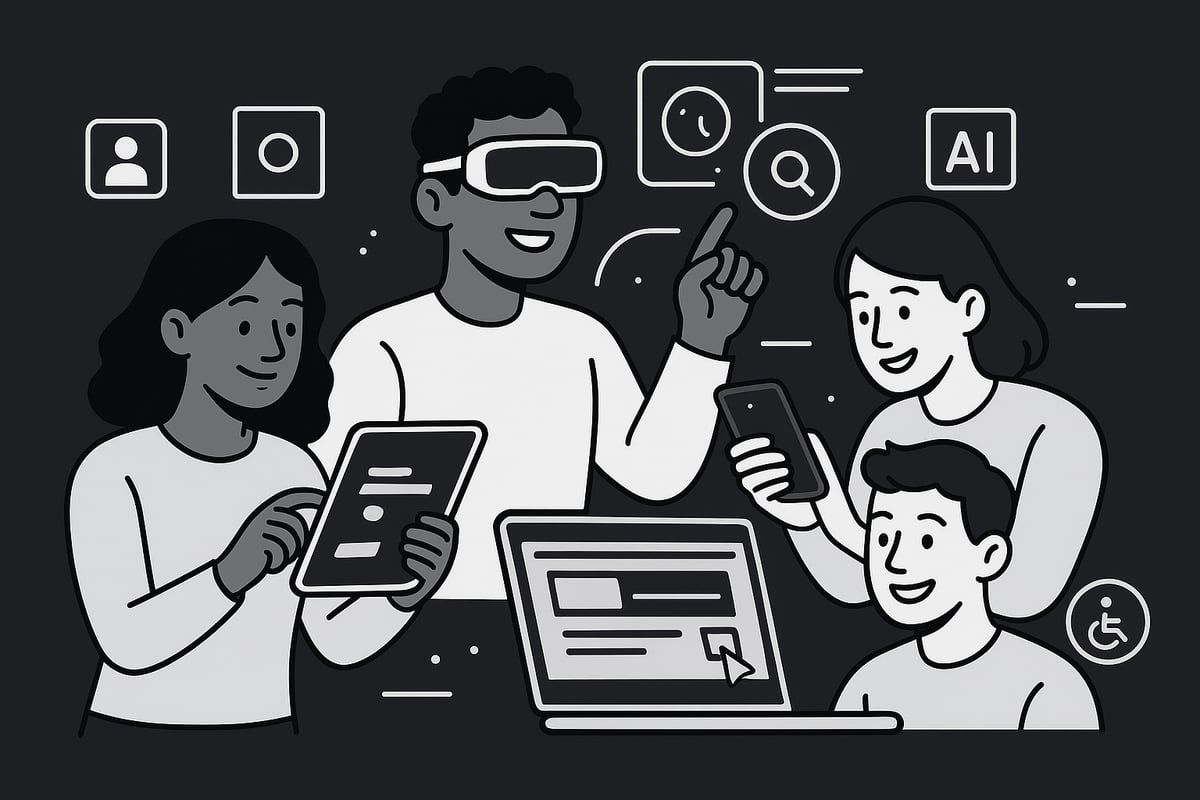
Digital design experience refers to the holistic perception users develop as they engage with a brand across all digital touchpoints. It is not limited to a website or an app, but extends to every interaction, from web portals to smart devices and physical-digital environments.
In 2026, the boundaries between user interface (UI), user experience (UX), and customer experience (CX) have blurred. Brands now adopt a unified approach, ensuring that every element works together for a consistent and seamless journey.
Consistency across devices and platforms is essential. Users expect to move from mobile to desktop, or from digital to physical environments, without disruption. Digital design experience is a key driver of customer loyalty and positive business outcomes.
For instance, Netflix excels by integrating UI, UX, and CX, allowing users to enjoy a frictionless streaming journey, regardless of device.
Key Elements of Modern Digital Design Experience
Modern digital design experience is built upon three pillars: UI, UX, and CX.
- User Interface (UI): Clean, attractive, and intuitive visuals that make content easy to interpret.
- User Experience Design (UX): Usability, accessibility, and responsiveness ensure satisfaction at every interaction.
- Customer Experience (CX): Focuses on the lifetime relationship, personalisation, and omnichannel support.
These elements do not exist in isolation. The interplay between UI, UX, and CX creates a holistic digital design experience that resonates with customers.
A recent study found that 89.2% of companies conduct user research before the design stage, highlighting the importance of understanding user needs from the outset.
| UI | UX | CX |
|---|---|---|
| Visual clarity | Usability | Personalisation |
| Brand consistency | Accessibility | Omnichannel support |
| Intuitive layout | Responsiveness | End-to-end satisfaction |
E-commerce platforms provide a strong example. They blend UI, UX, and CX to drive conversions, offering intuitive navigation, fast response times, and tailored support. For a deep dive into how digital branding strategies underpin these experiences, see this Digital branding solutions guide.
The Evolution: 2023 vs 2026
Since 2023, digital design experience has undergone significant transformation. User expectations have become more sophisticated, demanding not only efficiency but also meaningful engagement.
AI and automation now play a key role in shaping interactions, while immersive technologies such as AR, VR, and MR create new dimensions for engagement. There is also a heightened focus on ethical, inclusive, and sustainable design practices.
Retail and public spaces increasingly feature touchless and voice interfaces, enabling safer and more accessible experiences for all users. The digital design experience of 2026 is defined by adaptability and inclusivity, responding to rapid technological and societal change.
Why Digital Design Experience is Critical for Business Success
A superior digital design experience directly impacts customer satisfaction, retention, and advocacy. In saturated markets, it sets brands apart, turning ordinary interactions into memorable moments.
Digital design experience supports business agility by enabling rapid adaptation to new technologies and shifting customer needs. Companies that excel in this area enjoy higher customer lifetime value and stronger loyalty.
For example, businesses with outstanding digital experiences consistently outperform competitors, as customers return, recommend, and remain engaged with the brand.
Core Principles and Concepts Shaping Digital Design Experience
Mastering digital design experience in 2026 means embracing a set of core principles that champion empathy, clarity, ethical practice, and cultural intelligence. These concepts guide teams to create digital journeys that are not only functional but also meaningful and memorable for every user.
Human-Centred Design
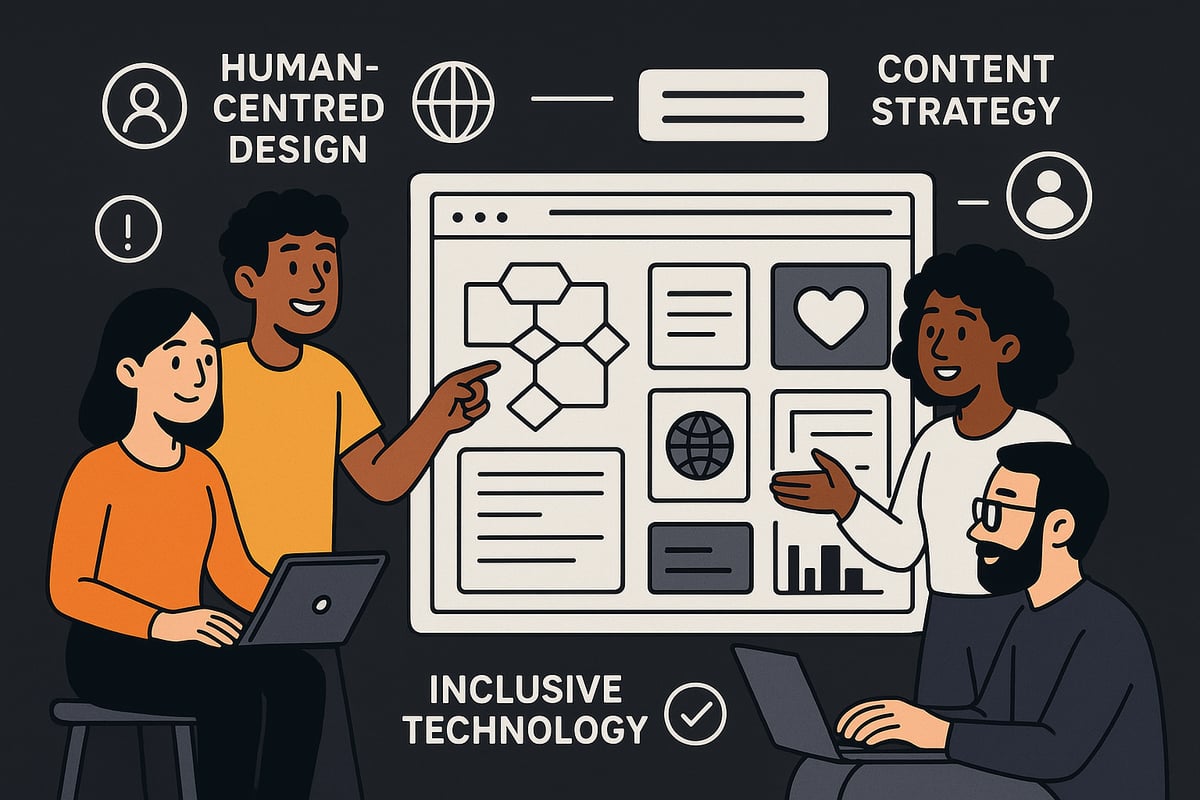
At the heart of digital design experience lies a human-centred approach, built on empathy and real-world understanding. Designers must immerse themselves in users' lives, gathering insights through research, co-creation, and frequent testing.
In fintech apps, for example, human-centred design ensures accessibility for users of all abilities, fostering trust in sensitive transactions. As Mario Maruffi states, “To understand design is to understand human problems.” This philosophy anchors every successful digital design experience.
Information Architecture and Findability
Information architecture is the backbone of digital design experience, making content easy to find and navigate. It rests on four pillars:
- Organisation: Logical grouping of information
- Labelling: Clear, consistent terminology
- Navigation: Simple pathways for movement
- Search: Effective search functionality
Peter Morville reminds us that findability precedes usability. Online learning platforms that streamline navigation empower users to focus on learning, rather than searching, enhancing the overall digital design experience.
Ethical Design: Avoiding Dark Patterns
Ethical design is integral to digital design experience, requiring brands to avoid manipulative practices known as dark patterns. These include:
| Dark Pattern Type | Example | Impact |
|---|---|---|
| Roach motel | Hard to cancel | User frustration, churn |
| Disguised ads | Hidden links | Erodes trust, confusion |
Regulators and consumers in 2026 are increasingly vigilant, with dark patterns cited as a leading cause of abandonment. Ethical digital design experience builds trust and safeguards long-term brand reputation.
Familiarity and Intuitive Interactions
Balancing innovation with familiarity is crucial in digital design experience. Designers draw on established mental models, using visual cues from skeuomorphism, flat design, or neumorphism to make interactions predictable.
Smart home apps exemplify this, offering intuitive controls that feel instantly recognisable. By aligning design choices with user expectations, digital design experience becomes both innovative and comfortable.
Ethnography and Cultural Sensitivity
Understanding the diverse contexts in which users engage with digital design experience is essential. Ethnographic research uncovers cultural, emotional, and situational nuances, allowing teams to adapt design for relevance and inclusivity.
Global e-commerce platforms, for instance, succeed by localising interfaces, languages, and imagery. Culturally sensitive digital design experience meets users where they are, building deeper connections.
The Role of Content in Digital Design Experience
Content is the lifeblood of digital design experience, shaping how users perceive and interact with digital products. Story-driven, interactive, and dynamic content boosts engagement, especially in mixed-reality environments.
Designers and content creators must collaborate closely to craft experiences that inform and inspire. For a deeper dive into content strategy, see the Definitive content for website design. Narrative-driven onboarding in SaaS products is a prime example of how content elevates digital design experience.
The Digital Design Experience Framework: Steps for 2026
Mastering digital design experience in 2026 requires a structured, actionable framework. The following seven steps provide a roadmap for businesses and designers looking to create standout, user-centred digital experiences that endure in a fast-evolving landscape.
Step 1: Deep User Research and Persona Development
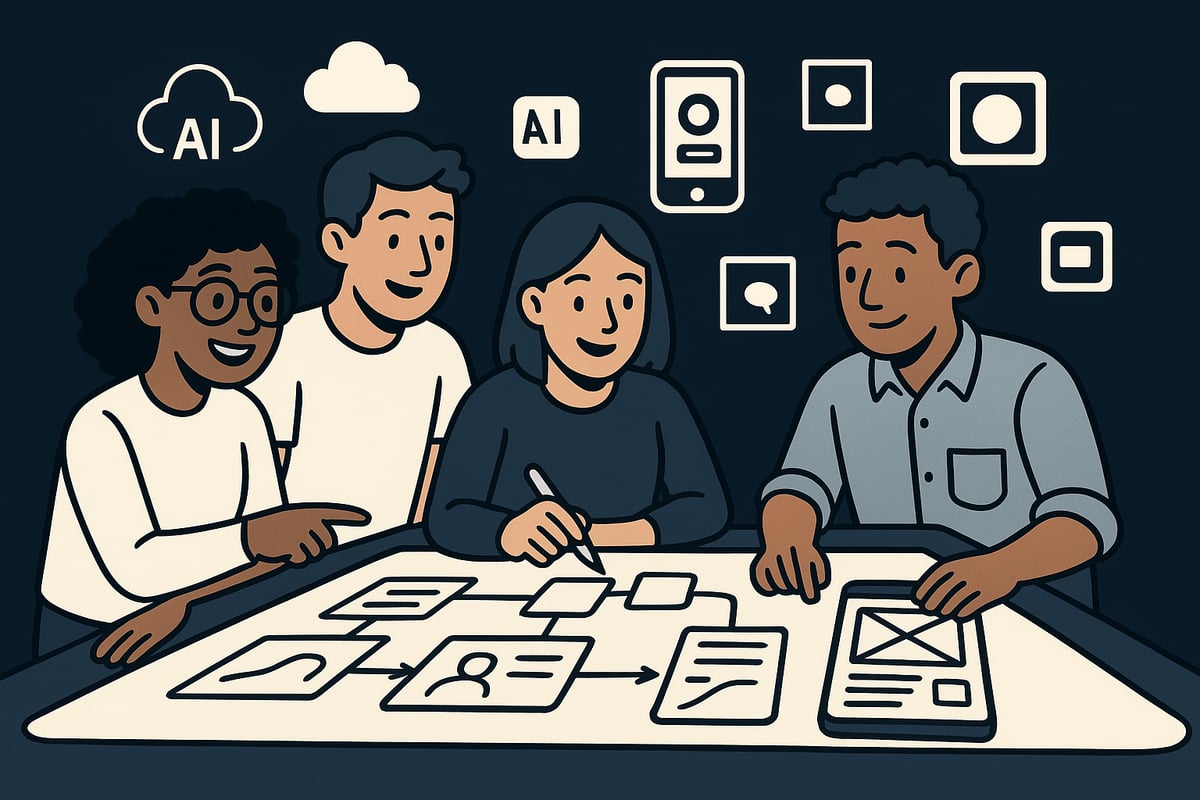
A successful digital design experience starts with understanding your audience at a granular level. Conduct qualitative and quantitative research, including interviews, analytics, and ethnography, to uncover real user needs and pain points.
Develop detailed personas that represent your target groups, capturing their goals, motivations, and frustrations. Mapping emotional triggers and expectations ensures every design decision aligns with user realities. In healthtech platforms, persona-driven design leads to more empathetic and effective solutions.
For a deeper dive into actionable research strategies, explore this Expert guide to design strategies.
Step 2: Customer Journey Mapping and Touchpoint Analysis
Mapping the entire customer journey is crucial for a cohesive digital design experience. Visualise every interaction across digital and physical touchpoints, from discovery to post-purchase.
Identify moments of delight, friction, and dropout. Use journey mapping tools and frameworks to spot gaps and prioritise improvements. In retail banking, omnichannel journey mapping has revealed critical pain points and opportunities for personalisation, leading to increased user satisfaction and loyalty.
Step 3: Designing for Omnichannel Consistency
Delivering a seamless digital design experience means ensuring consistency across web, mobile, physical spaces, and emerging channels like voice or AR. Users expect the same brand identity, navigation logic, and quality regardless of platform.
Over 80 percent of companies now invest in omnichannel strategies to meet these expectations. Hybrid workspaces that unify digital and physical experiences demonstrate how consistent touchpoints build trust and engagement.
Step 4: Prototyping, Testing, and Iteration
Prototyping is essential in validating ideas early and reducing costly mistakes. Build interactive prototypes to simulate real use cases and gather feedback from actual users.
Usability testing uncovers friction points, while A/B testing helps refine flows for optimal results. Iterative cycles allow teams to adapt quickly, as seen in e-commerce, where continuous testing of checkout processes leads to higher conversion rates and fewer abandoned baskets.
Step 5: Implementation with Scalable, Future-Proof Technologies
Implementing your digital design experience with scalable, secure, and adaptable technologies is non-negotiable in 2026. Leverage AI, automation, and modular design systems to future-proof your solutions.
Ensure accessibility and security from the outset, integrating APIs and cloud services for flexibility. AI-driven personalisation in streaming platforms, for example, tailors content in real time, enhancing user engagement and satisfaction.
Step 6: Continuous Optimisation and Analytics
A leading digital design experience is never static. Use analytics to monitor user behaviour and experience quality continuously. Real-time feedback and data-driven insights enable ongoing improvements.
Employ A/B and multivariate testing to experiment with new features and refine existing ones. SaaS providers regularly optimise their interfaces, resulting in enhanced usability and customer retention.
Step 7: Governance, Ownership, and Cross-Functional Collaboration
Strong governance ensures that digital design experience remains consistent and aligned with business goals. Assign clear ownership of the experience across marketing, sales, IT, and design teams.
Promote transparency in brand messaging and foster collaboration between all stakeholders. Social media management benefits from command and control structures, ensuring unified communication and rapid response to user needs.
By following this seven-step framework, organisations can build digital design experience strategies that are resilient, adaptive, and centred on real user value.
Emerging Trends and Technologies Defining 2026
The landscape of digital design experience is undergoing rapid transformation as we approach 2026. Brands must stay ahead by embracing new technologies and evolving user expectations. For a comprehensive overview of trends shaping this future, see Top Digital Design Trends to Watch in 2026. Let us explore the five most significant trends redefining how people interact with digital environments.
AI and Automation in Design
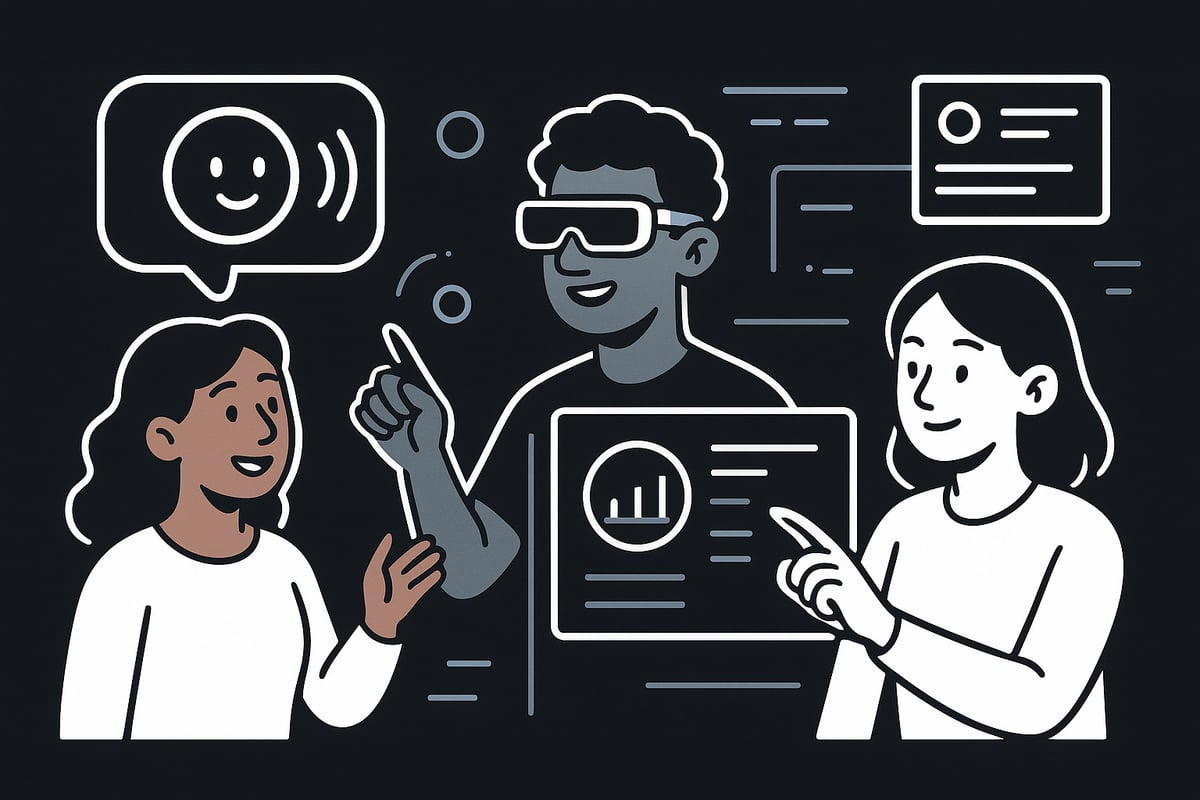
AI is revolutionising digital design experience by automating repetitive tasks and enabling personalisation at scale. AI-powered design tools help teams prototype rapidly, generate content, and streamline user testing. For instance, chatbots and AI recommendation engines are now standard for delivering instant support and tailored suggestions.
Automation also reduces friction in the customer journey. With real-time data analysis, digital platforms can adapt layouts and interactions, enhancing satisfaction. As AI continues to mature, the digital design experience will become more intuitive and predictive, meeting user needs proactively.
Immersive Experiences: AR, VR, and MR
Augmented reality, virtual reality, and mixed reality are making digital design experience more engaging than ever. These technologies enable brands to create interactive spaces that bridge the gap between physical and digital environments. In retail, AR is used for virtual product try-ons, while education platforms leverage VR for immersive learning simulations.
Smart cities are also adopting digital placemaking, where public spaces feature interactive installations and ambient content. As these tools become more accessible, digital design experience will offer richer, multisensory journeys that captivate and inform users.
Touchless, Voice, and Gesture Interfaces
Touchless interaction is quickly becoming a cornerstone of digital design experience. Voice assistants and gesture controls provide hands-free access, which is crucial for accessibility and hygiene, especially in public settings. Voice-activated kiosks in transport hubs, for example, allow travellers to access information without physical contact.
Gesture recognition is also being integrated into smart home devices and wearables. These developments ensure that digital design experience remains inclusive, adaptable, and future-ready as users demand safer and more convenient ways to interact with technology.
Sustainable and Inclusive Design
Sustainability and inclusivity are now fundamental to digital design experience. Designers are prioritising eco-friendly materials, energy-efficient code, and digital accessibility features. This includes optimising for low-energy devices and designing interfaces for neurodiverse users or those with disabilities.
Government websites, for example, are leading the way with robust accessibility standards and multilingual support. As expectations rise, digital design experience must reflect ethical responsibility, ensuring no user is left behind while reducing environmental impact.
Data Privacy, Security, and Ethical Considerations
Trust is central to digital design experience. Organisations are embedding privacy-by-design principles, ensuring transparency in data collection and usage. Regulations such as GDPR and evolving AI ethics standards require brands to be vigilant in protecting user information.
Privacy-first personalisation is gaining traction, allowing users to control their data while still enjoying tailored experiences. As digital design experience matures, balancing innovation with ethical responsibility will be key to earning and maintaining user trust.
Real-World Examples and Case Studies
Organisations leading in digital design experience are redefining how people interact, transact, and connect with brands. These case studies illustrate how a strategic approach to digital design experience drives real-world business outcomes and sets new standards for customer engagement.
Netflix: Seamless Digital Experience Across Devices
Netflix exemplifies digital design experience by creating a unified journey across TVs, mobiles, and desktops. Their approach combines intuitive user interfaces, responsive layouts, and consistent branding, ensuring viewers can start watching on one device and seamlessly continue on another.
The strength of Netflix’s digital design experience lies in how it blends UI, UX, and CX. Personalised recommendations, easy search, and rapid playback reduce friction, while helpful support is always accessible. This consistent attention to digital design experience has contributed to high subscription retention rates and strong brand loyalty. For further insight into the future of digital design experience, see Web Design Trends 2026.
AT&T Discovery District: Immersive Digital Placemaking
AT&T Discovery District demonstrates the power of digital design experience in public spaces. The District blends physical and digital environments, featuring interactive displays, ambient content, and mobile integration that invite exploration and participation.
Visitors engage with the digital design experience through touchless kiosks and immersive installations, making each visit memorable and interactive. The result is not just increased foot traffic but deeper brand engagement, as people associate AT&T with innovation and community. Such immersive digital design experience sets a benchmark for placemaking in urban environments.
Deloitte Greenhouse: Connected Workplace Environments
Deloitte Greenhouse reimagines the digital design experience within the workplace. Through ubiquitous connectivity, touchless access, and dynamic content, employees enjoy seamless transitions between physical and digital workflows.
The space’s digital design experience is tailored to foster collaboration, productivity, and well-being. Data-driven insights help refine layouts and content, while collaborative tools bring teams together, whether remote or on-site. The impact is measurable: higher employee satisfaction and greater operational efficiency, all rooted in an advanced digital design experience.
E-commerce Platform: Omnichannel Customer Journey
Modern e-commerce platforms excel in digital design experience by mapping the entire customer journey from discovery to post-purchase. These platforms ensure consistent branding and personalisation across web, mobile, and social channels.
Features like streamlined checkout, real-time support, and proactive order updates reinforce trust and drive conversions. The digital design experience here is not static but evolves through analytics and user feedback. To explore how emerging trends shape this landscape, review 10 Key Trends in User Experience for 2026. Ultimately, the result is higher customer lifetime value and sustained growth.
Building a Future-Ready Digital Design Experience Team
To deliver a truly outstanding digital design experience in 2026, organisations must assemble teams that blend creativity, technical skill, and business insight. The landscape demands more than traditional designers or developers. Teams must adapt rapidly, collaborate seamlessly, and anticipate emerging trends.
Skills and Roles Essential for 2026
A future-ready digital design experience team requires hybrid talent. Professionals must be comfortable crossing boundaries between design, technology, and business strategy.
Key roles include:
- Experience strategists to align design with business goals
- Content producers skilled in storytelling and multimedia
- Technologists who understand both code and user needs
- Data analysts for actionable insights
Cross-functional collaboration is critical. Teams must also commit to continuous learning, adapting to new platforms and tools as 6 Trends Shaping Design in 2026 highlight. The digital design experience depends on individuals who bring diverse expertise and are open to new methodologies.
Tools and Technologies Powering Modern Teams
Modern teams leverage a suite of advanced technologies to deliver a superior digital design experience. AI-driven design tools accelerate prototyping and automate repetitive tasks, while analytics suites provide deep user insights.
Popular tools include:
- Prototyping platforms for rapid iteration
- Real-time collaboration tools for remote and hybrid work
- Analytics dashboards for experience measurement
Cloud-based environments now enable real-time co-design sessions, connecting global talent seamlessly. Staying current with essential mobile website design tips, as detailed in Essential mobile website design tips, ensures teams can address the increasing complexity of digital touchpoints.
Fostering a Culture of Innovation and Experimentation
Encouraging experimentation is vital for a high-performing digital design experience team. Rapid prototyping and iterative testing are now standard practices. Teams that embrace failure as a learning opportunity foster creativity and resilience.
Many organisations establish experience labs or innovation hubs to support this mindset. These spaces provide the tools and freedom to test bold ideas. By making innovation part of everyday work, teams remain agile and responsive to changing user expectations in digital design experience.
Partnering for Success: When to Seek External Expertise
Sometimes, the scope of a project demands expertise beyond the in-house team. Knowing when to partner with agencies or specialists is crucial for achieving complex digital design experience goals.
Key criteria for selecting partners:
- Proven track record in digital transformation
- Alignment with organisational values and vision
- Ability to scale and adapt quickly
Collaborations for large-scale projects, such as launching new platforms or integrating advanced technologies, often benefit from external input. Strategic partnerships ensure that the digital design experience remains innovative and competitive.