
Your Web Design Guide for 2025: Essential Tips and Trends
Is your website ready for 2025? The digital landscape is evolving at a record pace, and keeping up is crucial for success. Every year, new trends and technologies reshape expectations, making it more important than ever to review your web design approach.
An up-to-date website is more than just a visual upgrade. It builds credibility, increases conversions, and keeps users engaged. By staying ahead, you set your brand apart from the competition.
In this guide, you will discover essential strategies to future-proof your web presence. From AI integration and accessibility to immersive visuals and conversion optimisation, we will cover everything you need to make your web design thrive in 2025.
The Foundations of Modern Web Design in 2025
Staying ahead in your web design approach for 2025 means mastering the essential foundations. These pillars guide not only how users interact with your site but also how search engines rank it. Let us explore the core elements shaping your web design success this year.
Defining User-Centric Design
User-centricity sits at the heart of your web design for 2025. Today’s websites thrive on intuitive navigation and seamless journeys, ensuring visitors reach their goals effortlessly. To achieve this, you must understand user personas and map out their behaviours.
Personalisation is now a standard, not a luxury. By leveraging heatmap analysis, you can see exactly where users click and linger, letting data guide your layout decisions. This approach minimises friction and boosts satisfaction.
Did you know that 88% of online consumers are less likely to return to a site after a bad experience? Your web design must prioritise clarity and relevance to keep visitors engaged and returning.
Mobile-First and Responsive Design
Mobile traffic now accounts for over 60% of global site visits, making mobile-first thinking essential for your web design. Responsive frameworks and adaptive layouts are no longer optional—they are the baseline.
Google’s mobile-first indexing means your web design must perform flawlessly on all devices to maintain SEO strength. Brands that prioritise mobile user experience often see significant increases in conversions and engagement.
A success story is a retailer optimising for mobile, leading to higher sales and happier customers. Making your web design adaptable ensures you reach your audience wherever they are.
Accessibility and Inclusivity
Accessibility is both a legal and ethical imperative in your web design. Compliance with WCAG 2.2 standards ensures your site is usable by everyone, including those with disabilities.
Techniques such as proper colour contrast, keyboard navigation, and descriptive alt text make a real difference. Accessible sites can expand their audience reach by up to 15%, opening new markets and boosting reputation.
For example, e-commerce platforms that enhance accessibility often see tangible revenue lifts. Your web design should champion inclusivity, making every visitor feel welcome.
Fast, Secure, and Reliable Performance
Performance is a crucial factor in your web design, directly impacting bounce rates and SEO. Sites that load quickly are favoured by both users and search engines.
It is vital to monitor Core Web Vitals:
| Metric | Purpose |
|---|---|
| Largest Contentful Paint (LCP) | Measures load speed |
| First Input Delay (FID) | Assesses interactivity |
| Cumulative Layout Shift (CLS) | Checks visual stability |
HTTPS and robust data privacy are now trust signals users expect. Sites that invest in speed improvements see up to 70% longer average session durations. For a comprehensive overview, see Website Design and Development Insights.
Top Web Design Trends for 2025
Staying ahead in your web design approach is essential as 2025 brings a wave of innovation. The digital landscape is rapidly shifting, and understanding the latest trends ensures your web design remains effective, engaging, and future-proof. Explore the most influential trends set to define your web design strategy and deliver measurable results.
AI and Automation in Web Design
Artificial intelligence is revolutionising your web design process in 2025. AI-powered builders and design assistants automate repetitive tasks, letting teams focus on creativity and strategy. These tools deliver personalised content and dynamic layouts tailored to each visitor, driving higher engagement.
Chatbots and virtual agents enhance user interaction, offering instant support and guidance. Real-time A/B testing powered by AI enables continuous optimisation, improving conversion rates with data-driven decisions. According to AI Solutions for Web Design, integrating AI tools can streamline workflows and unlock new levels of efficiency for your web design projects.
By embracing automation, your web design can adapt quickly to user needs, delivering custom experiences that set your brand apart.
Immersive Visuals and Interactive Elements
Immersive visuals are transforming user expectations in your web design. Micro-interactions, smooth animations, and dynamic backgrounds keep visitors engaged from the first click. The rise of 3D graphics and AR/VR experiences allows brands to create memorable, interactive journeys.
Retailers now use AR for product visualisation, enabling customers to preview items in real environments. Interactive content, such as quizzes or product configurators, can increase dwell time by 47 percent, directly boosting user engagement and satisfaction.
Incorporating these elements into your web design not only enhances aesthetics but also improves usability, making your site stand out in a crowded digital space.
Minimalism and Maximalism: Contrasting Aesthetics
In 2025, your web design choices will often oscillate between two powerful aesthetics: minimalism and maximalism. Minimalism uses clean layouts and generous whitespace to create clarity and focus, making navigation intuitive and reducing distractions.
On the other hand, maximalism embraces bold colours, expressive typography, and rich visuals, helping brands differentiate themselves and establish a memorable identity. Many successful brands now blend these approaches, creating hybrid designs that offer both simplicity and vibrancy.
Whether you opt for a minimalist or maximalist direction, your web design should always reflect your brand values and resonate with your target audience.
Sustainable and Ethical Web Design
Sustainability is now a core consideration in your web design. Eco-friendly hosting, efficient coding, and lightweight assets reduce your digital carbon footprint and appeal to environmentally conscious users. Ethical web design also involves transparent privacy policies and user-friendly data collection.
Brands that highlight their commitment to sustainability often find it becomes a unique selling point, building trust and loyalty. Techniques such as image optimisation and green hosting can make a tangible impact, while ethical UX ensures inclusivity and fairness.
By prioritising sustainability and ethics, your web design supports both business growth and social responsibility.
Advanced Personalisation and Dynamic Content
Advanced personalisation is reshaping your web design approach in 2025. Real-time content adaptation, powered by user data and behaviour, ensures every visitor receives a tailored experience. Geo-targeting and behaviour-driven recommendations guide users to relevant products or information.
E-commerce sites leveraging personalised offers see average order values rise, while data shows personalisation can boost sales by up to 20 percent. Dynamic content updates keep your web design fresh and engaging, encouraging repeat visits.
With these technologies, your web design becomes a powerful tool for building relationships and driving conversions.
Essential Steps for Planning Your 2025 Website
Launching a successful website in 2025 requires careful planning and strategic execution. Every step in your web design journey builds the foundation for a site that stands out, converts, and adapts to fast-changing digital demands. Here, we break down the six essential steps for future-proofing your web presence and driving measurable results.
Step 1: Research and Strategy
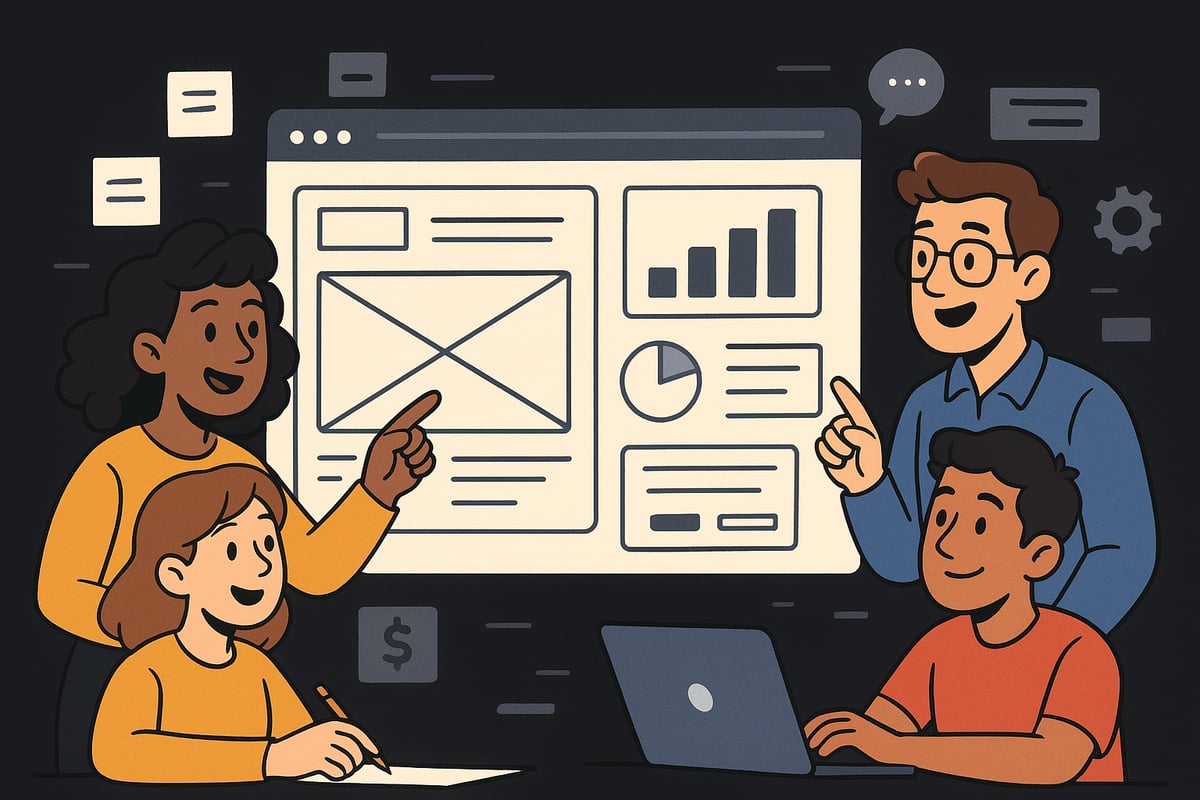
The first step in your web design project is comprehensive research and strategic planning. Begin by analysing competitors, understanding your audience, and pinpointing industry trends. Create detailed user personas to guide content and functionality decisions.
Leverage analytics to identify content gaps and opportunities. Defining clear business goals and measurable KPIs ensures your web design aligns with broader objectives. For inspiration, explore Creative Web Design Strategies to see how top brands are shaping their digital strategies for 2025.
A well-planned foundation is critical for your web design to deliver long-term value.
Step 2: Choosing the Right Platform and Tech Stack
Selecting the optimal platform is a vital step in your web design process. Assess the pros and cons of WordPress, Shopify, Magento, or custom solutions. Scalability and flexibility are non-negotiable for future growth.
A quick comparison table can help:
| Platform | Strengths | Best For |
|---|---|---|
| WordPress | Flexibility, SEO | Content-driven |
| Shopify | E-commerce focus | Online shops |
| Magento | Customisation | Large retailers |
Migrating to a headless CMS provides flexibility and ensures your web design adapts to evolving technology.
Step 3: Content Planning and SEO Integration
Content is the backbone of your web design. Start with a content audit and map user journeys to align messaging with audience intent. Integrate SEO best practices by using semantic HTML, structured data, and targeting high-impact keywords.
Consider using content clusters to boost organic traffic and authority. Aligning your web design with robust SEO strategies ensures visibility and sustained growth. Sites that optimise content structure often see higher engagement and improved rankings.
Effective content planning transforms your web design from a static brochure into a dynamic growth engine.
Step 4: Wireframing and Prototyping
Visualising your web design starts with wireframing. Use low-fidelity wireframes to outline layouts, navigation, and key interactions. Tools like Figma, Adobe XD, and Sketch streamline this process and foster collaboration.
Involve users early by gathering feedback on prototypes. Iterative testing at this stage helps refine your web design before development, saving time and resources. Focus on usability and logical flow to create an intuitive user experience.
Wireframing ensures your web design is both strategic and user-friendly from the outset.
Step 5: Design and Development Collaboration
Seamless collaboration between designers and developers is essential for efficient web design delivery. Embrace agile workflows to accelerate progress and adapt to feedback quickly.
Implementing design systems and reusable components further streamlines the process. Atomic design principles, for example, can reduce development time and maintain consistency across your web design.
Effective teamwork ensures your web design is cohesive, scalable, and ready to meet the demands of 2025.
Step 6: Testing, Launch, and Iteration
Before going live, rigorous testing is crucial for your web design. Perform usability tests, cross-device checks, and browser compatibility reviews to catch issues early. Plan your launch with soft rollouts or phased releases to minimise risks.
After launch, use analytics and user feedback to drive continuous improvement. Monitor key metrics to refine your web design and maximise ROI. Iteration keeps your web design fresh, relevant, and competitive in the evolving digital landscape.
Conversion Optimisation and Lead Generation Strategies
Optimising your web design for conversion and lead generation is vital in today’s competitive landscape. Every element, from layout to user journey, impacts how visitors interact and whether they become loyal customers. Let’s explore proven strategies to turn your web presence into a conversion powerhouse.
Designing for Conversion
The foundation of your web design should always prioritise conversion. Strategic placement of calls-to-action (CTAs), clear navigation, and prominent trust signals such as reviews or certifications build confidence.
Consider these conversion-boosting tactics:
- Use contrasting colours for CTAs to draw attention.
- Place social proof near decision points.
- Simplify forms to minimise friction.
A/B testing can reveal which CTA colours or wording deliver the highest engagement. According to E-commerce Web Design Insights, adjusting design elements can significantly impact user behaviour and conversion rates. Ensuring your web design supports clear paths to action will maximise results.
Integrating Lead Generation Tools
Lead generation is most effective when seamlessly integrated into your web design. Live chat, exit-intent popups, and downloadable resources are powerful tools for capturing potential clients.
Best practices include:
- Keeping forms short and GDPR compliant.
- Offering valuable downloads in exchange for contact details.
- Enabling live chat for instant support.
Your web design should make these tools visible but not intrusive. E-commerce sites often see a rise in leads by using popups that appear when users show intent to leave, providing one last opportunity to engage. Always communicate your data policies transparently to foster trust.
Content and SEO Alignment for Growth
High-quality content is essential for nurturing leads and supporting conversion goals. Align your web design with a robust content strategy to address each stage of the customer journey.
Key steps:
- Map content to user intent and funnel stage.
- Use keyword-rich headings and meta tags.
- Structure data with semantic HTML for better search visibility.
Blogs and resource centres can drive three times more inbound leads than paid ads when integrated into your web design. Optimise every page for both search engines and user experience to ensure sustained growth.
Measuring and Refining Performance
Continuous measurement is crucial to enhance your web design’s effectiveness. Track metrics such as conversion rate, bounce rate, and average session duration to identify improvement areas.
Recommended tools:
- Google Analytics for comprehensive data.
- Heatmaps to visualise user interaction.
- Regular user feedback surveys.
Implement a cycle of testing, analysis, and iteration. Brands that consistently refine their web design based on real insights often achieve a 30% higher return on investment. Make data-driven decisions to keep your site performing at its best.
E-commerce and Branding in Web Design
Creating an effective e-commerce presence requires more than attractive visuals. Your web design strategy must balance performance, seamless branding, and marketing integration. In 2025, digital success hinges on building trust, driving conversion, and unifying experiences across every touchpoint.
Building High-Performing E-commerce Sites
A high-performing e-commerce site is the cornerstone of your web design in 2025. Essential features include advanced product filters, rapid checkout, and authentic customer reviews. Mobile commerce continues to surge, so adaptive layouts and touch-friendly interfaces are non-negotiable.
Brands adopting E-commerce Website Design Best Practices see significant gains in conversion and average order value. Upselling and cross-selling techniques, paired with streamlined navigation, help guide users seamlessly from discovery to purchase.
Prioritising speed, security, and mobile usability ensures your web design stands out and keeps customers returning.
The Role of Branding in Digital Experience
Branding is integral to your web design, shaping first impressions and fostering loyalty. A consistent visual identity, from colour palette to typography, builds recognition across all channels. Incorporating storytelling and distinctive imagery helps form emotional bonds with customers.
Strong branding within your web design elevates your business above generic competitors. Brands with a clear voice and cohesive design achieve higher retention and increased customer trust. This unified approach makes every site interaction memorable and meaningful.
Ultimately, your web design must reflect your brand’s values and personality, resonating with your target audience.
Integrating Marketing and Web Design
Seamless integration of marketing and your web design is vital for driving measurable results. Landing pages, campaign-specific microsites, and optimised CTAs support targeted advertising and SEO efforts. When design and marketing work hand in hand, every campaign has a clear objective and a compelling user journey.
Brands that harmonise marketing with web design achieve higher ROI and lower acquisition costs. Tailored landing pages enable precise tracking, while consistent messaging builds confidence. This synergy makes your web design a powerful engine for growth and lead generation.
Aligning marketing and your web design ensures every visitor encounters a purposeful, persuasive experience.
Why Work with an Award-Winning Digital Partner
Choosing an expert partner for your web design is a strategic decision. Harley Oliver brings two decades of multi-award-winning experience, delivering future-ready, conversion-focused solutions. Their end-to-end services span branding, web design, e-commerce, and AI integration.
A client-centric approach ensures your web design meets unique business needs, whether you are a startup or a global brand. Proven results and tailored strategies help you thrive in a competitive digital landscape.
Book a consultation to discover how expert guidance can future-proof your web design and accelerate digital growth.
Future-Proofing Your Website: What to Expect Beyond 2025
The pace of change in your web design is only set to accelerate beyond 2025. To ensure your site remains competitive, it is vital to stay ahead of technology and evolving user expectations. Let us explore how you can future-proof your web presence and maximise every opportunity for growth.
Preparing for Emerging Technologies
Emerging technologies are transforming your web design in ways that were unimaginable a few years ago. Web3, blockchain, and decentralised experiences are beginning to shape the next digital frontier. AI is becoming central, powering voice search and predictive UX that anticipate user needs.
Forward-thinking brands are already integrating these tools, giving them a clear edge. According to Web Design Statistics 2025, sites that adapt early to tech trends often see improved engagement and loyalty. To keep your web design resilient, monitor advancements and be ready to experiment with new features.
Continuous Learning and Team Upskilling
A key ingredient in future-proofing your web design is investing in your team’s skills. Technology does not stand still, so continuous learning is essential. Encourage designers and developers to pursue online courses, attend webinars, and earn industry certifications.
Teams that prioritise upskilling adapt twice as fast to market changes. Regular knowledge sharing and collaborative projects foster innovation and help your web design team stay sharp. Make training part of your culture to ensure lasting success.
Building Scalable and Flexible Architectures
Scalability is non-negotiable for your web design moving forward. Modular design allows you to update features quickly, while a headless CMS and API-driven approach offer flexibility for future integrations. This structure supports growth as your needs evolve.
Brands using scalable architectures are able to launch new sites, languages, or features with minimal disruption. When your web design is flexible, you can respond to emerging trends and user expectations with confidence.
Staying Agile with Analytics and Feedback
Analytics are the compass for your web design journey. Setting up robust feedback loops with users and stakeholders ensures your decisions are data-driven. Use heatmaps, session recordings, and conversion metrics to identify what works and where to improve.
Agility comes from acting on insights quickly. Continuous iteration, backed by analytics, leads to sustainable growth and keeps your web design relevant. By adopting an agile mindset, you will be prepared for whatever the future brings.