
7 Web Marketing Design Strategies To Boost Your Brand In 2025
In 2025, web marketing design stands at the forefront of brand growth as digital competition intensifies. Brands that master modern web marketing design can capture attention, build trust, and foster lasting engagement.
This article explores seven proven strategies to help you elevate your brand. We will examine user-centric design, conversion-focused layouts, consistent branding, mobile-first approaches, advanced interactivity, SEO optimisation, and data-driven personalisation.
Ready to outperform your competition? Discover actionable insights that turn your website into a powerful tool for success.
The Importance of Web Marketing Design in 2025
In 2025, web marketing design is not just a visual concern, but a strategic business imperative. The digital landscape is evolving rapidly, and brands must adapt their design strategies to remain competitive, credible, and relevant.
The Evolution of Digital Branding
Over the past decade, web marketing design has shifted from static visuals to dynamic, user-focused experiences. First impressions are now crucial, with 94% of users forming opinions about a brand based on design alone. In saturated markets, design instantly communicates credibility and sets brands apart.
According to recent Web Design Industry Statistics, brands that invested in modern web marketing design saw engagement rise by 30%. This evolution means that design is no longer simply decorative, but a vital tool for differentiation and growth.
User Expectations and Behaviour Trends
Today’s users demand seamless, intuitive, and visually appealing web marketing design. Seventy five percent of people judge a brand’s credibility by its website design, making user experience central to success. With most traffic in 2025 coming from mobile and multiple devices, expectations for consistency and ease of use have never been higher.
The preferences of Gen Z and millennials continue to shape web marketing design trends. Brands that fail to update outdated designs risk losing market share to competitors who prioritise user needs and fresh aesthetics.
The ROI of Strategic Web Design
Investing in strategic web marketing design delivers measurable returns. Well-optimised design can improve conversion rates by up to 200 percent, while also reducing bounce rates and increasing the time visitors spend on site. Trust and loyalty are built when customers encounter sleek, functional, and branded experiences.
For example, A/B testing different call to action button styles has led to significant increases in sales. These results prove that every element of web marketing design, from layout to micro-interactions, directly impacts business outcomes.
Key Challenges and Opportunities
Brands face growing competition for user attention in an increasingly crowded digital space. Staying ahead requires adapting web marketing design to rapid changes in technology and search algorithms. There are also new opportunities to innovate using AI and automation.
Key challenges and opportunities include:
- Competing for attention with bold, memorable design
- Leveraging new tools for continuous innovation
- Ongoing testing and adaptation to shifting trends
The brands that thrive will be those that treat web marketing design as a living, evolving asset, constantly refined to meet user expectations and technological advances.
7 Web Marketing Design Strategies To Boost Your Brand In 2025
Modern web marketing design is the linchpin of digital success in 2025. To stand out, brands must adopt strategies that not only capture attention but also foster lasting engagement and trust. Below, we explore seven actionable strategies that will help you elevate your web marketing design, attract your ideal audience, and maintain a competitive edge.
1. Embrace User-Centric and Accessible Design
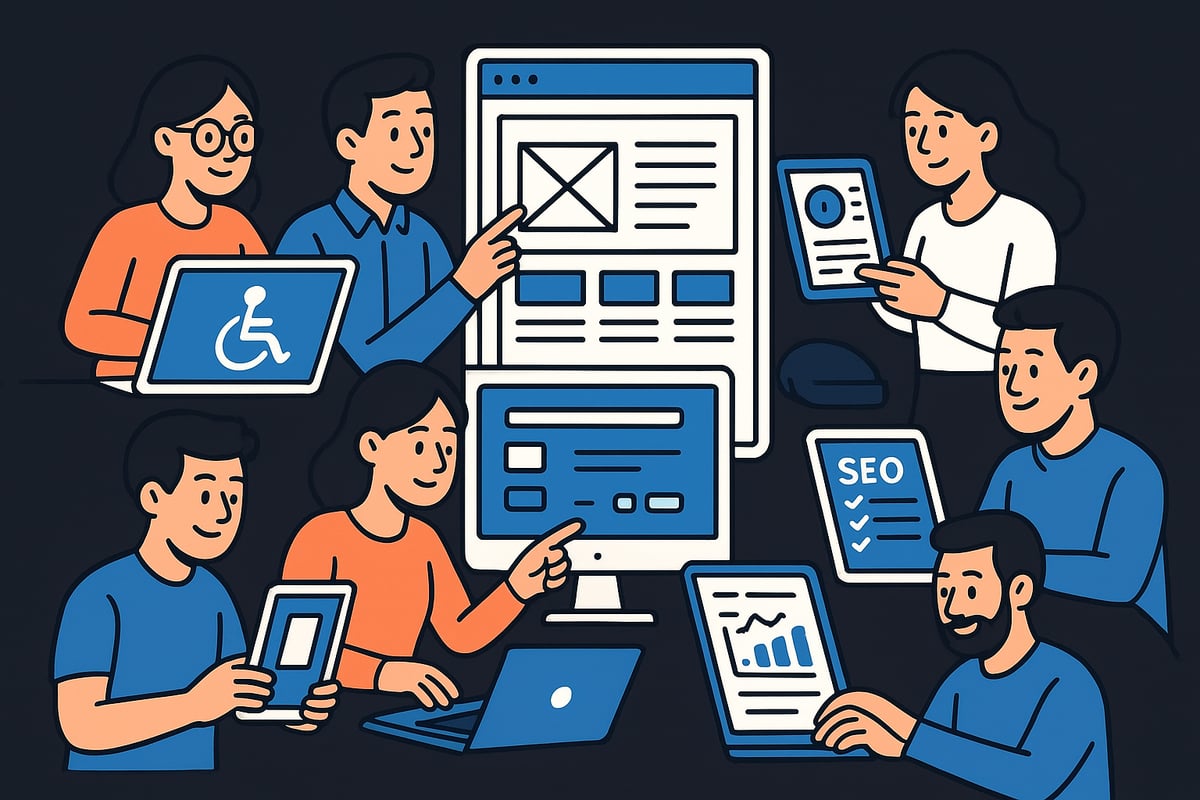
User-centric web marketing design focuses on making every interaction intuitive and enjoyable. Begin by mapping your customer journey, identifying friction points, and simplifying navigation. Tools like Hotjar provide heatmaps to visualise user behaviour, helping you refine layouts for clarity.
Accessibility is no longer optional. WCAG 2.2 compliance, alt text for images, and keyboard navigation ensure everyone can engage with your site. This not only fulfils ethical obligations but also expands your reach. In fact, 1 in 4 users has a disability affecting their web experience, so accessible design is a significant market opportunity.
Personalise content and navigation based on user segments and behaviours. For example, after Brand X simplified its menu and tailored content blocks, they saw a 20% rise in conversions. A user-centric approach in web marketing design builds trust, reduces bounce rates, and keeps visitors coming back.
Key actions:
- Map user journeys and address pain points.
- Implement accessibility features.
- Personalise navigation and content.
A focus on user-centric web marketing design is essential for sustainable digital growth.
2. Optimise for Conversion with High-Impact Landing Pages
Effective web marketing design transforms landing pages into powerful conversion engines. Start by removing distractions and focusing on a singular, compelling value proposition. Use bold headlines and concise, persuasive copy to immediately communicate benefits.
Whitespace is your ally. Strategic spacing draws attention to crucial elements, especially your call-to-action (CTA). Place CTAs above the fold, ensuring they are visually distinct and easily accessible. Trust signals such as testimonials, security badges, and awards reduce hesitation and build credibility.
Continuous improvement is key. A/B test different layouts, images, and CTA wording to identify what resonates best. For instance, a SaaS provider redesigned its landing page, resulting in a 35% increase in sign-ups. Conversion-optimised landing pages can double lead generation rates, making this a vital web marketing design strategy.
Checklist for high-impact landing pages:
- Clear value proposition
- Prominent CTA
- Strategic use of whitespace
- Trust signals
Optimising landing pages within your web marketing design directly impacts your bottom line.
3. Strengthen Brand Identity Through Visual Consistency
Consistency is the cornerstone of effective web marketing design. A cohesive brand style guide covering colours, fonts, imagery, and iconography ensures your brand is instantly recognisable across all channels. This unity builds trust, enhances recall, and supports long-term loyalty.
Storytelling and emotional design connect with users on a deeper level. Incorporate micro-interactions and branded animations to reinforce your identity and create memorable experiences. For example, a retail brand unified its digital assets and saw a 40% boost in brand recall.
Brands that maintain consistent visual identity are 3.5 times more likely to achieve strong visibility. Consistency across your website, social media, email, and ads is key. For further insights, the Digital Branding Solutions Guide explores advanced strategies for building and maintaining a powerful brand presence.
Quick tips:
- Develop and maintain a brand style guide.
- Use emotional storytelling and micro-interactions.
- Ensure all channels reflect your visual identity.
Strong, consistent web marketing design positions your brand for sustained recognition and growth.
4. Adopt a Mobile-First and Responsive Approach
Mobile-first web marketing design is no longer a trend, it is a necessity. With over 70% of web traffic originating from mobile devices in 2025, designing for smaller screens must come first. Begin with mobile wireframes and scale up, ensuring every element adapts seamlessly.
Responsive grids, scalable images, and adaptive UI components guarantee your site looks and performs well on any device. Prioritise load times, aiming for under two seconds. Compress images, use lightweight code, and test performance regularly.
Touch-friendly navigation and larger tap targets improve usability. An e-commerce site that overhauled its mobile experience reported a 50% increase in mobile sales. Google’s mobile-first indexing also means your web marketing design directly affects SEO rankings.
Mobile-first essentials:
- Start with mobile wireframes
- Optimise load speed
- Use responsive layouts
A responsive web marketing design ensures you do not miss out on the majority of your audience.
5. Integrate Advanced Interactivity and Micro-Animations
Interactive elements are revolutionising web marketing design by turning passive visitors into active participants. Integrate quizzes, calculators, or chatbots to engage users and provide instant value. Micro-animations offer feedback, guide onboarding, and add delight without overwhelming users.
Gamification increases retention and encourages exploration. For example, a finance brand introduced interactive tools, boosting session duration by 60%. Interactive content generates twice as many conversions as static alternatives, making this approach highly effective.
Balance is crucial. Too much interactivity can distract or confuse. Test features for usability and iterate based on feedback.
Examples of advanced interactivity:
- Interactive calculators or quizzes
- Onboarding animations
- Gamified user journeys
By weaving interactivity into your web marketing design, you create memorable and engaging user experiences.
6. Leverage SEO-Driven Content and Structured Data
SEO and web marketing design must work hand in hand for optimal results. Optimise headings, meta tags, image alt text, and schema markup to improve search visibility. Structured data helps search engines understand your content, enabling rich snippets and FAQs in results.
Develop content clusters and pillar pages to establish topical authority. Regularly audit site speed, mobile performance, and crawlability. For instance, a blog doubled its traffic by implementing schema and targeting featured snippets.
Sites with structured data see up to 30% higher click-through rates. Table:
| SEO Element | Impact on Web Marketing Design |
|---|---|
| Headings/Meta Tags | Improves clarity and relevance |
| Image Alt Text | Enhances accessibility and SEO |
| Schema Markup | Enables rich snippets, increases CTR |
| Site Speed | Reduces bounce, improves rankings |
Prioritising SEO in your web marketing design boosts both visibility and user engagement.
7. Utilise Data-Driven Personalisation and AI
Data-driven personalisation is redefining web marketing design. Harness AI to deliver dynamic content and tailored product recommendations based on user data. Automated segmentation lets you customise messaging for different behaviours and preferences.
Analytics inform ongoing design improvements. Use tools to track engagement and refine layouts. Integrate chatbots for instant support and efficient lead capture. An online retailer used AI recommendations to lift average order value by 25%, while personalised experiences can increase conversion rates by up to 202%.
Key steps for AI-powered personalisation:
- Implement dynamic content and recommendations
- Automate segmentation and messaging
- Use analytics for continuous improvement
Incorporating AI and personalisation into your web marketing design ensures every user feels uniquely valued, driving stronger results.
How to Measure the Impact of Web Marketing Design Strategies
Measuring the impact of your web marketing design efforts is essential for continuous improvement and ensuring your strategies deliver real business results. With so many tools and metrics available, understanding the right approach can help you clearly demonstrate the value of your web marketing design investments.
Key Metrics to Track
To evaluate your web marketing design, focus on metrics that reflect user behaviour and business outcomes. The most effective teams track:
| Metric | Purpose |
|---|---|
| Conversion Rate | Measures how design drives sales or leads |
| Bounce Rate | Shows if users find the site engaging |
| Average Session Duration | Indicates user engagement |
| Goal Completions | Tracks achievement of key actions |
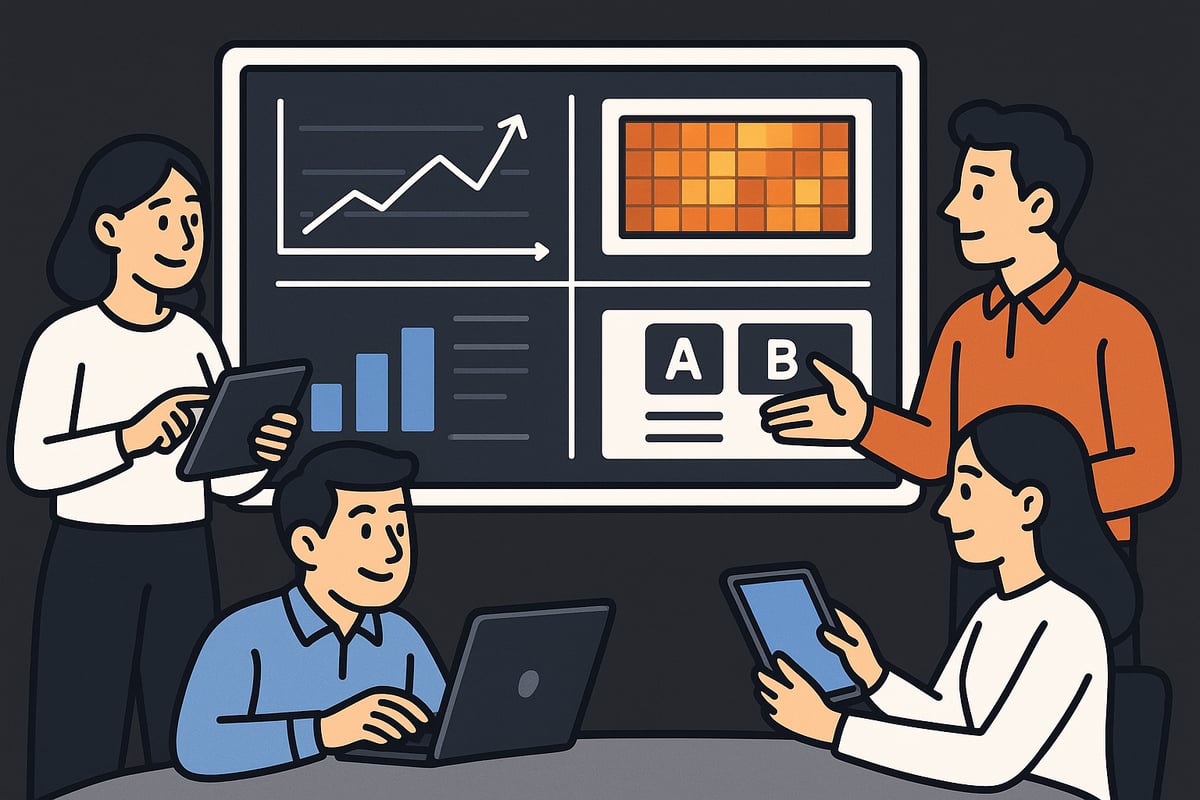
Heatmaps and scroll tracking reveal how visitors interact with your design. Conducting brand recall surveys can uncover whether your web marketing design leaves a memorable impression. For example, monitoring CTA clicks provides direct feedback on design effectiveness and helps identify where improvements are needed.
A/B Testing and Continuous Improvement
A/B testing is a cornerstone of data-driven web marketing design. By setting up controlled experiments for elements like colours, layouts, or CTAs, you isolate what resonates best with your audience. Use split testing tools such as Google Optimize or Optimizely to gather statistically significant results.
Review performance after each test and iterate based on user feedback and analytics. For instance, regularly refining landing pages through iterative tests can lead to incremental gains in conversion and engagement. This cycle of testing and learning keeps your web marketing design aligned with user expectations and business goals.
Leveraging Analytics Platforms
Integrating advanced analytics platforms is non-negotiable for effective web marketing design measurement. Google Analytics 4, Hotjar, and similar tools provide a holistic view of user journeys. Set up custom dashboards for real-time monitoring of key performance indicators.
Funnel analysis helps pinpoint where users drop off, guiding targeted improvements. For deeper insights, explore Website Design and Development Best Practices to ensure your analytics setup captures the full impact of your design strategies. These platforms empower teams to make informed, data-driven decisions for ongoing optimisation.
Benchmarking and Industry Comparison
Benchmarking places your web marketing design performance in context. Compare your metrics against industry standards to identify strengths and uncover growth opportunities. Use annual web design and marketing reports to stay informed on evolving benchmarks.
Tracking progress against competitors helps set realistic objectives and motivates continuous improvement. For example, after a web marketing design overhaul, outperforming industry average conversion rates is a tangible sign of success. Regular benchmarking ensures your brand remains competitive and adapts swiftly to changing digital landscapes.
Future Trends in Web Marketing Design for 2025 and Beyond
Staying ahead in web marketing design is more crucial than ever as digital trends rapidly evolve. Brands that anticipate and adapt to these shifts secure a significant competitive advantage. The following emerging trends will shape how businesses engage audiences and deliver memorable online experiences in 2025.
AI and Automation in Web Design
Artificial intelligence is revolutionising web marketing design by streamlining workflows and enhancing personalisation. AI-powered tools now automate everything from layout generation to content creation, allowing designers to iterate faster and more efficiently.
Brands are leveraging chatbots for 24/7 customer support, while machine learning analyses user behaviour to tailor content in real time. For a deeper dive into how AI is transforming the industry, explore the State of Digital Marketing Web Design in 2025. Companies using these innovations report improved engagement and increased ROI, making AI integration a must for forward-thinking web marketing design.
Voice and Visual Search Optimisation
Voice and visual search are rapidly changing how users interact with online content. As more consumers use smart speakers and image-based queries, web marketing design must accommodate conversational interfaces and visual discovery.
Brands are adapting by creating voice-friendly navigation and optimising images for search engines. Retailers, for example, have implemented visual search tools to help customers find products with a simple photo upload. This trend ensures that web marketing design remains accessible and user-friendly, catering to modern browsing habits.
Sustainability and Ethical Design
Sustainability is becoming a core value in web marketing design. Eco-friendly websites focus on minimalism, optimised performance, and green hosting to reduce digital carbon footprints. Ethical design also prioritises user privacy and transparent data practices.
Brands adopting these principles are witnessing stronger loyalty and trust from their audiences. For instance, businesses that clearly communicate privacy policies and minimise intrusive tracking are viewed more favourably. This approach not only benefits the environment but also aligns with shifting consumer expectations in web marketing design.
Immersive Experiences: AR, VR, and 3D Elements
The integration of augmented reality, virtual reality, and 3D graphics is redefining web marketing design. These immersive technologies enable brands to create engaging experiences, such as virtual try-ons or interactive product demos.
Home décor brands, for example, now offer AR-powered room previews, allowing customers to visualise products in their own spaces. According to 5 Major Trends in Web Design for 2025, these innovations are set to become standard features, enhancing user engagement and setting brands apart in a crowded market. Embracing immersive design ensures your web marketing design remains at the forefront of digital innovation.