
Personalize Website: The Creative Guide for 2026
Imagine landing on a site that instantly recognises you, adapts content to your tastes, and helps you achieve your goals with ease. This is the power you unlock when you personalise website experiences in 2026.
In this guide, you will discover the latest trends and proven strategies to personalise website journeys for your audience. We will show how brands and marketers can leverage new tools, creative design, and ethical data practices for measurable results.
Ready to transform your digital presence? Explore actionable steps, inspiring examples, and future-proof tactics to deliver truly personalised experiences.
The Evolution of Website Personalisation: Trends and Statistics for 2026
Website personalisation has transformed the way brands connect with audiences. Today, the ability to personalise website experiences is not just a competitive edge, but an essential expectation. As digital interactions multiply, businesses must personalise website journeys to remain relevant and memorable.
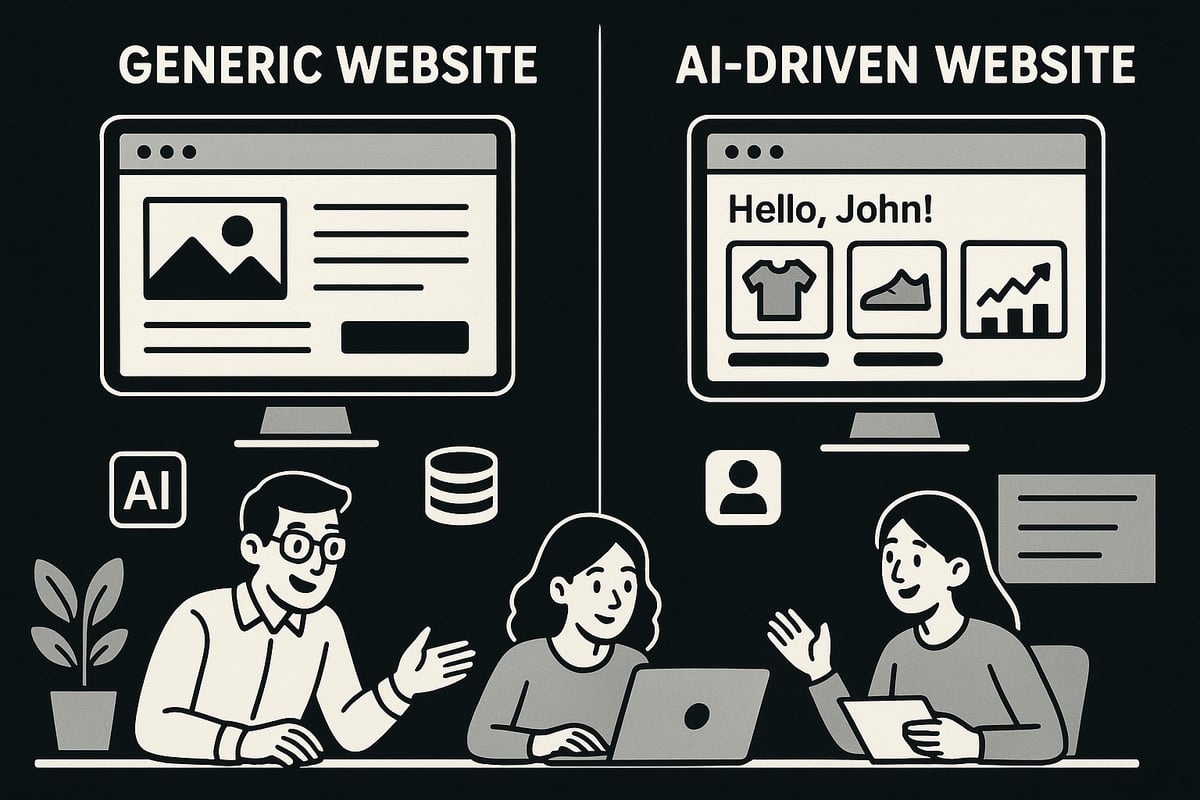
The journey to personalise website content began with simple static pages. In the early days of the internet, every visitor saw identical layouts and messages, regardless of their needs or interests. Over the years, personalisation evolved from basic name insertion in emails to dynamic, AI-powered experiences that adapt in real time.
By 2026, the leap forward is extraordinary. Brands now use advanced tools to personalise website interfaces for each visitor. These tools analyse behaviour, preferences, and even intent to deliver content that feels uniquely crafted. The transition from static to smart, data-driven experiences reflects a broader shift towards customer-centric digital strategies.
Key trends shaping website personalisation in 2026 include:
- Hyper-personalisation, where every element adapts to individual preferences.
- Predictive UX, anticipating user needs before they are expressed.
- AI-driven content recommendations and adaptive layouts.
- Omnichannel journeys, ensuring consistency across web, mobile, and offline touchpoints.
The numbers speak for themselves. According to Salesforce (2025), 92% of consumers now expect brands to personalise website interactions. Econsultancy (2024) reports that personalisation can increase conversion rates by up to 30%. Marketers are seeing significant returns, with 89% noting up to $20 returned for every $1 spent on personalisation efforts (Personalization Delivers a Strong Return).
| Statistic | Source | Year |
|---|---|---|
| 92% of consumers expect personalisation | Salesforce | 2025 |
| Up to 30% increase in conversion rates | Econsultancy | 2024 |
| $20 ROI for every $1 spent on personalisation | DesignRush | 2024 |
Real-world leaders continue to set the pace. Netflix’s dynamic recommendations use deep learning to surface new series and films tailored for each viewer. Amazon personalises website shopping experiences by suggesting products based on browsing and purchase history. Spotify curates playlists that reflect individual listening habits, making each session feel bespoke.
Artificial intelligence and machine learning have become the engines that drive these experiences. By leveraging AI, brands can segment audiences with incredible granularity and adapt content in real time. This not only helps personalise website content at scale, but also increases engagement, satisfaction, and loyalty.
Personalisation’s impact on brand loyalty and customer lifetime value is profound. When users feel seen and understood, they return more often, spend more, and advocate for the brand within their networks. The ability to personalise website journeys deepens relationships and differentiates businesses in crowded digital markets.
However, challenges remain. Data privacy concerns, technical complexity, and the need to scale content for diverse audiences require careful planning. Balancing personalisation with transparency and trust is crucial as regulations evolve.
Looking ahead, the drive to personalise website experiences will continue to shape digital strategy. Brands that harness these trends and technologies are poised to deliver more relevant, engaging, and profitable customer journeys.
Laying the Foundation: Audience Insights and Personalisation Strategy
Understanding your audience is the cornerstone of any effort to personalize website experiences in 2026. Brands that succeed here gather robust insights, segment users thoughtfully, and map journeys with empathy and precision.
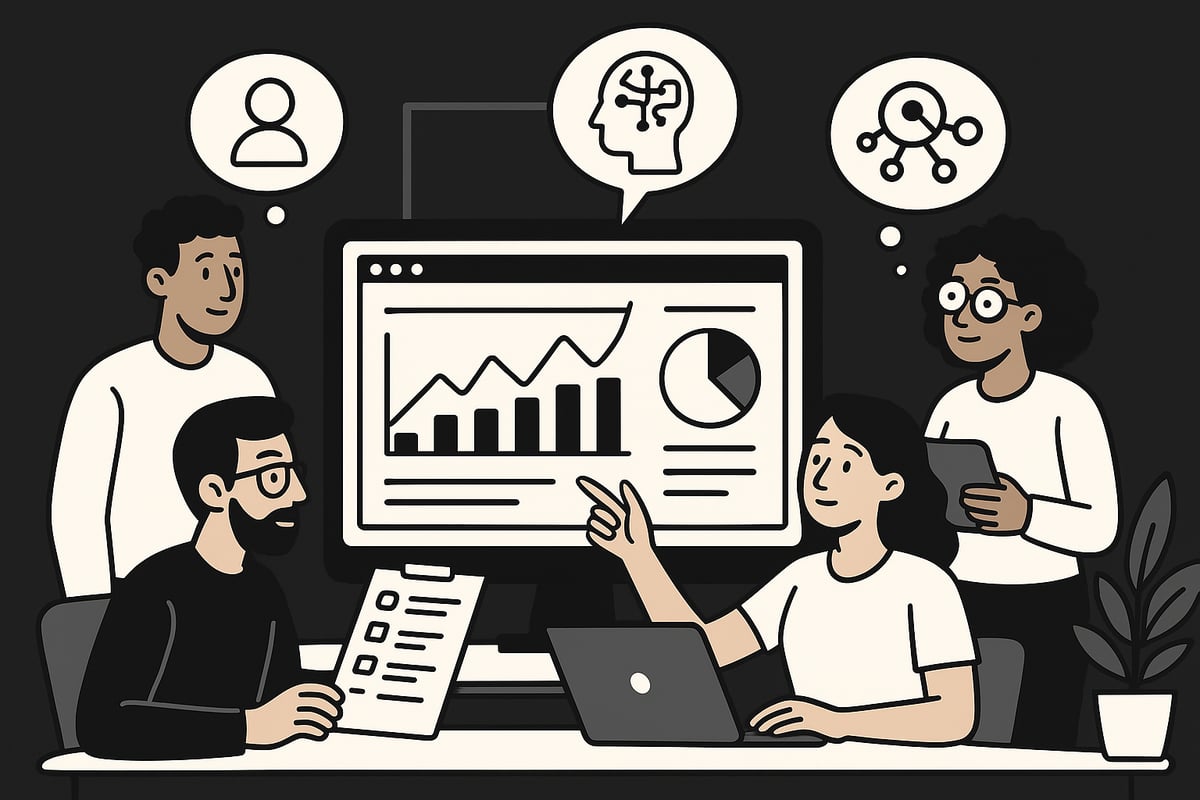
Understanding Your Audience
To personalize website content in a meaningful way, start with data. Employ analytics tools to track user behaviour, set up surveys for direct feedback, and integrate CRM systems for a unified customer view. These approaches help you build a dynamic understanding of each visitor.
Segmentation is vital. Use demographic information like age and location, psychographics such as interests and values, and behavioural signals including purchase frequency and page views. Mapping the customer journey highlights where personalisation can make the most impact, from first visit to repeat purchase.
For example, e-commerce brands often segment users based on browsing habits and buying cycles. Empathy is key, so step into your users' shoes to anticipate their needs. AI-driven analytics now allow brands to predict trends, helping you personalize website journeys before customers even realise what they want.
Update personas regularly. Data-driven personas reflect evolving audience needs, keeping your strategy agile. By making audience insights a continuous priority, you ensure every effort to personalize website content stays relevant and effective.
Crafting a Personalisation Roadmap
Building a successful plan to personalize website experiences requires clear objectives. Decide if your focus is engagement, retention, conversion, or brand advocacy. Prioritise opportunities by aligning them with business goals and user pain points.
Ensure your approach matches your brand’s identity and voice. Assemble a cross-functional team with marketing, design, development, and analytics experts working together. A lifestyle e-commerce brand, for example, may focus on visual storytelling and product recommendations, while a B2B SaaS provider might prioritise onboarding flows and resource hubs.
Establish key performance indicators (KPIs) such as conversion rate, time on site, or repeat visits. Use iterative planning: test, learn, and scale what works. For a comprehensive approach, review website design and development strategies to integrate personalisation seamlessly with your site’s architecture.
A structured roadmap not only helps you personalize website elements efficiently, it also ensures your efforts drive measurable results across all touchpoints.
Ethical Considerations and Data Privacy
As you personalize website interactions, ethical data handling is crucial. Regulations like GDPR, CCPA, and new global laws shape every facet of personalisation strategy. Always be transparent, letting users know what data you collect and how it’s used.
Balance personalisation with trust by obtaining clear consent and offering easy opt-out options. Secure data storage and robust handling procedures protect both your business and your customers. Apple’s privacy-first approach, for instance, sets a high bar for transparency, showing that trust can drive brand loyalty.
Make privacy policies accessible and understandable. Use opt-in mechanisms and progressive profiling to build trust over time. Prepare for regulatory changes by staying informed and updating your processes regularly.
By embedding ethical considerations into your strategy, you create the foundation to personalize website experiences that respect users while delivering value. This approach ensures your brand remains resilient and trusted as regulations and expectations evolve.
Creative Personalisation Techniques: Content, Design, and UX
Personalisation in 2026 is about more than simple name insertion. Brands that successfully personalize website experiences use creativity, data, and technology to build memorable, relevant user journeys. Explore the latest methods for dynamic content, adaptive design, intuitive navigation, and AI-driven personalisation, all while keeping your audience engaged and your brand ahead.
Dynamic Content and Adaptive Design
To personalize website experiences, start by making your content truly dynamic. Use data to tailor headlines, calls to action, and product recommendations for each visitor. For example, a returning customer might see a headline that welcomes them back by name, while a new visitor receives a tailored introduction based on their location.
Geolocation and language preferences are powerful tools. Retailers can display local store information and region-specific promotions, ensuring every interaction feels relevant. Adaptive layouts respond to device type and user behaviour, creating seamless experiences across mobiles, tablets, and desktops.
Micro-interactions, such as subtle animations when a user hovers over a product, add a personal touch. Interactive content like quizzes or videos can deepen engagement and provide more data to further personalize website content.
A/B testing remains essential. Test different versions of personalised content to see what resonates most. For more insights on crafting effective content for adaptive design, see this content for website design guide. Every detail, from copy to layout, should be optimised for the individual.
Personalised User Journeys and Navigation
Navigation is no longer one-size-fits-all. When you personalize website navigation, you help users find what matters most to them, faster. Segment your audience and customise menus, so returning users see quick links to their favourite sections while new visitors are guided through an onboarding flow.
Smart search is a game changer. Predictive suggestions based on previous searches or browsing history can surface the most relevant content. Streaming platforms offer a great example, with genres and recommendations tailored to viewing habits.
Dynamic landing pages make every click count. Whether traffic comes from social media, email, or organic search, deliver a landing page that speaks directly to the visitor’s intent. Reduce friction throughout the journey with autofill forms, saved preferences, and one-click actions.
Track performance with analytics and user feedback. Continuously refine navigation and journey flows to ensure your efforts to personalize website experiences deliver measurable improvements in engagement and satisfaction.
Integrating AI and Automation for Personalisation at Scale
Scaling personalisation requires intelligent automation and AI. AI-driven content recommendations can anticipate user needs, suggesting products, articles, or services in real time. Chatbots and virtual assistants provide tailored support, guiding users to the right solution faster.
Automated email and push notifications keep your audience engaged with timely, relevant messages. E-commerce brands, for instance, use AI to personalize website product suggestions based on browsing and purchase history.
Machine learning algorithms constantly analyse user behaviour, learning and adapting to provide ever more relevant experiences. Balancing automation with the human touch is essential—AI should enhance, not replace, genuine brand interaction.
A range of platforms support these capabilities. For an overview of advanced AI solutions for brands, explore tools that enable granular segmentation, predictive analytics, and seamless integration with your technology stack.
Harley Oliver: Your Partner for Creative Website Personalisation
Harley Oliver stands at the forefront of creative digital personalisation. Their expertise lies in blending innovative design, strong branding, and AI-driven solutions to personalize website experiences across industries.
With an award-winning track record, Harley Oliver crafts custom strategies for e-commerce, digital products, and brand identities. Their approach is user-centric, ensuring that every personalisation project is scalable and privacy-compliant.
Clients benefit from tailored solutions that align with business goals and deliver measurable impact. If you are ready to personalize website experiences for your audience, consider consulting Harley Oliver for a transformative digital journey.
Technology Stack for Next-Gen Website Personalisation
The technology stack you choose in 2026 will directly influence how effectively you personalise website experiences for your audience. With rapid advances in AI, automation, and data processing, brands must select tools that not only enable personalisation at scale but also ensure security and compliance.
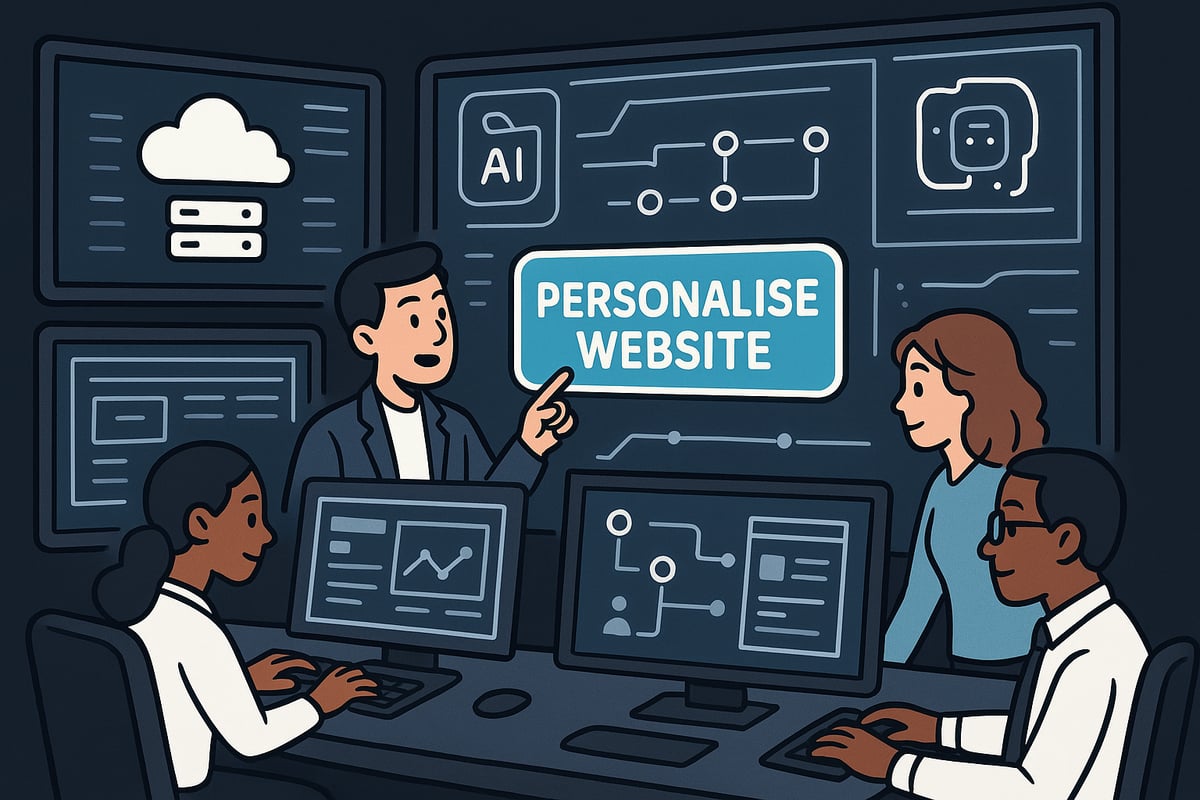
Essential Tools for Website Personalisation
To personalise website content effectively, start with a robust CMS that supports personalisation engines. Modern platforms like Adobe Experience Manager, Sitecore, and Contentful provide built-in personalisation modules. Seamless CRM integration, such as Salesforce or HubSpot, allows you to unify customer data and activate real-time insights.
Analytics platforms, including Google Analytics 4 and Mixpanel, are vital for tracking user behaviour and measuring the impact of personalisation strategies. These tools help you understand what resonates with your audience and refine your approach continuously.
Key components:
- CMS with personalisation capabilities
- CRM integration for unified data
- Advanced analytics platforms
AI and Machine Learning Frameworks
AI is the cornerstone of any effort to personalise website experiences in 2026. Machine learning frameworks like TensorFlow, IBM Watson, and Adobe Sensei empower brands to segment users, predict intent, and automate content delivery.
As highlighted in AI-Powered Personalization Becomes the New Standard, AI-driven personalisation is setting new benchmarks for dynamic content and user experience. These frameworks analyse behavioural data in real time, enabling hyper-personalised recommendations and predictive UX.
AI also supports sentiment analysis, natural language processing, and adaptive design, ensuring every digital interaction feels tailored and relevant.
Plugins, APIs, and Real-Time Data Processing
Expanding your ability to personalise website elements further, consider personalisation plugins and APIs for platforms like Shopify, WordPress, and Magento. Tools such as Dynamic Yield, Optimizely, and Segment enable seamless integration and management of personalisation rules.
Real-time data collection tools capture user actions as they happen. Event-driven APIs and cloud-based data pipelines process information instantly, allowing for immediate adaptation of content, offers, and navigation.
Table: Tech Stack Components
| Component | Leading Solutions | Function |
|---|---|---|
| CMS | Adobe, Sitecore, Contentful | Content management, personalisation |
| CRM | Salesforce, HubSpot | Customer data, segmentation |
| Analytics | GA4, Mixpanel | Behaviour tracking, reporting |
| AI Framework | TensorFlow, Watson, Sensei | Predictive analytics, content automation |
| Personalisation Mgmt | Dynamic Yield, Optimizely | Rule management, testing |
Personalisation Management and Automation
Managing and scaling your efforts to personalise website experiences requires sophisticated platforms. Personalisation management platforms like Optimizely and Dynamic Yield let you create, test, and deploy variations quickly.
For omnichannel experiences, marketing automation tools such as Marketo, Braze, and Iterable sync personalisation across web, email, and mobile. Automated workflows ensure that messaging and offers are consistent and relevant at every touchpoint.
AI-powered automation also drives chatbots, virtual assistants, and recommendation engines, providing users with real-time, contextual support.
Scalability, Security, and Tech Stack Example
Scalability is crucial when you personalise website content for growing audiences. Modern solutions rely on cloud hosting, CDN services, and edge computing to deliver fast, reliable experiences worldwide.
Security and compliance are non-negotiable. Ensure your stack supports encryption, role-based access, and regulatory adherence (GDPR, CCPA). Regular audits and secure API practices help maintain user trust.
Example: DTC E-commerce Brand Tech Stack (2026)
- CMS: Headless Contentful with personalisation engine
- CRM: Salesforce integrated with Segment
- AI: TensorFlow for real-time product recommendations
- Personalisation Management: Dynamic Yield
- Automation: Braze for cross-channel messaging
- Hosting: AWS with CDN and edge nodes
By investing in the right technology, you future-proof your business and deliver the experiences today’s users expect. The ability to personalise website journeys is now a defining factor for digital success.
Measuring Success: KPIs, Testing, and Continuous Optimisation
Tracking the impact of your efforts to personalize website experiences is essential for driving real business results. Brands that prioritise measurement can unlock actionable insights, refine their strategies, and consistently outperform competitors.
Defining KPIs for Personalisation
Start by identifying the right metrics to measure how well you personalize website experiences. Common KPIs include:
- Conversion Rate: The percentage of visitors who complete a desired action, such as making a purchase or signing up.
- Average Order Value (AOV): The average spend per transaction, which often rises with effective personalisation.
- Engagement Metrics: Time on site, pages per session, and interaction rates reveal how users respond to tailored content.
- Retention Rate: Measures how many visitors return, indicating the long-term value of personalisation.
Align each KPI with your business objectives to ensure you are tracking what truly matters. For example, an e-commerce brand may focus on conversion and AOV, while a SaaS provider prioritises engagement and retention.
Testing Strategies for Personalised Elements
Once you have established KPIs, experimentation becomes crucial. Use A/B and multivariate testing to evaluate different personalisation tactics. For instance, test personalised product recommendations versus generic ones, or adapt headlines and calls-to-action for various audience segments.
Break down testing into manageable steps:
- Formulate a hypothesis based on audience insights.
- Implement the personalisation change on a controlled segment.
- Collect and compare data against a baseline.
- Iterate based on the results.
Consistent, data-driven testing allows you to optimize every aspect as you personalize website content and features.
Analysing Behaviour & Continuous Optimisation
After testing, dive deep into user behaviour to identify what works best. Use analytics tools, heatmaps, and session recordings to observe how visitors interact with personalised elements. Collect direct feedback through surveys or on-site prompts to understand user sentiment and intent.
Apply attribution modelling to determine which personalised touchpoints drive conversions or engagement. For example, a retailer might find that personalised recommendations on the homepage have a greater impact than those on product pages.
Continuous optimisation is key. Leverage AI technologies to adapt and refine personalisation strategies in real time, responding to trends and changing user needs. For a deeper dive into the future of AI in personalisation, see AI-Driven Digital Marketing Strategies for 2026, which explores predictive analytics and next-generation tactics.
Real-World Impact & Reporting
A data-driven approach to personalize website experiences delivers measurable gains. Consider a case study where an e-commerce brand introduced AI-powered product recommendations. After implementation, conversion rates increased by 25%, and average order value rose by 15%. These results underscore the tangible benefits of ongoing optimisation.
Summarise insights and share them with stakeholders through clear, visual reports. Highlight progress against KPIs, key learnings from tests, and next steps for further improvement.
In the end, success is not a one-time achievement. Continuously measure, test, and refine your approach to ensure your efforts to personalize website experiences remain impactful and future-ready.
Future-Proofing Your Personalisation Strategy: Trends to Watch in 2026 and Beyond
In 2026, the pace of digital change is relentless. To keep your brand competitive, you must future-proof your strategy and personalize website experiences for every user. Let us explore the trends shaping tomorrow’s personalisation landscape, from AI-driven adaptation to privacy-first approaches and cross-channel innovation.
The Rise of Hyper-Personalisation and Predictive Experiences
Hyper-personalisation is redefining how brands interact with their customers. In 2026, AI and machine learning will enable you to personalize website content in real time, using advanced data signals and predictive analytics. Imagine a website that not only greets users by name but also anticipates their needs, offering recommendations and content before they even ask.
Predictive UX is the next step. By analysing behavioural patterns, AI can suggest the “next best action” for each visitor, such as tailored offers or relevant articles. Retailers already use these techniques to increase satisfaction and loyalty by guiding users through seamless, intuitive journeys.
Emotional intelligence is also entering the scene. Recent research on Emotion-Driven Personalized Recommendation for AI-Generated Content demonstrates how multi-modal sentiment and intent analysis can elevate the way you personalize website experiences. By factoring in emotional cues, brands deliver not just relevant, but truly resonant digital journeys.
Voice and gesture-based interfaces are also on the horizon. As these technologies mature, expect to see websites that adjust layouts or recommendations based on spoken commands or physical gestures. Preparing your content and design for adaptive, predictive delivery will be vital for brands aiming to lead in this new era.
Privacy-First Personalisation: Balancing Customisation with Consent
As you personalize website experiences, privacy remains a top concern. In 2026, evolving privacy laws and rising user expectations demand a transparent, ethical approach. Zero-party data is becoming the gold standard. By encouraging visitors to share their preferences directly, you gain valuable insights while building trust.
Anonymous personalisation technologies are growing. These tools allow you to deliver tailored content without storing personally identifiable information. Brands are also adopting progressive profiling, which collects data in small, user-approved steps, making the process less intrusive.
With the decline of third-party cookies, new strategies are essential. Cookieless tracking and contextual personalisation methods are gaining traction. Users want clear explanations of how their data is used. To personalize website content effectively, always prioritise opt-in consent and communicate your privacy policies clearly.
The future belongs to brands that balance innovation with respect for user autonomy. By designing transparent data flows, you can create compelling personal experiences while maintaining compliance and user trust.
Integrating Personalisation Across All Digital Touchpoints
To truly personalize website interactions, brands must unify experiences across every digital touchpoint. Omnichannel personalisation connects your website, mobile app, email campaigns, and even offline engagements into one seamless journey.
The rise of IoT and wearable devices adds new complexity. For example, fitness brands now sync website content with data from smartwatches, delivering workout suggestions based on real-time activity. Consistency across these channels is crucial. Customers expect their preferences and progress to follow them, regardless of platform.
A major challenge in 2026 is integrating data streams and identifying users across devices. Robust personalisation management tools can help you orchestrate experiences and centralise user profiles. To personalize website journeys at scale, invest in platforms that support real-time updates, behavioural triggers, and cross-channel analytics.
Here is a summary table of key touchpoints for cross-channel personalisation:
| Touchpoint | Example Strategy | User Benefit |
|---|---|---|
| Website | Dynamic landing pages | Relevant content |
| Mobile App | Push notification personalisation | Timely reminders |
| Behavioural-triggered emails | Increased engagement | |
| Wearables | Data-driven content syncing | Personalised recommendations |
By integrating these touchpoints, you build loyalty and drive results through a unified, user-centric approach.
Preparing Your Team and Processes for the Future
To personalize website experiences effectively in the coming years, your team must keep pace with rapid technological change. Upskill your staff in AI, data analytics, and user experience design. Foster a culture of experimentation, where testing and iteration are part of daily routines.
Agile workflows allow you to adapt quickly, responding to new trends and user feedback. Collaboration between marketing, design, tech, and analytics departments is essential for holistic personalisation. Invest in ongoing education and technology upgrades to stay ahead of the curve.
By empowering your team and refining your processes, you ensure that your personalisation strategy remains future-ready and delivers measurable impact.