
In Design Web Guide: Expert Insights for 2026
2026 is redefining the boundaries of in design web, challenging every designer and brand to keep pace with rapid change. Are you prepared to lead, or risk being left behind?
This expert-driven guide unpacks everything you need to master in design web strategies, advanced tools, and streamlined workflows for the digital future.
Discover the latest trends, learn step-by-step processes, and explore collaboration strategies designed for real-world impact. Gain actionable insights and future-proof techniques to elevate your web projects.
Stay ahead by implementing proven approaches and expert predictions. The future of in design web starts here—let’s get ready for success.
The Evolution of In Design Web: Trends & Technologies for 2026
The world of in design web has seen a dramatic transformation from 2020 to 2026. New technologies, shifting user expectations, and a focus on digital-first experiences have redefined the playing field. Staying ahead means understanding how these changes shape design strategies, workflows, and the very tools we use.
The shift to digital has made in design web more dynamic than ever. From the integration of AI and automation to the widespread adoption of cloud-based design platforms, the once clear boundaries between print and web design have blurred. InDesign, traditionally a print powerhouse, now stands at the heart of digital and web projects for agencies and enterprises alike.
Recent industry reports show InDesign’s adoption rate for web projects has surged, with over 60% of large agencies now using it for digital-first workflows. This marks a significant change, as in design web teams look for robust tools that offer both precision and collaboration at scale.
Key trends are reshaping the in design web landscape for 2026. Responsive design is non-negotiable, as users expect seamless experiences across devices. Accessibility is now a legal and ethical priority, ensuring digital products are inclusive. Immersive user experiences, from micro-interactions to multimedia integration, set leading brands apart. The blending of branding with UX/UI design is now standard, creating cohesive digital identities that build trust and loyalty.
Generative AI is a game changer for in design web. It accelerates layout design, automates repetitive tasks, and enables real-time content creation. Designers can now use AI to suggest layouts, create assets, and even manage content libraries. This not only boosts productivity but also frees teams to focus on creativity and strategic thinking.
Remote-first, collaborative workflows are now the norm. Cloud solutions allow teams to work together in real time, regardless of location. According to recent surveys, 70% of design teams have embraced cloud-based tools, streamlining feedback, iteration, and asset management.
A notable trend in in design web is the convergence of roles. Designers, developers, and marketers increasingly collaborate from project inception. This integrated approach ensures that design decisions support technical requirements and business goals, resulting in more effective digital products.
Innovative brands are leading the way by leveraging InDesign for web-centric projects. For example, global agencies use InDesign’s powerful layout features to create responsive prototypes and high-fidelity mock-ups that translate seamlessly into web builds.
To future-proof your in design web workflow, experts advise staying agile, embracing automation, and investing in continuous learning. For a deeper dive into the latest industry shifts, see the Top web design trends 2026, which highlights the most influential changes shaping the future of digital design.
The next era of in design web will be defined by those who adapt quickly, integrate emerging technologies, and prioritise collaboration. The opportunities for innovation are limitless for those ready to lead.
Building an In Design Web Workflow: Step-by-Step Guide
Mastering your in design web workflow is essential for delivering high-impact digital projects in 2026. This practical guide breaks down each phase, offering clear steps, expert tips, and real-world examples to help you optimise your process and stay ahead.
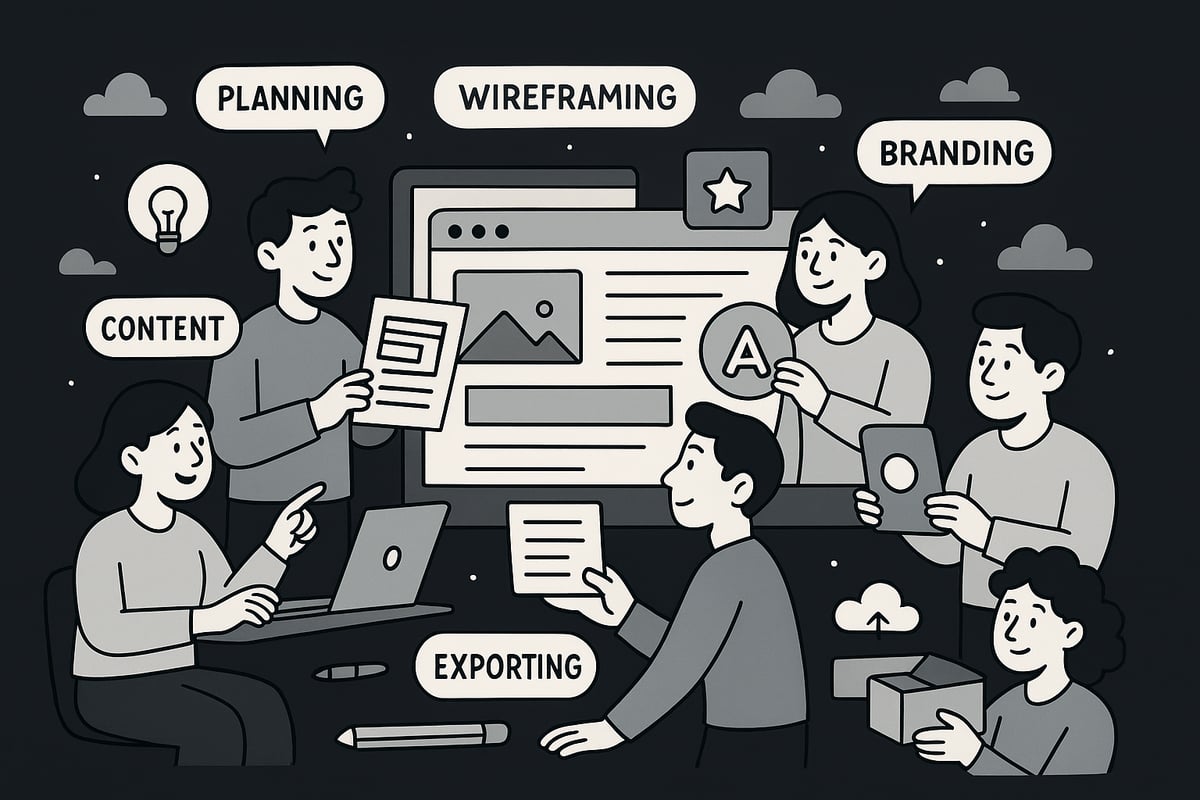
Step 1: Discovery & Planning
A successful in design web project begins with thorough research and clear goal-setting. Start by defining user personas, mapping out user journeys, and understanding your target audience. Use InDesign to sketch initial sitemaps and outline content architecture, ensuring alignment with your project vision.
- Conduct market research and competitor benchmarking.
- Organise stakeholder interviews to clarify expectations.
- Document project requirements and key deliverables.
According to industry studies, 70% of winning digital projects stem from robust planning. Setting a strong foundation early helps manage scope, reduces risks, and positions your in design web initiative for long-term success.
Step 2: Wireframing & Prototyping
Wireframes are the blueprint of an in design web project, providing structure and clarity. InDesign excels at precise layout control, allowing you to create detailed wireframes with master pages and grids for uniformity.
- Map out navigation and page hierarchy with multi-page wireframes.
- Use layers and guides for responsive design planning.
- Compare InDesign's pixel-perfect control to Figma's collaborative features.
A well-built wireframe streamlines feedback and reduces ambiguity. In design web teams often choose InDesign for its robust prototyping tools, especially when consistency across complex layouts is a priority.
Step 3: Visual Design & Branding Integration
Brand identity must shine through every element of your in design web project. Apply brand guidelines meticulously, managing colour palettes, typography, and imagery within InDesign.
- Build and share asset libraries for rapid reuse.
- Set up style guides for consistent application across all screens.
- Integrate logos and iconography seamlessly.
Research shows that consistent branding increases user trust by 23 percent. InDesign's asset management features ensure your in design web visuals are both on-brand and adaptable for future updates. For more on digital branding, see Digital Branding Solutions Blog.
Step 4: Content Creation & Asset Management
Efficient content workflows are at the heart of in design web excellence. Streamline text and media imports, leveraging InDesign's content linking and updating features to scale projects quickly.
- Collaborate with writers and editors using shared documents.
- Employ version control to avoid content duplication.
- Use linked assets for easy global updates.
For deeper insights into content workflows, explore the Content for Website Design guide. A content-led approach not only boosts SEO but also enhances user experience throughout your in design web project.
Step 5: Exporting & Developer Handoff
The transition from design to development is critical in any in design web process. Export assets in web-ready formats like JPG, PNG, or SVG, and organise files logically for smooth handoff.
- Adopt clear asset naming conventions.
- Optimise resolution for performance.
- Prepare a developer-ready package with annotated layouts.
Efficient handoff can reduce build time by up to 30 percent. A transparent workflow minimises back-and-forth, ensuring your in design web assets integrate seamlessly into the final website.
Step 6: Iteration, Testing & Launch
Continuous improvement distinguishes standout in design web projects. Use InDesign's prototyping features for stakeholder reviews and iterative feedback loops.
- Test for accessibility, responsiveness, and cross-device compatibility.
- Gather feedback using digital proofing tools.
- Refine designs based on user testing and analytics.
Iterative design increases launch success rates by 40 percent. By embedding testing and adaptation into your in design web workflow, you ensure the final product meets user needs and exceeds expectations.
Collaboration & Efficiency: InDesign in Modern Web Teams
Collaboration is at the heart of modern in design web projects. As digital teams grow more distributed, seamless integration and communication become critical for success. Let us explore how InDesign powers efficiency, from tool integration to streamlined approvals, ensuring teams deliver their best work in any environment.
Integrating InDesign with Other Tools
Effective in design web workflows demand seamless integration with creative software. InDesign connects effortlessly with Photoshop and Illustrator, allowing designers to refine images, vectors, and layouts without breaking stride. Cloud storage integration further ensures that assets remain accessible and up to date.
Consider a typical workflow: a designer imports a logo created in Illustrator, adjusts photography in Photoshop, and places both directly into the in design web document. Libraries shared across Adobe apps streamline asset updates. This synergy accelerates project delivery and maintains consistency across platforms.
Real-Time Collaboration & Remote Workflows
In 2026, over 60% of design teams operate remotely. In design web projects thrive when teams harness InDesign’s cloud features, enabling real-time editing and feedback. Shared cloud documents allow multiple contributors to review layouts, make changes, and resolve issues instantly, regardless of location.
Remote-first workflows foster inclusivity and flexibility. Cloud-based commenting, version tracking, and instant notifications mean that every team member stays informed and engaged. The result is a more agile, responsive design process, perfectly suited for the fast-paced nature of in design web work.
Version Control & Asset Management
Maintaining consistency in large in design web projects is a challenge. Shared libraries and template systems in InDesign provide a solution. By centralising assets, teams reduce duplication and ensure everyone works from the latest files.
Version control is crucial when multiple designers collaborate. InDesign’s file management tools support tracking changes, rolling back edits, and auditing asset use. This approach minimises errors and streamlines updates, giving teams confidence as projects scale.
A well-organised asset management system minimises confusion and keeps the in design web workflow efficient from concept to launch.
Streamlining Feedback & Approval Processes
Efficient feedback is essential for any in design web project. InDesign’s digital proofing and annotation features enable stakeholders to review layouts, leave comments, and approve changes directly within the document. This digital-first approach reduces revision cycles and accelerates sign-offs.
For agencies and brands seeking advanced workflows, aligning with Website Design & Development Services can introduce best practices for collaborative approvals and stakeholder engagement. Structured feedback processes keep projects on track and ensure a smooth path from concept to launch.
Overcoming Common Collaboration Challenges
Even the best in design web teams face hurdles like miscommunication, file conflicts, and varying design standards. Clear communication protocols and a culture of accountability are key to overcoming these issues.
Tips for success include:
- Establishing naming conventions for files and assets
- Scheduling regular project check-ins
- Using shared templates to unify visual language
Expert insight: foster a team environment where feedback is constructive and everyone understands their responsibilities. This approach leads to higher quality outcomes and a more resilient in design web team.
Advanced In Design Web Techniques for 2026
The pace of innovation in design web is accelerating, demanding new skills and approaches from every professional. As we approach 2026, advanced techniques and technologies are reshaping digital experiences, from AI-powered layouts to immersive, accessible interfaces. Let us explore the techniques redefining in design web excellence.
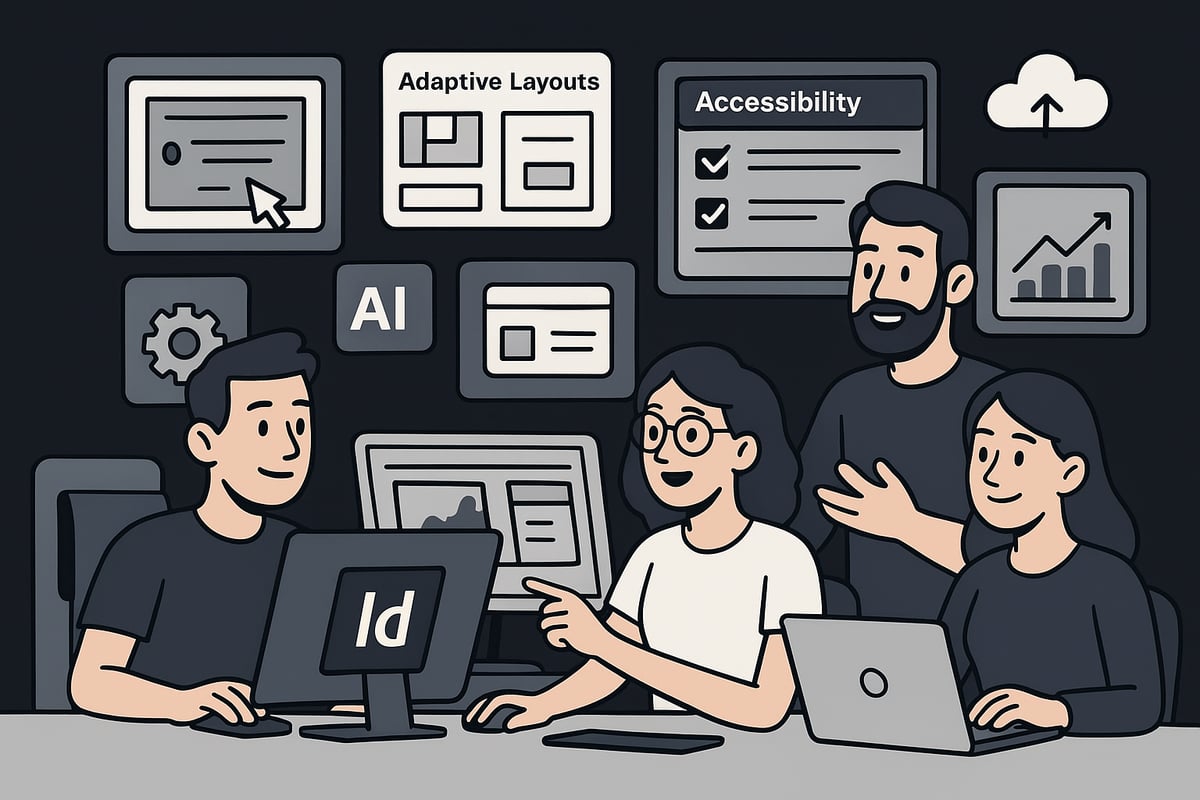
Leveraging AI & Automation in Design
AI is rapidly transforming in design web processes, automating repetitive tasks and unlocking creative possibilities. Designers now use generative AI tools within InDesign to automate layout generation, populate templates with dynamic content, and even suggest optimal colour schemes.
For example, AI-driven scripts can auto-populate product catalogues or news feeds directly in InDesign, saving countless hours. Asset creation, such as resizing images or generating alternative text for accessibility, is now streamlined. This level of automation allows teams to focus on strategy and innovation, rather than manual production.
Integrating AI not only boosts efficiency but also ensures consistency across large projects in design web.
Responsive & Adaptive Design Strategies
Delivering seamless digital experiences across devices is a core priority for in design web professionals. InDesign now supports multi-device layout planning through adaptive grids and scalable components, enabling designers to visualise breakpoints for mobile, tablet, and desktop within a single project.
A mobile-first approach is increasingly common, where layouts are designed for small screens before scaling up. Using InDesign’s flexible artboards and master pages, designers can replicate content while adjusting hierarchy and imagery for each device.
By building adaptive wireframes early, teams ensure that every in design web project meets user expectations, regardless of platform or screen size.
Accessibility & Inclusive Design Best Practices
Accessibility is now fundamental in design web, with compliance to WCAG 2.2 standards a core requirement for leading brands. InDesign offers robust tools for managing semantic structure, colour contrast, and text alternatives, allowing designers to create universally usable sites.
Data shows that 85% of top sites in 2026 prioritise accessibility, reflecting its business value and social impact. Designers use InDesign’s preflight checks to catch accessibility errors before export, ensuring screen reader compatibility and keyboard navigation.
By prioritising inclusive design at every stage, in design web teams build trust, expand reach, and deliver experiences that work for everyone.
Creating Immersive, Interactive Experiences
The modern digital audience expects more than static visuals. In design web now includes interactive elements like animations, micro-interactions, and embedded multimedia. InDesign enables designers to prototype these features, exporting interactive PDFs or HTML assets for stakeholder review.
For instance, clickable prototypes with animated transitions help communicate the intended user journey. Interactive buttons, embedded videos, and hover effects can all be visualised within InDesign before development begins.
These immersive experiences set brands apart, making in design web projects memorable and engaging for users across all industries.
Performance Optimisation & SEO Considerations
Performance and visibility are non-negotiable for in design web success. Designers must create lightweight, fast-loading assets and ensure every visual element supports SEO goals. InDesign’s export options allow for optimised images (JPG, PNG, SVG) with precise resolution control.
Collaboration with developers ensures that asset names, alt text, and metadata are SEO-friendly. Responsive design and accessibility also contribute to better search rankings. According to future-proof web design trends for 2026, integrating performance and SEO best practices is critical for staying ahead.
By embedding these principles, in design web projects achieve greater reach, faster load times, and improved user satisfaction.
Expert Insights & Predictions: The Future of In Design Web
The pace of change in design web is accelerating, and industry leaders are shaping tomorrow’s standards today. Success in this space demands a forward-thinking mindset, informed by expert insights, real-world results, and a commitment to continuous improvement.
Thought Leader Perspectives for 2026
Thought leaders agree: the future of in design web is collaborative, data-driven, and AI-enhanced. According to web design industry statistics, over 70% of agencies now utilise cloud-based tools and automation to streamline workflows.
Agency directors highlight the growing importance of integrating generative AI for both creative ideation and asset production. As one design lead notes, “AI is not replacing creativity, but amplifying our ability to deliver bespoke experiences at scale.” This expert guidance is shaping how teams approach every stage of in design web projects.
Case Studies: Success Stories & Lessons Learned
Brands leveraging in design web workflows are seeing measurable gains in efficiency and impact. For example, a global retailer adopted an InDesign-led approach, resulting in a 30% reduction in build time and a 20% boost in brand consistency across digital platforms.
| Case Study | Time Saved | Brand Consistency | Outcome |
|---|---|---|---|
| Global Retailer | 30% | +20% | Faster launches |
| Creative Agency | 25% | +18% | Higher engagement |
These results show that in design web strategies can drive both operational performance and user trust. Lessons learned include the importance of early stakeholder alignment and the value of robust asset management systems.
Common Pitfalls & How to Avoid Them
Despite the potential, common pitfalls persist in design web workflows. Asset bloat, inconsistent branding, and poor communication can undermine project outcomes.
To avoid these issues:
- Establish clear file naming conventions.
- Use shared libraries for visual assets.
- Implement regular review cycles with stakeholders.
Experienced teams also stress the need for cross-functional collaboration. Addressing these pitfalls early leads to smoother launches and higher client satisfaction in design web projects.
Essential Skills for Future-Proof Designers
The next generation of in design web professionals will need to master a blend of technical and creative skills. Key competencies include:
- Cross-disciplinary knowledge (design, development, marketing)
- AI and automation literacy
- Collaboration in remote and hybrid teams
- Strong communication and stakeholder management
Expert tip: Embrace continuous learning. The most successful designers in design web invest in regular upskilling and stay attuned to industry shifts.
Predictions: What’s Next for In Design Web?
Looking ahead, in design web is set to become even more dynamic. The rise of fully automated, AI-driven design systems is on the horizon. Client expectations are shifting toward hyper-personalisation and instant scalability.
Emerging technologies, such as real-time prototyping and adaptive content delivery, will redefine what’s possible. According to Web design statistics and trends 2025, brands that adopt these innovations early will lead the market. The future of in design web belongs to those ready to adapt, collaborate, and innovate.
Resources & Toolkits for In Design Web Success
Staying ahead in the in design web field means having the right resources at your fingertips. As workflows become more advanced, a well-curated toolkit can accelerate project delivery, boost team collaboration, and ensure that your skills remain relevant in 2026.
Essential Tools for In Design Web Projects
To thrive in in design web, invest in these must-have tools:
- InDesign Plugins: Automate layout tasks, manage assets, and extend typography options.
- Asset Management Systems: Organise images, fonts, and reusable components for efficiency.
- Prototyping Platforms: Integrate with InDesign for interactive mockups and user testing.
- Cloud Collaboration Solutions: Enable real-time editing and feedback for distributed teams.
Below is a quick comparison of top cloud collaboration tools for in design web use in 2026:
| Tool | Key Feature | User Satisfaction |
|---|---|---|
| Adobe Creative Cloud | Deep InDesign integration | 92% |
| Figma | Real-time prototyping | 89% |
| Miro | Visual brainstorming | 85% |
Recommended Reading and Learning
Continuous learning is crucial for in design web professionals. Explore advanced topics through books, blogs, and online courses. For those new to digital projects, the Online Site Design Guide offers a solid foundation and complements more advanced InDesign strategies.
Templates, Checklists, and Downloadables
Streamline your workflow with downloadable templates for wireframes, branding guidelines, and asset handoff checklists. These resources help maintain consistency and save valuable time on every project.
Community Forums, Webinars, and Events
Engage with design communities online to exchange ideas and stay current. Participate in webinars and attend industry events to connect with experts and learn about emerging in design web trends.
Adoption Data and Staying Ahead
Recent industry surveys show over 80% adoption of cloud collaboration tools among design teams, with user satisfaction scores consistently above 85%. To keep your edge in the in design web landscape, regularly update your toolkit, follow trusted blogs, and join professional groups focused on digital design innovation.