
Design of Products and Services: The 2026 Expert Guide
Innovation is accelerating at an unprecedented rate in 2026. Businesses face constant change and must rethink how they approach the design of products and services.
To stay ahead, organisations need to create solutions that truly delight users, address real-world challenges, and adapt quickly to new market demands.
This expert guide offers the most up-to-date strategies, frameworks, and practical insights for mastering product and service design in 2026.
You will discover essential steps, emerging trends, and proven methodologies that define tomorrow’s most successful offerings.
We will explore foundational principles, user-centric design, digital transformation, sustainability, innovation, and the future outlook for the design of products and services.
Foundations of Modern Product and Service Design
The design of products and services in 2026 is shaped by an evolving blend of technology, user expectations, and global standards. Organisations now blur the lines between physical and digital, aiming for seamless experiences that go beyond traditional boundaries. This foundation sets the stage for innovation and competitiveness in a crowded market.
Defining Product and Service Design in 2026
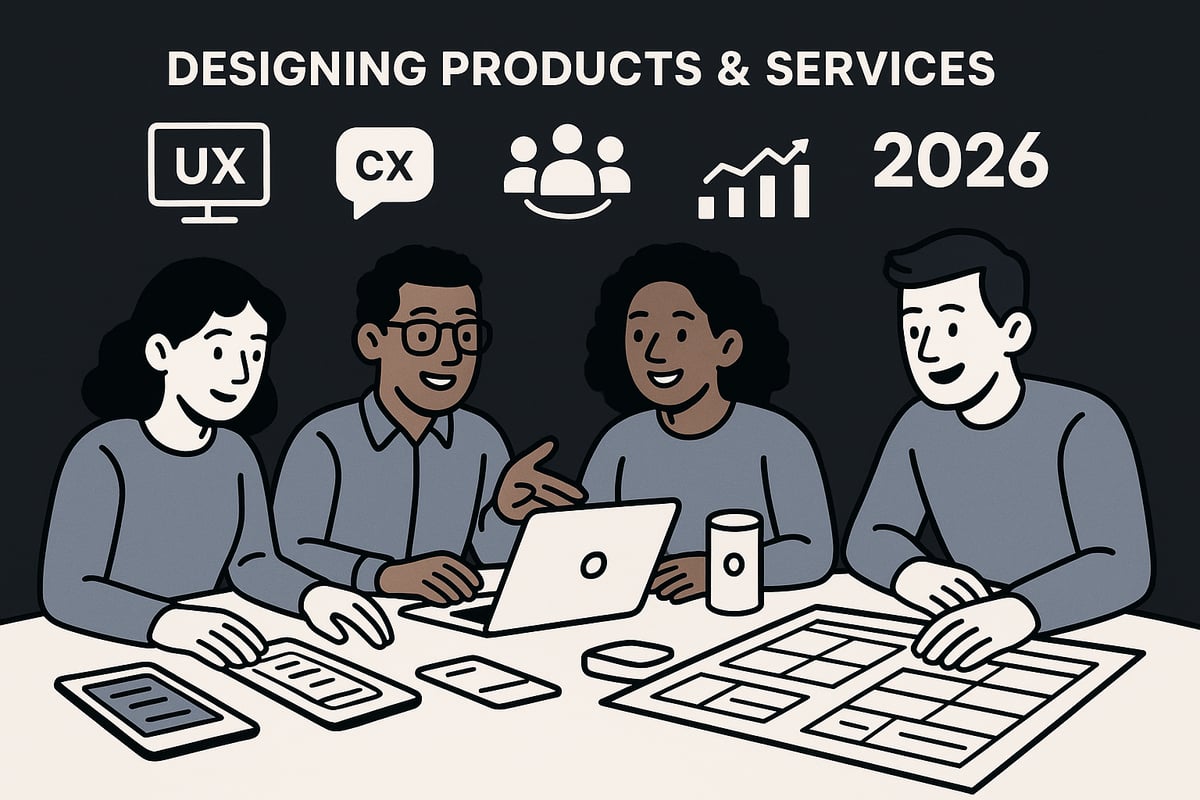
The design of products and services now encompasses both tangible items and intangible experiences. While product design traditionally focused on physical items, service design maps the interactions and touchpoints that shape customer journeys. Increasingly, these overlap, with digital and physical merging into unified ecosystems.
Key terminology includes UX (user experience), CX (customer experience), HCD (human-centred design), and DfX (design for excellence). Organisations align with ISO 9001 and other global standards to ensure quality and consistency. Apple’s integration of hardware and software is a prime example of how the design of products and services creates cohesive, engaging experiences.
Core Principles and Frameworks
A human-centred approach is now at the core of the design of products and services. Teams prioritise understanding real user needs, crafting value propositions that solve meaningful problems. Frameworks like jobs-to-be-done help clarify what users truly seek, while lean and agile methodologies drive efficiency and adaptability.
The Double Diamond and Design Thinking frameworks break the process into phases of discovery, definition, development, and delivery. IDEO’s iterative prototyping model showcases how continuous feedback refines the design of products and services for better outcomes.
| Framework | Focus Area | Example Use |
|---|---|---|
| Design Thinking | Empathy, Prototyping | Service innovation |
| Double Diamond | Problem/Solution Phases | Product launches |
| Lean/Agile | Rapid Iteration | MVP development |
The Role of Cross-Functional Teams
Successful design of products and services relies on collaboration across disciplines. Cross-functional teams bring together design, engineering, marketing, and business experts, ensuring every perspective is heard. This co-creation extends to stakeholders and end-users, promoting solutions that are both innovative and practical.
Spotify’s squad model demonstrates how small, autonomous groups accelerate the design of products and services by sharing ownership and responsibility. This approach fosters creativity, speeds up decision-making, and enhances alignment throughout the organisation.
Data-Driven and Evidence-Based Design
Today, the design of products and services is grounded in evidence, not assumption. Teams leverage analytics, A/B testing, and direct user feedback to validate ideas and optimise solutions. AI and machine learning enhance the ability to predict user behaviours and personalise experiences.
According to Product Design Statistics 2025, 77% of top-performing companies now use data-driven design methods to increase product success rates. These practices ensure that decisions are informed, measurable, and responsive to real-world needs.
Regulatory, Ethical, and Accessibility Considerations
Ethics, accessibility, and compliance are now non-negotiable in the design of products and services. Adhering to GDPR, ADA, and sustainability requirements protects users and strengthens brand trust. Inclusive design means considering diverse abilities and backgrounds from the start.
Microsoft’s inclusive design toolkit sets a benchmark for creating accessible and ethical solutions. By embedding these principles, organisations future-proof the design of products and services, making them equitable and responsible for all.
Step-by-Step Guide to Designing Products and Services in 2026
Navigating the design of products and services in 2026 requires a methodical, user-centred approach. This step-by-step guide breaks down the essential phases, from research to future-proofing, ensuring your offerings resonate in a dynamic market. Each stage builds on the last, enabling teams to create, launch, and refine solutions that deliver measurable value.
Below is a summary table outlining the core steps in the design of products and services process:
| Step | Focus Area | Key Actions |
|---|---|---|
| 1 | Discovery & Research | Market/user analysis |
| 2 | Ideation & Concept Dev. | Idea generation/validation |
| 3 | Prototyping & Testing | Build/test solutions |
| 4 | Scalability & Sustainability | Design for growth/impact |
| 5 | Implementation & Launch | Develop/roll out |
| 6 | Post-Launch Optimisation | Monitor/improve |
| 7 | Future-Proofing & Adaptation | Ensure long-term relevance |
Step 1: Discovery & Research
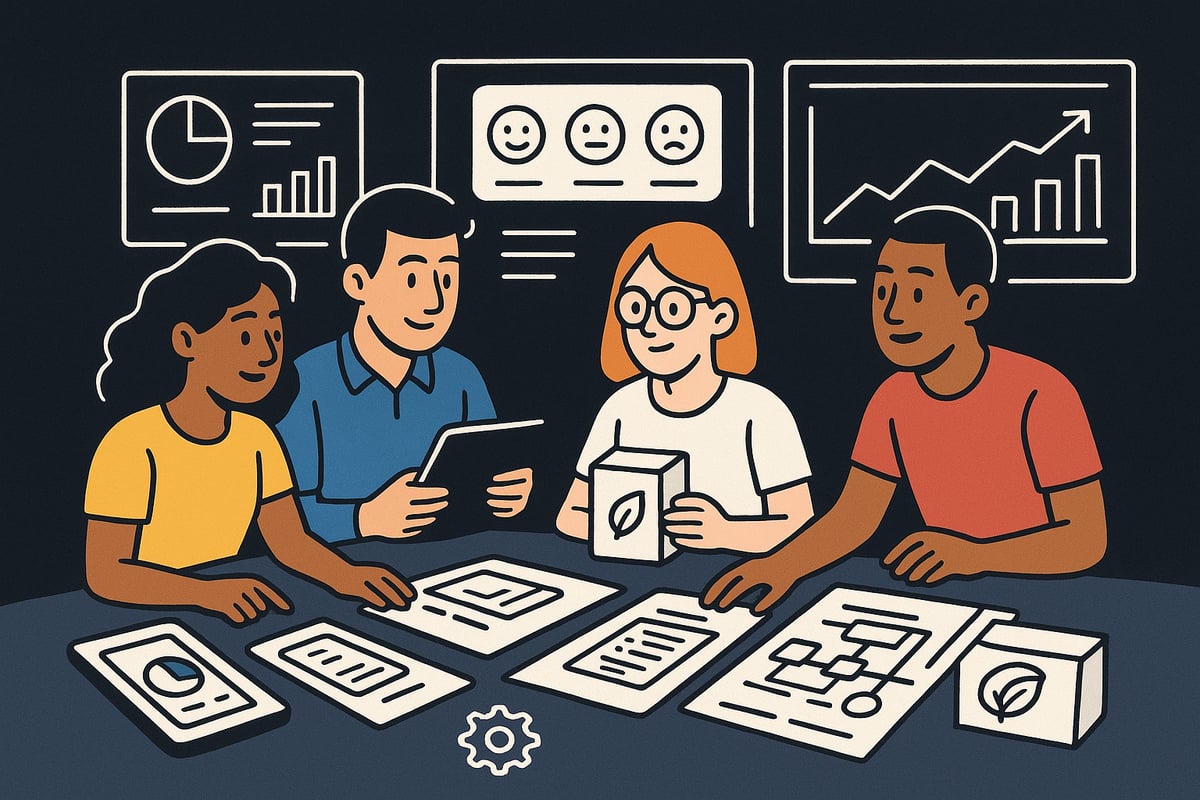
The foundation of effective design of products and services lies in thorough discovery and research. Begin by analysing market trends, conducting competitor analysis, and forecasting shifts in user expectations.
Engage directly with potential users through interviews, ethnographic studies, and persona development. These approaches help teams uncover unmet needs and pain points, which are crucial for building meaningful solutions.
A prime example is Airbnb, which maps the entire customer journey to identify areas for improvement. By understanding every interaction, teams can design products and services that stand out in a crowded marketplace.
Step 2: Ideation & Concept Development
Once insights are gathered, move into ideation and concept development. This stage in the design of products and services focuses on generating a wide range of ideas through brainstorming sessions and collaborative workshops.
Leverage digital whiteboards and AI-assisted ideation tools to enhance creativity and speed. Involving cross-functional teams encourages diverse perspectives and robust concepts.
According to Forrester, teams using collaborative ideation are twice as likely to launch successful offerings. Validate ideas quickly with users to ensure alignment with real-world needs, setting the stage for effective prototyping and testing.
Step 3: Prototyping & Testing
Prototyping and testing bring concepts to life, a vital step in the design of products and services. Start with low-fidelity prototypes to visualise ideas, then progress to high-fidelity versions for realistic testing.
Run usability tests and gather feedback in rapid cycles. Design sprints accelerate learning and reduce time to market. For digital solutions, the app design and development process provides a structured approach to building and iterating on prototypes, ensuring high user satisfaction.
Google famously uses rapid prototyping to refine new services, enabling quick pivots based on user input. Consistent feedback loops at this stage prevent costly mistakes later.
Step 4: Design for Scalability & Sustainability
Ensuring scalability and sustainability is now central to the design of products and services. Adopt modular design and platform thinking to support growth and adaptability.
Embrace circular economy principles by selecting sustainable materials and developing energy-efficient delivery models. Nielsen reports that 63% of consumers prefer sustainable products and services, making this step essential for long-term success.
Teams should consider scalability not only in technology but also in operations and supply chain. This holistic view ensures resilience as markets evolve.
Step 5: Implementation & Launch
With a validated prototype, move to implementation and launch. Agile development methods are at the heart of the design of products and services in this phase, enabling teams to release minimum viable products (MVPs) and iterate based on user feedback.
Organise cross-functional launch teams to coordinate development, marketing, and customer support. Phased rollouts help manage risk and allow for incremental improvements. Tesla exemplifies this approach with its staged product launches, ensuring quality and market readiness.
A well-executed launch sets the tone for the product or service’s lifecycle and maximises impact.
Step 6: Post-Launch Optimisation
After launch, continuous optimisation is critical to the design of products and services. Monitor key performance indicators (KPIs), collect user feedback, and implement improvements regularly.
Analytics dashboards and automated reporting streamline the process. According to Gartner, 80% of successful offerings iterate after launch, highlighting the importance of ongoing enhancement.
This phase ensures products and services remain relevant, competitive, and aligned with evolving user needs. Teams that prioritise optimisation achieve greater customer satisfaction and sustained growth.
Step 7: Future-Proofing & Adaptation
The final step in the design of products and services is future-proofing and adaptation. Build flexibility into your design systems to accommodate emerging technologies and shifting market conditions.
Scenario planning and responsive design principles prepare teams for uncertainty. Netflix’s adaptive content delivery model is a leading example, allowing rapid adjustment to user preferences and technological advances.
By embedding adaptability, organisations can respond to disruption and maintain leadership in a rapidly evolving landscape.
User-Centred Design: Creating Value in the Experience Economy
User-centred design is at the heart of successful products and services in 2026. In the experience economy, organisations must understand what users truly value, then deliver solutions that exceed expectations. The design of products and services now hinges on empathy, inclusivity, and personalisation, ensuring every interaction leaves a positive, lasting impression.
Understanding User Needs and Behaviours
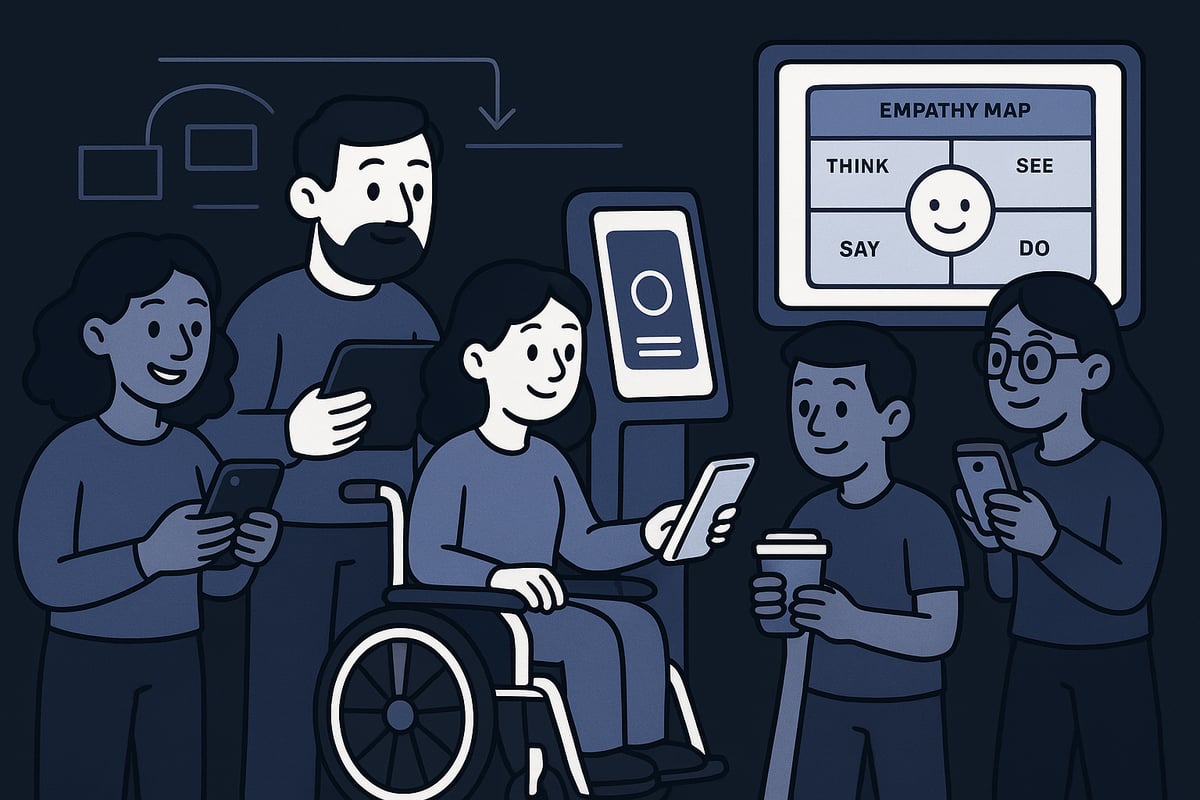
The design of products and services begins with deep user understanding. Conducting thorough user research, such as interviews and ethnographic studies, uncovers real motivations and pain points. Empathy mapping helps teams visualise user emotions and needs, while journey analytics track behaviour across touchpoints.
Creating detailed personas and user segments enables targeted solutions that resonate with specific audiences. For instance, Nike’s personalised shopping experience uses rich data to tailor recommendations and streamline the path to purchase. By prioritising user needs, the design of products and services achieves both relevance and impact.
Designing for Emotional Engagement
Emotional engagement is a critical differentiator in the design of products and services. Emotional design principles, including thoughtful storytelling and consistent brand voice, help organisations forge strong connections with users. Micro-interactions, such as animated feedback or tailored greetings, create moments of delight that users remember.
According to the Harvard Business Review, emotionally engaged users are three times more likely to recommend a product or service. Crafting a cohesive emotional narrative also relies on a solid brand strategy and design essentials foundation, ensuring every touchpoint reinforces trust and loyalty. This approach elevates the design of products and services above the competition.
Accessibility and Inclusive Design
In 2026, accessibility and inclusivity are non-negotiable in the design of products and services. Designing for diverse abilities and backgrounds requires a proactive approach, incorporating features like screen reader compatibility, adjustable font sizes, and clear colour contrasts.
Legal requirements, such as the ADA and global accessibility guidelines, set minimum standards, but leading organisations go further. The BBC’s accessible digital platforms exemplify best practice, offering seamless experiences for all users. By embracing inclusive design, the design of products and services opens opportunities and markets previously out of reach.
Personalisation and Customisation
Personalisation drives value in the design of products and services, allowing organisations to deliver unique experiences for every user. AI-powered engines and dynamic content adapt offerings in real time, increasing relevance and satisfaction.
However, balancing personalisation with privacy is essential. Users expect tailored experiences, but also demand transparency about data use. Salesforce reports that 72 percent of consumers expect personalisation, making it a competitive necessity. When executed thoughtfully, personalisation becomes a defining feature in the design of products and services.
Service Design Tools and Blueprints
Service design tools bring structure and clarity to the design of products and services. Service blueprints map out back-end processes and front-stage interactions, ensuring smooth delivery across every channel. Customer journey maps and touchpoint analysis help identify opportunities for improvement and innovation.
Maintaining cross-channel consistency is key to building trust and satisfaction. Starbucks’ integrated digital and in-store experience is a prime example of omnichannel success. Leveraging these tools, the design of products and services becomes more efficient, scalable, and user-focused.
Digital Transformation and Technology’s Impact on Design
Digital transformation is rapidly reshaping the design of products and services, driving innovation and elevating user expectations. Technology’s influence is now central to every stage of the design process, from ideation to optimisation.
The Rise of AI and Automation in Design
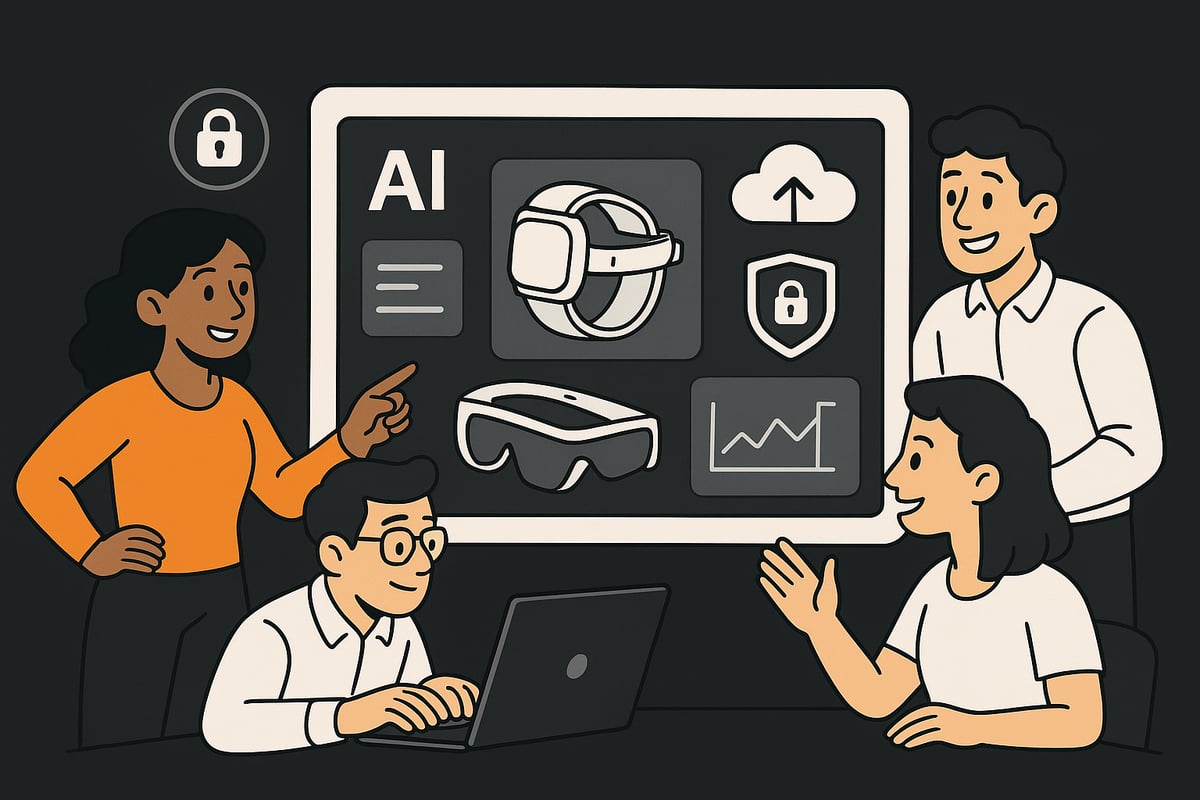
Artificial intelligence is transforming the design of products and services by enabling rapid prototyping, smart automation, and generative creativity. AI-powered tools can now suggest layouts, automate repetitive tasks, and even generate entirely new concepts based on user data.
Designers are leveraging automation to test variations, optimise workflows, and reduce time to market. For instance, Adobe Sensei’s AI assistant streamlines the creative process, freeing teams to focus on innovation. The integration of generative AI, as explored in Industry 6.0 and Generative AI, marks a significant leap, allowing for fully automated product design processes and intelligent adaptation to user needs.
The result is a more efficient and adaptive approach to the design of products and services, where AI augments human creativity and decision-making.
Integrating IoT, AR/VR, and Emerging Tech
The convergence of IoT, AR, and VR is revolutionising the design of products and services. Connected devices gather real-time data, enabling continuous improvement and personalisation. AR and VR provide immersive prototyping environments, allowing users and designers to interact with digital models before physical production.
By 2026, over half of companies are investing in AR/VR for design, creating new opportunities for collaboration and user engagement. Smart products now seamlessly blend physical and digital experiences, setting new benchmarks for innovation.
Emerging technologies require design teams to adopt agile mindsets and experiment with novel interaction paradigms, ensuring that the design of products and services remains at the forefront of user expectations.
Data Privacy, Security, and Ethics
As technology advances, privacy and ethical considerations have become central to the design of products and services. Designers must address data security from the outset, implementing robust safeguards and transparent practices.
Ethical design involves more than compliance; it requires anticipating potential misuse and ensuring fairness in AI-driven experiences. Apple’s privacy-centric approach is a leading example, embedding user trust into every product.
Balancing innovation with responsibility, companies are redefining standards for ethical design, making privacy and security foundational to the design of products and services.
The Shift to Cloud-Based and Remote Collaboration
Cloud technology has revolutionised the way teams approach the design of products and services. Distributed teams collaborate in real time using cloud-based platforms, enabling seamless sharing, version control, and feedback.
Eighty-five percent of design teams now rely on cloud tools, accelerating workflows and supporting remote work. Platforms like Figma and Miro empower cross-functional teams to contribute from anywhere, making the design process more inclusive and dynamic.
This shift not only increases efficiency but also expands access to global talent, ensuring that the design of products and services benefits from diverse expertise and perspectives.
Measuring Digital Experience Success
Success in the design of products and services is now measured by real-time data and user-centric metrics. Key indicators such as NPS, CSAT, retention, and conversion rates guide continuous improvement.
A summary of essential digital experience metrics:
| Metric | What It Measures | Why It Matters |
|---|---|---|
| NPS | User loyalty | Predicts long-term growth |
| CSAT | Customer satisfaction | Reflects immediate experience |
| Retention | Repeat engagement | Indicates ongoing value |
| Conversion | User actions (e.g., sign-ups) | Ties design to business outcomes |
Amazon’s data-driven optimisation process exemplifies how analytics inform every stage of the design of products and services, ensuring offerings evolve with user needs.
Sustainability, Social Impact, and Responsible Design
Sustainability and social impact are now central to the design of products and services. In 2026, businesses cannot afford to ignore their responsibility to people and the planet. Responsible design is not just about compliance, it is a strategic imperative that builds trust and long-term value.
Designing for Environmental Sustainability
A sustainable approach to the design of products and services starts with life-cycle thinking. Every stage, from sourcing raw materials to end-of-life disposal, must be considered. Eco-friendly materials, energy-efficient processes, and circular design principles are now standard expectations.
For instance, many manufacturers are integrating circular economy models and AI-driven personalisation as predicted in the IDC FutureScape: Manufacturing Predictions 2024. Patagonia’s use of recycled fabrics and repair services exemplifies this shift.
Designers must:
- Conduct life-cycle analyses
- Select renewable or recycled materials
- Optimise for reuse and minimal waste
Embedding these strategies into the design of products and services futureproofs offerings and aligns with consumer demand.
Social Responsibility and Ethical Impact
In the design of products and services, social responsibility shapes both reputation and real-world outcomes. Ethical design means considering the broader impact on communities, workers, and society.
Transparency is essential. Brands are expected to provide clear information about sourcing, labour practices, and community engagement. Unilever’s responsible sourcing programme is a leading example. Designers should partner with stakeholders, prioritise fair labour, and ensure products do not harm vulnerable groups.
A recent statistic shows that 66 percent of consumers factor sustainability into their purchase decisions (Accenture). Ethical impact in the design of products and services is now a key driver of loyalty and differentiation.
Regulatory Compliance and Global Standards
Compliance is non-negotiable in the design of products and services. International standards like ISO 14001 for environmental management, B Corp certification, and Fair Trade labels help ensure that products and services meet global expectations for sustainability and ethics.
Key certifications include:
| Standard | Focus Area | Example Brand |
|---|---|---|
| ISO 14001 | Environmental Management | Siemens |
| B Corp | Social & Environmental | Ben & Jerry’s |
| Fair Trade | Ethical Sourcing | Divine Chocolate |
Adhering to these standards in the design of products and services reduces regulatory risk and opens new markets. It also builds credibility with partners and consumers.
The Business Case for Responsible Design
Responsible design of products and services is not just good ethics, it is good business. Sustainable and ethical practices drive brand loyalty, reduce long-term risk, and help companies stand out.
Financial data backs this up. Companies with strong ESG (Environmental, Social, Governance) credentials consistently outperform peers financially (MSCI). Investing in responsible design of products and services pays dividends through increased trust, customer retention, and market share.
The future belongs to businesses that embed sustainability and social impact into every stage of the design of products and services.
Innovation, Trends, and the Future of Product and Service Design
The future of the design of products and services is evolving faster than ever. Designers must adapt to new technologies, shifting user expectations, and emerging business models. Understanding where innovation is heading in 2026 is essential for any organisation aiming to stay ahead.
Emerging Design Trends for 2026
In 2026, the design of products and services is shaped by hyper-personalisation, phygital experiences, and the rise of zero UI. Businesses are blending digital and physical touchpoints to create seamless, memorable journeys. Subscription models and platform ecosystems are becoming standard, enabling companies to build long-term relationships with users.
A leading example is Peloton, which integrates hardware, software, and community features into a single, continuous experience. Designers are now focusing on emotional connection, flexible user flows, and adaptive interfaces. The DesignFromX: Consumer-Driven Design approach is also gaining traction, empowering users to co-create solutions with generative AI. These trends are redefining how organisations approach the design of products and services.
The Role of AI, Blockchain, and Quantum Computing
AI is transforming the design of products and services by automating ideation, testing, and personalisation. Generative AI tools enable rapid prototyping and creative exploration, while data-driven insights guide decision-making. Blockchain technology is emerging as a powerful tool for transparency, trust, and secure transactions within digital ecosystems.
Quantum computing, though still in its early stages, promises to solve complex design challenges that were previously impossible. According to Gartner, 40 percent of enterprises are experimenting with blockchain in service design. As these technologies mature, they will become central to the design of products and services, unlocking new possibilities and efficiencies.
The Future of Work in Design Teams
The design of products and services is increasingly driven by remote-first teams, the gig economy, and global collaboration. Organisations are rethinking traditional team structures, embracing distributed expertise, and investing in upskilling. Interdisciplinary knowledge is now a must, as design challenges span technology, business, and social impact.
Automattic’s distributed design teams have set a benchmark for remote collaboration and innovation. To succeed, teams must foster a culture of trust, flexible workflows, and continuous learning. These changes are reshaping not only how teams operate but also how the design of products and services is delivered worldwide.
Preparing for Continuous Disruption
Continuous disruption is the new normal in the design of products and services. To remain competitive, organisations must build resilient, adaptive design processes that can quickly respond to change. Scenario planning, rapid experimentation, and a culture of learning are vital.
Leaders recognise that innovation is not a one-time effort but an ongoing journey. According to PwC, 90 percent of executives see innovation as critical for future growth. By embracing these mindsets, businesses can future-proof the design of products and services, ensuring long-term success in an unpredictable landscape.