
9 Essential Best Digital Marketing Website Design Ideas 2025
The digital marketing landscape in 2025 is changing faster than ever, with brands competing to capture attention online. Standing out now demands more than just a functional website; it requires the best digital marketing website design to drive meaningful results.
In this article, you will discover nine essential and actionable website design ideas tailored for digital marketing success in 2025. From advanced user experience and AI integration to personalisation and conversion optimisation, we will cover the strategies you need. Ready to elevate your brand? Explore these trends to stay ahead of the competition.
The Importance of Cutting-Edge Website Design in Digital Marketing
In the rapidly evolving digital marketing landscape, a website is often the first point of contact between a brand and its audience. The best digital marketing website design is not just visually appealing but also strategically crafted to support marketing objectives, foster trust, and drive conversions. With competition intensifying in 2025, brands cannot afford to overlook the pivotal role that cutting-edge website design plays in their digital marketing strategy.
Research shows that 94% of first impressions are directly related to website design, according to Stanford Web Credibility. This statistic underlines the importance of investing in the best digital marketing website design to influence how users perceive your brand from the outset. A well-designed website can establish credibility, build trust, and encourage visitors to take meaningful actions, such as subscribing or making a purchase.
The expectations of users in 2025 are shaped by emerging trends like ultra-fast load speeds, seamless interactivity, and mobile-first experiences. Brands that excel in these areas are setting new standards in the marketplace. For example, companies that prioritise responsive layouts and interactive elements often see significant gains in engagement and retention. If you are looking for inspiration, the Creative Design Strategy for 2025 provides valuable insights into forward-thinking approaches that can set your brand apart.
Adopting the best digital marketing website design ideas gives businesses a tangible competitive edge. Not only do innovative designs enhance user experience, but they also contribute to stronger SEO performance and higher digital marketing ROI. By continuously updating and optimising your website, you ensure your brand remains relevant, trustworthy, and positioned for long-term success in a crowded online marketplace.

9 Essential Best Digital Marketing Website Design Ideas 2025
Staying ahead in digital marketing means embracing innovation. In 2025, applying the best digital marketing website design ideas is no longer optional, but fundamental to success. The following nine strategies blend future-focused creativity, data-driven insights, and proven results. Each one is actionable and designed to help your brand excel in a competitive landscape.
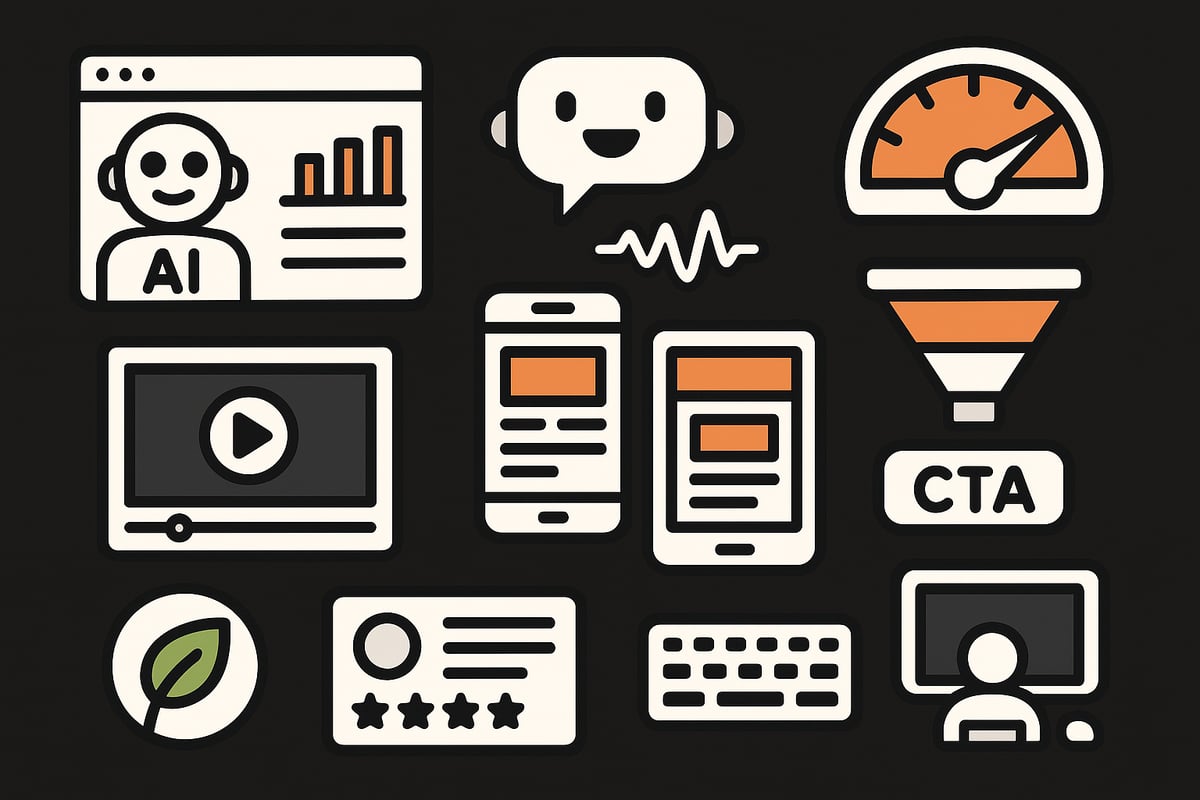
1. [AI-Driven Personalisation]
AI-driven personalisation is redefining the best digital marketing website design by creating unique, relevant experiences for every visitor. In 2025, brands are using artificial intelligence to dynamically tailor content, product suggestions, and layouts based on real-time user behaviour.
For example, dynamic landing pages serve different headlines and visuals depending on visitor profiles, while AI-driven recommendation engines boost engagement by suggesting the most relevant products. According to McKinsey, personalisation can lift sales by up to 20 percent, making this a powerful lever for digital marketing results.
Implementation is streamlined with platforms like Adobe Target, Dynamic Yield, and AI Solutions for Web Design, which enable seamless integration of AI personalisation features. When adopting these tools, it is crucial to stay transparent about data usage and prioritise user privacy, which builds trust and long-term loyalty.
AI's future in web design includes predictive content delivery, automated design adjustments, and hyper-personalisation. Brands that place AI at the core of their best digital marketing website design will be best positioned to convert visitors into loyal customers.
2. [Voice Search and Conversational Interfaces]
Voice search and conversational UIs are changing the way users interact with websites. As more consumers use smart speakers and voice assistants, optimising for natural language queries is essential in the best digital marketing website design.
Brands are integrating chatbots, voice-activated navigation, and AI-powered assistants to make site interactions smoother. For instance, voice-enabled menus allow users to find information hands-free, while chatbots answer queries instantly, improving accessibility and engagement.
A recent PwC study shows that 71 percent of consumers now prefer searching by voice over typing. This trend impacts SEO, as content must be structured for conversational queries. To adapt, use clear CTAs, concise copy, and ensure mobile responsiveness.
Designing for voice means prioritising fast, intuitive paths to information. Incorporate features like speech-to-text, accessible buttons, and streamlined navigation. These enhancements are vital for brands aiming to lead with the best digital marketing website design in 2025.
3. [Ultra-Fast Load Speeds and Core Web Vitals]
Speed is non-negotiable in the best digital marketing website design. Slow websites frustrate users and damage conversion rates. Google’s Core Web Vitals have become a ranking factor, making performance a top priority for SEO and user satisfaction.
Techniques like image optimisation, lazy loading, and efficient code reduce load times. For example, compressing images and minimising scripts can cut page load by several seconds. Google reports that 53 percent of mobile users abandon sites taking more than three seconds to load.
Brands like Amazon and ASOS have seen measurable increases in conversions after improving their site speed. Use tools such as Google PageSpeed Insights and Lighthouse to monitor and enhance performance. For a detailed look at site performance metrics, consult resources on Core Web Vitals and site optimisation.
Regular audits and updates ensure sustained speed, keeping your best digital marketing website design competitive year after year.
4. [Immersive Visual Storytelling]
Immersive visual storytelling is a cornerstone of the best digital marketing website design in 2025. Leveraging video, animation, and interactivity captures attention and fosters emotional connections with your audience.
Hero videos, parallax scrolling, and microinteractions make content memorable. Brands like Apple use cinematic visuals and subtle animations to reinforce their identity and keep users engaged. According to Forbes, adding video can increase average dwell time by 88 percent, translating to higher user retention and conversions.
When incorporating visual elements, balance creativity with performance. Use compressed video formats, lazy loading, and accessible design. Tools like LottieFiles and Adobe Animate help create immersive experiences that do not compromise speed or accessibility.
Visual storytelling allows brands to differentiate themselves and deliver the best digital marketing website design, building stronger relationships with users.
5. [Mobile-First and Responsive Design]
Mobile-first thinking is at the heart of the best digital marketing website design strategies. With over 60 percent of website traffic now originating from mobile devices, responsive frameworks are essential for reaching audiences wherever they are.
Adaptive layouts, touch-friendly navigation, and scalable images ensure seamless experiences across all devices. Brands such as Airbnb and Nike excel with mobile-first designs that prioritise content and usability on small screens.
Testing tools like Google Mobile-Friendly Test and BrowserStack help verify responsiveness. A mobile-first approach not only improves user experience but also boosts SEO rankings, as Google prioritises mobile-optimised sites.
By embracing mobile-first and responsive principles, brands can future-proof their best digital marketing website design and maximise reach in 2025.
6. [Conversion-Focused UX/UI]
A conversion-focused UX/UI is a hallmark of the best digital marketing website design. Every element, from CTAs to navigation, should be optimised to drive users toward desired actions.
Principles such as intuitive navigation, clear calls to action, and trust signals like badges or testimonials increase conversions. For example, simplified forms and high-performing landing pages reduce friction and encourage sign-ups or purchases.
A/B testing and UX analysis tools, such as Hotjar and Optimizely, enable data-driven improvements. Forrester reports that enhancing UX can boost conversion rates by up to 400 percent, underscoring the value of thoughtful design.
Accessibility and inclusivity are also key. Designing for all users ensures that your best digital marketing website design delivers results across diverse audiences.
7. [Sustainable and Ethical Web Design]
Sustainable and ethical practices are integral to the best digital marketing website design in 2025. Consumers increasingly value brands that demonstrate environmental responsibility online.
Techniques like green hosting, energy-efficient code, and minimalist interfaces reduce digital carbon footprints. Brands leading in this area, such as Ecosia and Patagonia, communicate sustainability transparently through their design and content.
According to Nielsen, 81 percent of consumers prefer to buy from sustainable brands. Measuring and reporting website sustainability, such as energy use and hosting choices, builds trust and loyalty.
Incorporating sustainability into your best digital marketing website design is not only ethical but also strengthens your competitive edge.
8. [Integrated Social Proof and Trust Signals]
Social proof and trust signals are powerful drivers in the best digital marketing website design. Displaying testimonials, reviews, partner logos, and case studies reassures visitors and increases conversions.
Strategic placement is crucial. Place reviews near CTAs, embed real-time notifications, and ensure authenticity with verified badges. Spiegel Research Center found that displaying reviews can increase conversions by 270 percent.
Automation tools help integrate social proof seamlessly, keeping content fresh and relevant. Authenticity, visibility, and credibility are the pillars of effective trust signal design.
By weaving social proof throughout your best digital marketing website design, you build confidence and encourage action from every visitor.
9. [Accessible Design for All Users]
Accessibility is fundamental to the best digital marketing website design in 2025. Legal and ethical standards, such as WCAG and ADA, require websites to be usable by everyone, including those with disabilities.
Key features include alt text for images, keyboard navigation, and sufficient colour contrast. Brands like Microsoft and BBC lead by example, ensuring their sites are inclusive and easy to navigate.
Accessibility also improves SEO and expands your audience. Tools like Axe and WAVE help test and refine accessibility features. According to WHO, 15 percent of the global population experiences some form of disability, highlighting the importance of inclusive design.
Future trends point to AI-driven accessibility and voice navigation, making accessibility a dynamic, evolving aspect of the best digital marketing website design.
How to Implement These Website Design Ideas in Your Digital Marketing Strategy
Adopting the best digital marketing website design strategies is only effective if you implement them with precision. The transition from planning to execution requires a clear roadmap, focused collaboration, and ongoing performance measurement. Here is a practical guide to embedding these ideas into your digital marketing approach.
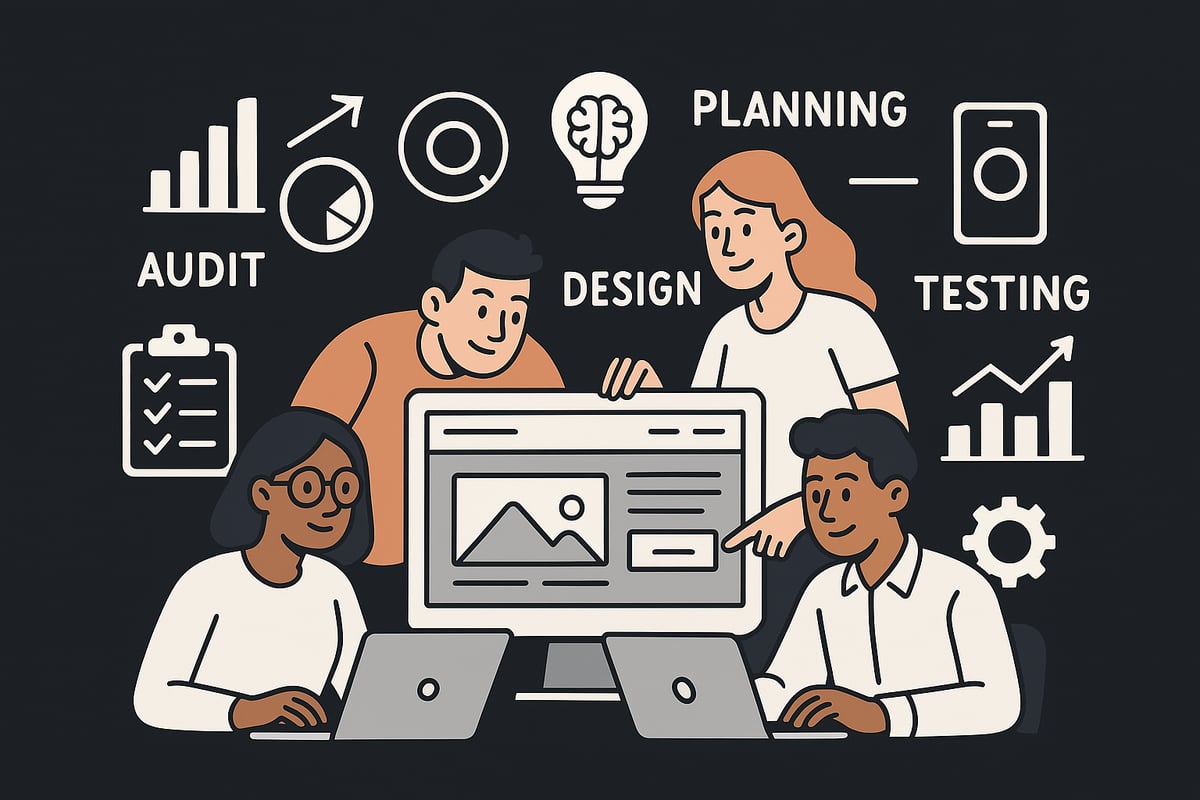
Step-by-Step Implementation Process
Begin by auditing your current website against the best digital marketing website design benchmarks. Identify gaps in speed, personalisation, accessibility, and mobile responsiveness. Develop an actionable plan that prioritises quick wins and aligns with your business objectives.
Break the process into manageable phases:
- Audit your site’s structure, content, and performance.
- Map design improvements to your marketing goals.
- Roll out changes incrementally, testing each step.
- Review outcomes and refine based on user feedback.
Prioritisation and Collaboration
Not all ideas need to be implemented at once. Determine which best digital marketing website design features will have the greatest impact on your goals, such as AI personalisation or faster load speeds. Collaborate closely with designers, developers, and marketers to ensure a seamless transition. For deeper insights on aligning design with brand strategy, see this Digital Branding Solutions Guide.
Tools, Platforms, and Measuring Impact
Leverage tools like Google Analytics, Hotjar, and A/B testing platforms to track the effectiveness of your best digital marketing website design updates. Consider using professional services for more complex projects—explore Website Design and Development Services for expert support. Monitor KPIs such as bounce rate, conversion rate, and average session duration to gauge success.
Overcoming Challenges and Pitfalls
Common challenges include resistance to change, technical debt, and limited resources. Mitigate these risks by setting clear timelines, assigning responsibilities, and maintaining open communication across your team. Use agile methodology to adapt quickly and address issues as they arise.
Quick Reference Table: Implementation Checklist
| Step | Action Item | Tool/Resource |
|---|---|---|
| Audit | Analyse current site | Google Analytics, Hotjar |
| Prioritise | Align with business goals | Stakeholder meetings |
| Collaborate | Designer and developer sync | Project management tools |
| Implement | Roll out design changes | Website CMS, dev tools |
| Measure | Track KPIs and user feedback | Analytics, surveys |
Real-World Example and Next Steps
A retail brand recently overhauled its website using best digital marketing website design ideas, resulting in a 30% boost in conversions and improved user satisfaction. Begin your journey by auditing your own website today and building a roadmap for lasting digital marketing success.
Future Trends and Evolving Best Practices in Digital Marketing Website Design
As we look beyond 2025, the best digital marketing website design is poised for rapid transformation. Innovations in technology and shifts in user expectations are rewriting the rules. Brands must stay agile, embracing change to remain competitive.
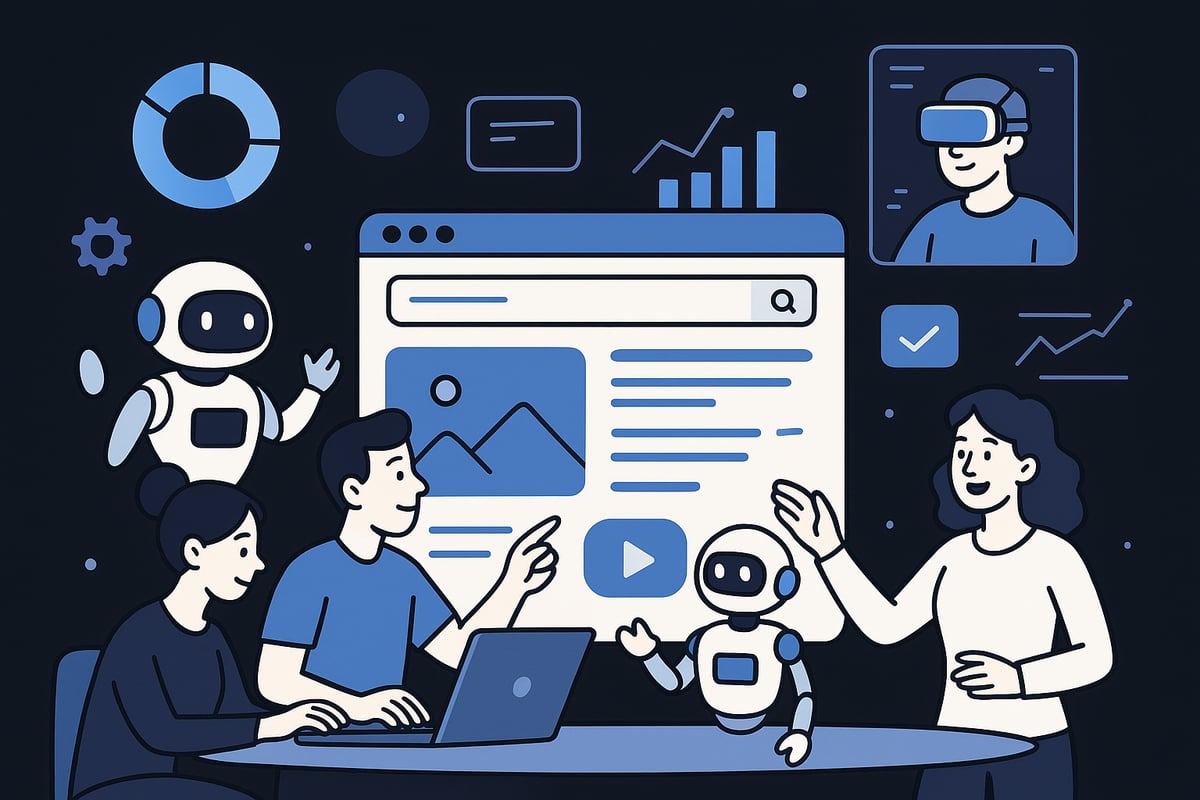
The Next Wave: Technology and User Expectations
Emerging technologies are setting new standards for the best digital marketing website design. Augmented reality and virtual reality are making websites more immersive, letting users interact with products in lifelike ways. Blockchain is enhancing data security and transparency, which builds greater trust with visitors.
Hyper-personalisation will become even more advanced. Websites will adapt in real time to each user’s preferences and behaviours. This trend is driven by rising consumer expectations for seamless, intuitive experiences. People want brands to anticipate their needs, not just react to them. To stay relevant, businesses must keep pace with these evolving demands.
AI, Automation, and Personalisation in Web Design
Artificial intelligence and automation are at the heart of future-ready best digital marketing website design. AI-powered tools will refine everything from content recommendations to customer service, making every visit feel unique. Automation will streamline updates and testing, reducing manual workload for teams.
For a deeper dive into how AI-driven personalisation is enhancing creative collaboration and user engagement, see AI-Driven Personalisation in Web Design. These innovations will make websites smarter and more responsive, improving results across digital marketing channels.
Staying Ahead: Strategies and Resources
Keeping up with best digital marketing website design trends requires a culture of continuous learning and experimentation. Here are a few strategies to future-proof your web presence:
- Regularly audit your website for new technology integrations
- Invest in staff training on emerging tools and platforms
- Test new features with small user groups before full rollout
- Follow respected industry blogs, webinars, and research
By embracing these practices, businesses can ensure their digital marketing websites remain not only current, but ahead of the curve.